Anutin Charnvirakul Re-elected as Thai Prime Minister Amidst Shifting Political Landscape
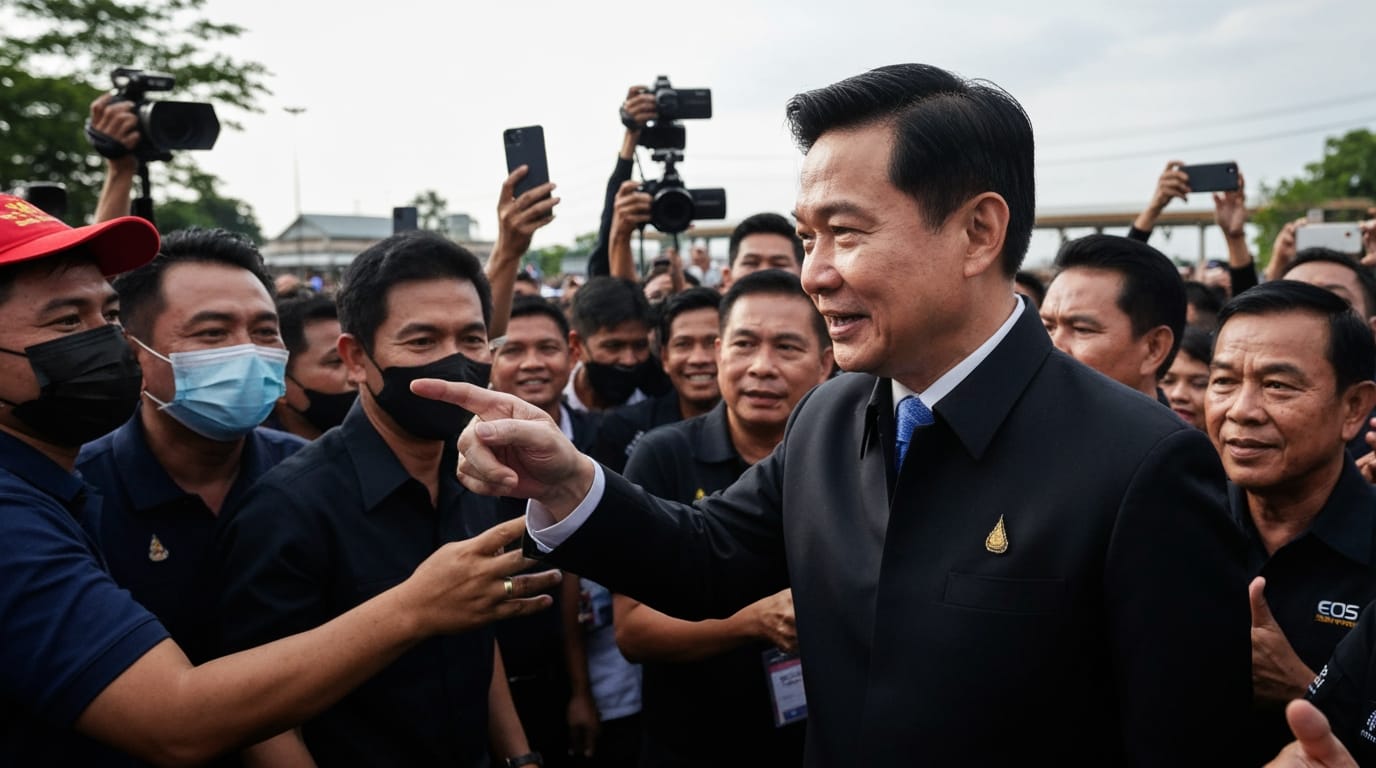
BANGKOK, Thailand – Anutin Charnvirakul, leader of the Bhumjaithai Party, has been re-elected as Thailand's Prime Minister, securing a fresh mandate following a snap general election held on February 8, 2026. His re-election on March 19, 2026, by the House of Representatives underscores a complex and evolving political narrative in the Southeast Asian nation, marking his continued leadership in a period defined by economic challenges and persistent geopolitical tensions. The vote saw Anutin garner 293 votes against his rival, Natthaphong Ruengpanyawut of the People's Party, who received 119 votes, with 86 abstentions in the 499-member lower house.
The Path to Re-election: A Snap Election's Mandate
Anutin Charnvirakul's journey to a second term as prime minister was set in motion by a series of political developments that culminated in the dissolution of the House of Representatives in December 2025. He initially assumed the premiership in September 2025, following the Constitutional Court's removal of his predecessor, Paetongtarn Shinawatra, from office due to ethical violations related to a conversation with Cambodian Senate President Hun Sen. This political upheaval created an environment of uncertainty, leading to the snap election on February 8, 2026. The Election Commission of Thailand (ECT) had formally set the election date after the House dissolution took effect on December 12, 2025.
The election itself was a significant event, with Anutin's Bhumjaithai Party emerging as the strongest force. It secured a commanding 192 seats in the 500-member House of Representatives, a significant increase from its previous standing and surpassing all other parties. The People's Party followed with 120 seats, while the Pheu Thai Party, previously a dominant force, garnered 74 seats. This outcome positioned Bhumjaithai at the forefront of government formation, despite not reaching an outright majority on its own. The election also notably included a referendum on the same day to determine if the 2017 constitution should be replaced.
Bhumjaithai's Strategic Alliances and Anutin's Political Ascent
The Bhumjaithai Party's impressive performance in the February 2026 election, combined with Anutin's prior experience as prime minister, cemented his position for re-election. To form a stable government, Bhumjaithai forged a coalition with the third-placed Pheu Thai Party and several other smaller political groups. This alliance collectively secured approximately 292 out of 499 seats, providing a comfortable majority for Anutin's nomination.
Anutin Charnvirakul, a 59-year-old former construction magnate, has a seasoned political career spanning several decades. He first entered politics in 1996 as an advisor to the foreign minister. His earlier ministerial roles included Deputy Minister of Commerce in 2004 and Deputy Minister of Public Health from 2004 to 2005. A five-year political ban due to his involvement as an executive member of the Thai Rak Thai Party temporarily halted his career, but he re-emerged in 2012 to lead the Bhumjaithai Party, succeeding his father. Under his leadership, the Bhumjaithai Party has strategically broadened its appeal, notably advocating for the decriminalization of cannabis, a policy that gained significant traction. The party's conservative stance, particularly its unwillingness to align with any party proposing amendments to the lèse-majesté law (Section 112 of the Thai Criminal Code), has also been a consistent feature of its platform. His ability to navigate complex political landscapes and form robust coalitions has been central to his continued rise to power.
Navigating Domestic and International Headwinds
The new Anutin administration faces a formidable array of challenges on both the domestic and international fronts. Economically, Thailand grapples with sluggish growth, a persistent issue that requires immediate attention and strategic policy interventions. The government will need to stimulate the economy, attract foreign investment, and address issues of income inequality to ensure broad-based prosperity for its citizens.
Regionally, lingering border tensions with neighboring Cambodia remain a critical concern. Bhumjaithai's election campaign notably featured strong positions on this matter, including promises to construct a wall along the Cambodian frontier, maintain closed border crossings, and recruit 100,000 volunteer soldiers. These proposals reflect a firm stance on national security and sovereignty, but also highlight the delicate diplomatic tightrope the government must walk to ensure stability in the region. Furthermore, the global geopolitical landscape presents additional complexities, with the new government needing to contend with the fallout from international conflicts, such as the Middle East war, which can have ripple effects on global trade and regional stability.
A Renewed Mandate and the Road Ahead
Anutin Charnvirakul's re-election as Thailand's 32nd Prime Minister signifies a continuation of his leadership, albeit under new parliamentary dynamics. His immediate priorities will include the formal royal endorsement by King Maha Vajiralongkorn, followed by the meticulous assembly of a new cabinet. This cabinet will be tasked with translating campaign promises into actionable policies and addressing the pressing national and international issues at hand. Anutin has expressed his commitment to working collaboratively with all representatives to ensure the country's prosperity and the public interest.
The political landscape in Thailand remains dynamic, characterized by a vibrant multiparty system and the ongoing influence of traditional institutions. The strong showing of the Bhumjaithai Party, coupled with the strategic coalition formed, suggests a government with a clear parliamentary majority, yet one that will need to demonstrate adaptability and effective governance to maintain public trust. The coming months will be crucial in observing how Anutin Charnvirakul's administration navigates the complex challenges and capitalizes on the renewed mandate to steer Thailand toward stability and growth. The focus will be on delivering tangible results for the Thai people, particularly in the areas of economic recovery and regional security.


