Argentina's Congress Approves Landmark Budget Under Milei, Charting New Fiscal Course
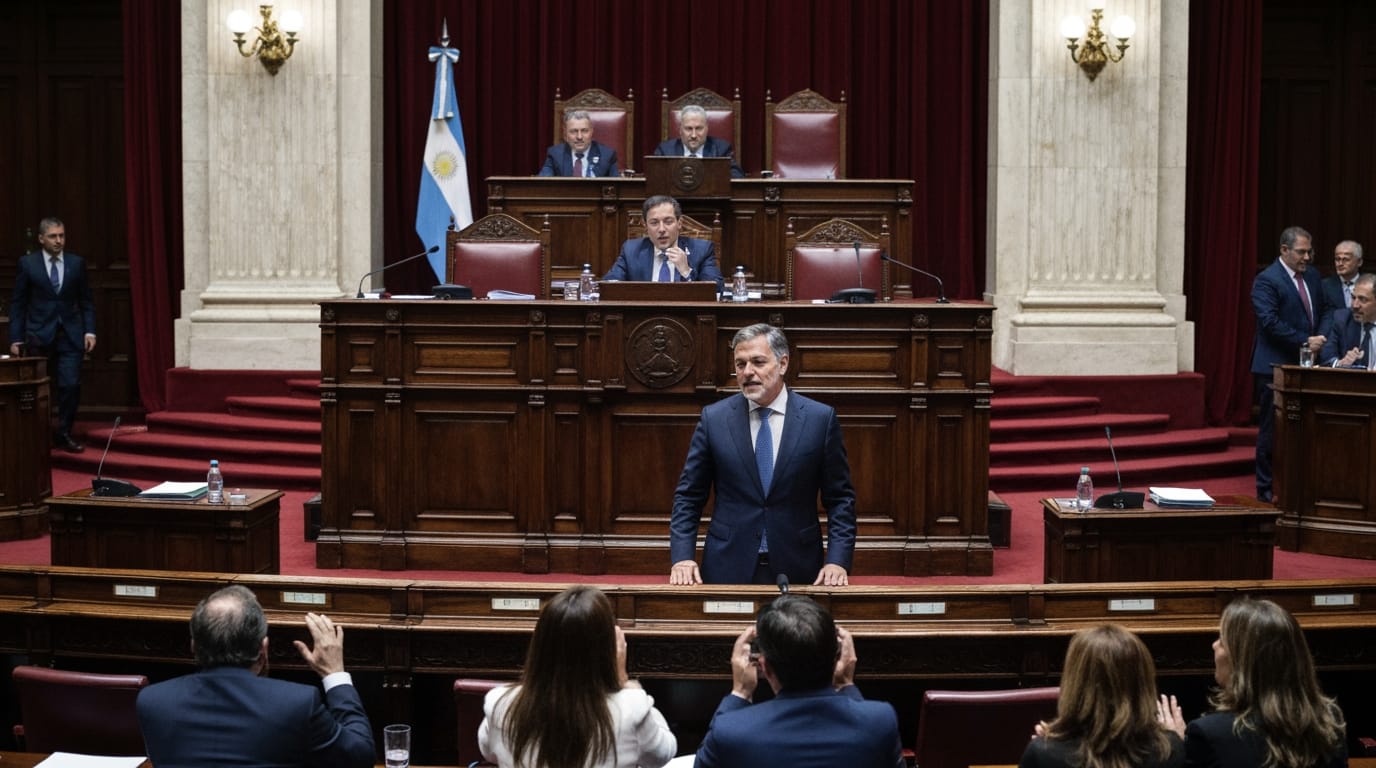
Buenos Aires, Argentina — After nearly two years of operating largely by executive decree, Argentina’s Congress has approved the nation’s 2026 budget, marking a pivotal legislative victory for President Javier Milei and signaling a significant shift in the country's economic and political landscape. The approval, secured on December 26, 2025, represents the first budget successfully navigated through a divided legislature by the libertarian leader since he took office in late 2023, and is poised to underpin his administration’s ambitious fiscal consolidation and economic recovery agenda.
The passage of the 2026 budget, greenlit by 46 votes to 25 with one abstention in the Senate, culminates an intense period of political negotiation and underscores a strengthened position for Milei’s La Libertad Avanza (LLA) party following the October 2025 midterm elections. This legislative breakthrough allows the government to move beyond extending previous budgets and implement its economic blueprint with formal congressional backing, a critical step in addressing Argentina’s chronic financial instability.
A New Era of Fiscal Discipline
The approved budget for 2026 enshrines the "zero deficit" principle that has been the cornerstone of President Milei’s economic philosophy. It projects a primary budget surplus equivalent to 1.2% of the Gross Domestic Product (GDP), a key indicator of fiscal health after decades of recurrent deficits. Total spending is set at approximately $102 billion, or 148 billion Argentine pesos, reflecting a meticulous allocation of resources aimed at controlling public expenditure.
Milei’s administration has consistently argued that fiscal balance is paramount to curbing rampant inflation and restoring investor confidence. The government's macroeconomic forecasts for 2026 are notably optimistic, anticipating a robust 5% economic growth rate. Annual inflation is projected to dramatically decrease to 10.1%, a stark contrast to the near 300% peak observed in April 2024. The budget also forecasts a dollar exchange rate of approximately AR$1,423 by December 2026. These targets, while ambitious, reflect the government's unwavering commitment to its stabilization program.
Shifting Tides in Congress
The successful passage of the 2026 budget marks a significant turning point in Milei's relationship with Argentina's Congress. For much of his term, Milei, whose LLA party held a distinct minority, had struggled to advance his legislative agenda, often resorting to presidential decrees. The October 2025 midterm legislative elections proved transformative, as LLA achieved a strong showing, becoming the largest minority in the lower house and expanding its presence in the Senate. This enhanced political capital provided the necessary leverage to secure cross-party deals and ultimately pass the budget bill.
Previously, the government had operated under an extended version of the 2023 budget, as the 2025 budget proposal, presented by Milei himself in an unprecedented move in September 2024, faced substantial congressional resistance and was not formally debated or approved. Milei’s direct appeal to lawmakers, bypassing his economy minister, underscored the personal importance he placed on his fiscal policies, despite facing an often-skeptical and opposition-dominated Congress. His outspoken stance and vows to veto any legislation compromising fiscal discipline highlighted the confrontational yet determined approach that characterized his early presidency.
Balancing Austerity with Social Needs
While the administration’s focus remains firmly on fiscal contraction, the 2026 budget also outlines specific allocations for social services, reflecting a nuanced approach after the severe cuts that characterized Milei’s initial year in office. Approximately 85% of the budget's resources are dedicated to social spending, encompassing critical areas such as education, healthcare, and pensions. The budget includes a 17% real increase for healthcare, an 8% increase for education, and a 5% increase for pensions and disability benefits, all projected to be above the inflation rate. Significant allocations include 65.7 trillion pesos for pension payments and 4.8 trillion pesos for National Universities.
However, the budget also contains measures that have drawn scrutiny. It includes the repeal of laws related to disability and National Universities funding, which had been passed by Congress but vetoed by the government, only to be later ratified by Parliament. This indicates ongoing tension regarding the extent of social program funding. The budget also maintains the "Cold Zones Law," which provides energy subsidies, only for the Patagonian region and Mendoza, canceling its previous extension to other areas. These adjustments come against a backdrop where earlier austerity measures, though leading to Argentina's first fiscal surplus in nearly two decades in 2024, had a high social cost, initially seeing poverty rates rise to nearly 60% in early 2024 before declining to approximately 31.6% by mid-2025 due to falling inflation.
Navigating Argentina's Economic Future
The approval of the 2026 budget is a critical step in Argentina’s long and arduous journey towards economic stability. President Milei inherited an economy plagued by hyperinflation, a massive fiscal deficit, and severely depleted central bank reserves. His initial "shock therapy" involved drastic spending cuts, devaluation of the peso, and the removal of subsidies. These measures, while painful, have shown signs of stabilizing the economy, with monthly inflation rates falling significantly from their December 2023 peak.
The International Monetary Fund (IMF) has expressed cautious optimism, projecting a 5% growth rate for Argentina in both 2025 and 2026. The government's commitment to ending monetary financing of the deficit and attracting foreign investment is central to its strategy. A tax amnesty program, for instance, successfully brought approximately $18 billion back into the banking system by late 2024. However, significant challenges remain, including managing substantial debt maturities (exceeding $14 billion in 2025) and navigating the complex interplay between fiscal discipline and social welfare.
The approved 2026 budget represents not just a financial plan but a political declaration of intent. It demonstrates Milei's growing ability to translate his reformist vision into concrete legislation, providing a clearer, albeit still challenging, path for Argentina's economic recovery. The coming years will reveal whether this legislative milestone can sustain the momentum needed to achieve long-term prosperity for the nation.


