Argentina's Divisive Labor Reform Advances Amid Nationwide Protests and Clashes
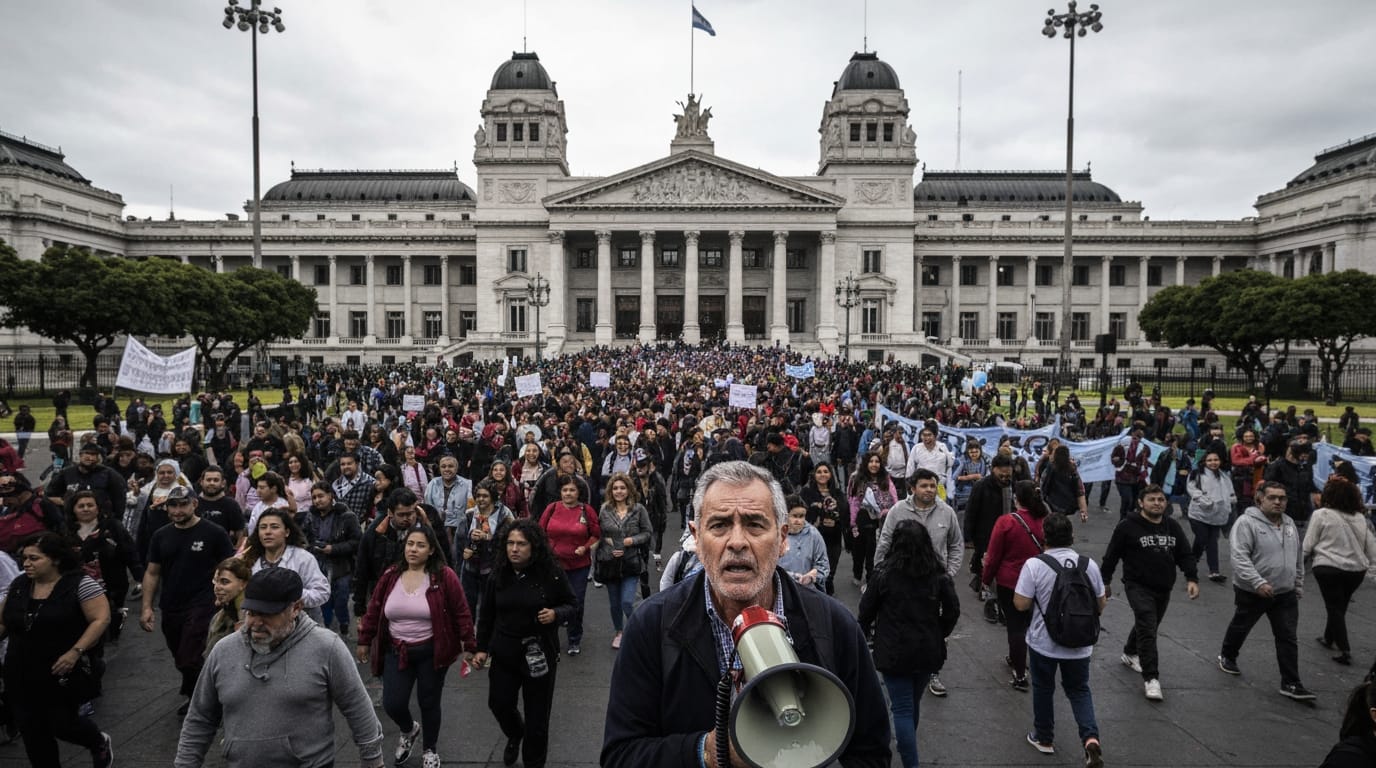
BUENOS AIRES, Argentina – Argentina's lower house of Congress has approved a controversial labor reform bill championed by President Javier Milei, pushing forward a key piece of his sweeping economic agenda despite widespread protests, a nationwide strike, and violent clashes outside the legislative building. The passage by a 135-115 vote early Friday sends the legislation back to the Senate for final approval, as modifications were introduced during its debate in the Chamber of Deputies. The move marks a significant victory for the libertarian leader but has intensified a simmering standoff with powerful trade unions and opposition parties who decry the bill as a severe rollback of workers' rights.
The streets of Buenos Aires and other major cities were transformed into battlegrounds and ghost towns alike throughout the week, as thousands of workers mobilized by the General Confederation of Labor (CGT) and other unions converged on Congress. Security forces deployed water cannons and rubber bullets against protesters who responded with rocks and Molotov cocktails, leading to numerous arrests and injuries on both sides. A 24-hour general strike called by unions paralyzed public transport, closed banks, halted flights, and disrupted essential services across the country, underscoring the deep divisions ignited by the proposed reforms.
The Genesis of Reform: A Nation's Economic Overhaul
President Milei's administration argues that the labor reform is a critical component of his "shock therapy" program designed to revitalize Argentina's long-stagnant economy. Proponents of the bill contend that the nation's existing labor laws are "obsolete," excessively bureaucratic, and actively discourage investment and formal job creation. They point to the grim statistic that nearly half of Argentines work informally, and private-sector job growth has remained stagnant for 14 years. The government believes that modernizing regulations will reduce labor costs, spur economic dynamism, and ultimately draw foreign investment needed to generate formal employment opportunities. "We are rebuilding Argentina from the ground up, starting with employment," a statement from Milei's La Libertad Avanza party declared.
Contentious Clauses: A Deep Dive into the Bill's Provisions
The legislation introduces a series of significant changes that directly impact the working lives of millions of Argentines. Among its most contentious provisions are those that ease hiring and firing rules for employers, streamline severance pay calculations, and modify working hours and vacation policies.
Specifically, the bill aims to reduce dismissal costs by capping severance payments and excluding bonuses and other non-monthly items from the calculation base. It also proposes extending trial periods during which companies can fire new employees with greater ease. Regarding working hours, the reform allows for the standard workday to be extended from eight to 12 hours through a "time bank" system, where overtime can be compensated with rest time rather than additional pay. Vacation time flexibility is also increased, allowing employers to set dates with 30 days' notice and workers to split their holidays into blocks.
Furthermore, the bill seeks to curb the power of trade unions. It limits the right to strike, particularly by declaring certain sectors as "essential," which would restrict the possibility of full work stoppages and mandate minimum service levels during strikes. The legislation also promotes collective bargaining at the company level, a shift that opponents argue would undermine the strength of national trade unions and their ability to secure favorable sector-wide agreements. While some proposals, such as allowing wages to be paid in foreign currency, remain in the bill, controversial clauses allowing payment in kind or through virtual wallets were reportedly met with strong opposition and were either removed or heavily amended during the legislative process.
Voices of Opposition: A Threat to Hard-Won Rights
Unions and Peronist allies have vehemently opposed the reform, characterizing it as a "false modernization" and a "true regression of workers' rights." They argue that the bill dismantles protections that have been integral to Argentina's social model since the rise of Peronism in the 1940s, a movement historically rooted in championing workers. Critics, like Axel Kicillof, governor of Buenos Aires province, assert that weakening severance pay, overtime, and vacation time will not improve conditions for workers but rather expose them to greater abuse and economic precarity.
Labor leaders warn that the reforms could deepen inequality and worsen the country's economic and social crisis, transforming Argentina into a "cheap labor hub." The International Trade Union Confederation's General Secretary, Luc Triangle, described the reforms as an attack on democracy. Unions have vowed to continue their fight against the legislation in "all necessary fronts: the streets, the justice system and, of course, the national congress."
The Path Ahead: Political Implications and Public Opinion
The successful passage of the bill through the lower house, following its initial approval by the Senate, represents a significant political achievement for President Milei. It signals his administration's increasing leverage in Congress and its capacity to advance its pro-market agenda, even in the face of intense public and political backlash. This legislative victory is seen as a crucial step for Milei, who came to power on a platform promising radical economic change.
However, the journey of the labor reform bill is not yet complete. Due to the modifications introduced in the lower house, the legislation must now return to the Senate for a final vote. While the government has demonstrated its ability to secure votes, the strong opposition from unions and Peronists suggests that further resistance, including potential legal challenges, is anticipated. Public opinion on the reform remains divided, with recent polls indicating a slight majority in favor but a significant portion still opposed, reflecting the deeply contentious nature of the changes proposed. The coming weeks will determine the ultimate fate of this landmark legislation and its long-term impact on Argentina's economy and its workforce.


