ASEAN Fortifies Defenses Against Exploding Cyberscam Threat, Human Trafficking Crisis
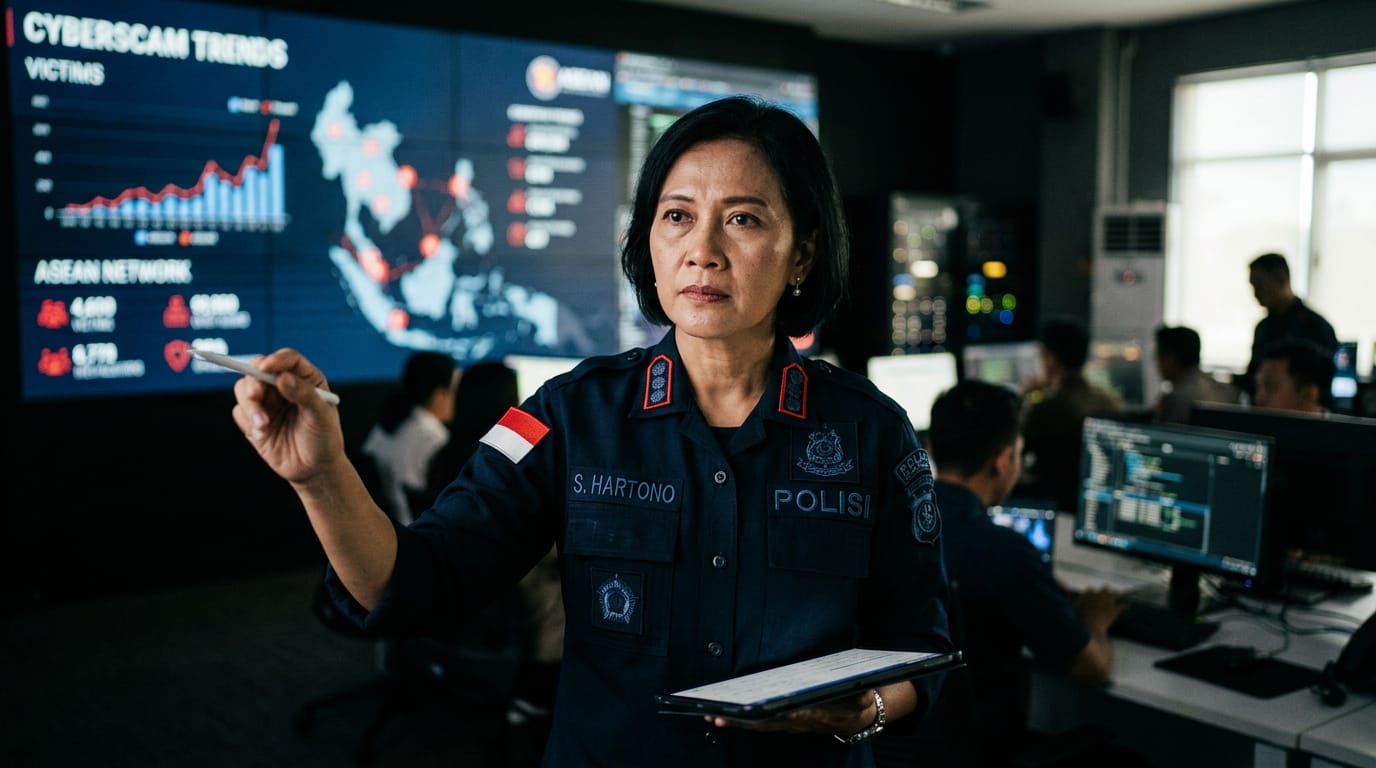
KUALA LUMPUR – The Association of Southeast Asian Nations (ASEAN) is significantly stepping up its collective efforts to combat a rapidly escalating cyberscam crisis that has ensnared hundreds of thousands in forced labor and defrauded victims of billions across the Asia-Pacific region. As online fraud evolves into a sophisticated, transnational organized crime, ASEAN member states are closing ranks, deploying a multi-faceted approach encompassing enhanced regional cooperation, policy development, and robust public awareness campaigns to safeguard their citizens and economies.
The digital transformation sweeping Southeast Asia has unfortunately created fertile ground for an unprecedented surge in online fraud, making it one of the fastest-growing forms of organized crime globally. Recent reports paint a stark picture of the crisis's magnitude. Scam-related losses across East and Southeast Asia, Australia, and New Zealand were estimated to be between USD 88.3 billion and USD 114.1 billion in 2025, a figure that has more than tripled since 2023. This staggering financial toll is compounded by a dire humanitarian crisis, as criminal syndicates increasingly rely on human trafficking and forced labor to staff their sprawling scam operations.
The Dark Underbelly: Human Cost of Cybercrime
At the heart of the cyberscam epidemic lies a horrifying reality: the exploitation of at least 300,000 individuals coerced or trafficked into working in scam compounds across Southeast Asia. These victims, identified from at least 80 countries, are often lured by deceptive job advertisements promising lucrative positions in customer service, marketing, or technology sectors. Once in countries like Myanmar, Laos, Cambodia, and the Philippines, their passports are confiscated, and they are subjected to horrific conditions, including psychological abuse, violence, constant surveillance, and threats against their families. Many spend months, some even over a year, trapped in these fortified compounds, forced to perpetrate cryptocurrency scams, romance scams, and other forms of online fraud. This systematic forced criminality has become a major modern slavery crisis, with new evidence suggesting criminals are leveraging artificial intelligence, cryptocurrency, and private messaging platforms to scale their operations and control their workforce.
The nature of these operations makes rescue and recovery incredibly challenging. While some law enforcement crackdowns have occurred, such as those in Myanmar, the fluidity of these criminal networks means operations often relocate to more remote regions, sustaining the cycle of exploitation. The victims themselves, often perceived incorrectly as willing participants, are indeed survivors of trafficking, necessitating protection and assistance rather than punishment.
Erosion of Trust: Economic and Social Fallout
Beyond the direct financial losses and human suffering, the pervasive nature of online scams poses a significant threat to ASEAN's burgeoning digital economy and societal trust. A 2025 report revealed that nearly one in ten ASEAN consumers fell victim to scams in the preceding year, with 84% expressing concern that scam activity is on the rise. This erosion of confidence is prompting behavioral changes online, with 92% of respondents altering their digital habits. The report highlighted that consumer trust, the bedrock of the region's digital economy, is faltering, risking the momentum built through digitalization across Southeast Asia.
The economic impact extends to businesses and financial institutions, which are grappling with application fraud, transaction fraud, and cross-border money laundering made more sophisticated by generative AI. Singapore's Cyber Security Agency reported over $1.2 million in losses due to phishing scams within a three-month period in late 2024, while Thailand and Vietnam saw a 60% rise in fraudulent QR code payments. This criminal economy, estimated to generate tens of billions annually, undermines governance, rule of law, and regional stability, further complicated by the reported corruption of officials who may turn a blind eye or even benefit from these illicit operations.
ASEAN's United Front: Policy and Operational Responses
Recognizing the gravity of the threat, ASEAN has adopted a comprehensive, multi-sectoral approach to bolster its defenses. Collaborative frameworks and initiatives are being strengthened to enhance cybersecurity posture and facilitate cross-border cooperation.
A pivotal entity in this fight is the ASEAN Cybercrime Operations Desk, established by INTERPOL in 2018 and renamed in 2020 to reflect its operational role. This desk provides intelligence development, investigative support, and operational coordination to all ten ASEAN Member States (AMS) in countering cybercrime. It also disseminates Cyber Activity Reports to keep AMS updated on regional cyber risks and links law enforcement with private sector partners.
ASEAN's strategic response is guided by the Cybersecurity Cooperation Strategy (CCS) for 2021-2025, which focuses on advancing cyber readiness, harmonizing regional cyber policies, enhancing trust in cyberspace, and building capacity. A new strategy for 2026-2030 is also in development. The ASEAN Cybersecurity Coordinating Committee (Cyber-CC), established in 2020, ensures cross-sectoral coordination on cybersecurity matters. Further capacity building is provided through the ASEAN-Singapore Cybersecurity Centre of Excellence (ASCCE), launched in 2019, which offers specialized training to government officials on cybersecurity operations, advanced technologies, and policy development.
In a more direct response to online scams, the ASEAN Working Group on Anti-Online Scams (WG-AS) was established in February 2024 under the ASEAN Digital Ministers' Meeting (ADGMIN). This group has already developed a comprehensive Report on Online Scam Activities in ASEAN (2023–2024) and released the ASEAN Recommendations on Anti-Online Scams, both endorsed in January 2025. These efforts complement the ASEAN Guide on Anti-Scam Policies and Best Practices, providing practical guidance for governments and telecommunications regulators.
Empowering Communities and Future Defenses
Beyond law enforcement and policy, ASEAN emphasizes the critical role of public awareness and education. The "Scam Ready ASEAN" initiative, launched by the ASEAN Foundation, aims to equip communities with the necessary knowledge, digital confidence, and critical-thinking skills to recognize and prevent scams in the increasingly complex online environment. This program underscores a "whole-of-ecosystem" approach, advocating for collaboration among governments, industry, and civil society to protect the region's citizens.
Looking ahead, the ongoing negotiations for the ASEAN Digital Economy Framework Agreement (DEFA) represent a strategic blueprint for the region's digital future. This agreement is set to incorporate high standards in cybersecurity, data governance, and consumer protection, fostering an open, secure, and inclusive digital landscape. Such frameworks are crucial in ensuring that as the digital economy expands, protective measures keep pace, building trust for cross-border transactions and innovation.
The fight against cyberscams and human trafficking is an enduring challenge, demanding sustained vigilance and adaptability from ASEAN member states. The collective resolve to enhance cross-border cooperation, dismantle criminal networks, protect victims, and empower citizens with digital literacy forms a critical bulwark against this evolving threat. While the road ahead remains complex, ASEAN's united front and comprehensive strategies underscore its commitment to securing a safe and prosperous digital future for its nearly 680 million people.


