ASEAN Leaders Convene Urgent Summit to Address Iran War Fallout
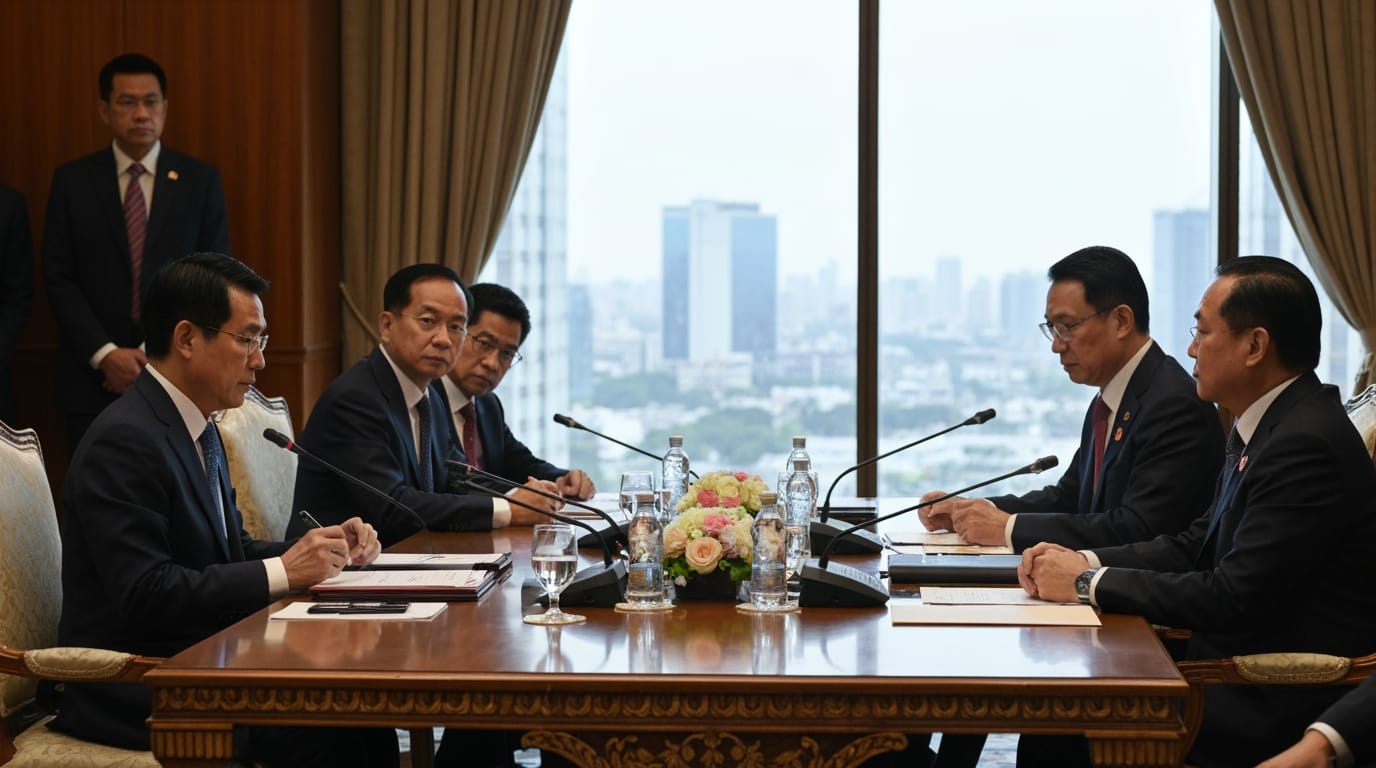
Cebu, Philippines – Leaders of the Association of Southeast Asian Nations (ASEAN) have converged in Cebu, Philippines, for their 48th annual summit, compelled by the escalating conflict involving Iran, the United States, and Israel. The critical gathering, which began on Thursday, May 7, 2026, is dominated by discussions on formulating a coordinated regional response to mitigate the severe economic and humanitarian impacts of the Middle East crisis on Southeast Asia. Philippine President Ferdinand Marcos Jr., chairing the summit, emphasized the urgent need for unity and a robust contingency plan as the region grapples with disruptions to energy supplies, trade routes, and the safety of millions of its citizens abroad.
The "Iran war," as many regional leaders refer to the ongoing hostilities that began with US and Israeli military strikes against Iran on February 28, 2026, has sent shockwaves across the globe, particularly impacting the oil-import-reliant economies of Southeast Asia. ASEAN, a dynamic bloc of 11 member states representing nearly 700 million people and a combined economic output of approximately US$3.8 trillion, finds itself acutely vulnerable to external shocks emanating from the Middle East. The urgency of the situation has prompted leaders to strip the summit of its usual pomp and pageantry, focusing instead on pragmatic, collective measures to safeguard regional stability and prosperity.
Economic Lifelines Under Threat: Energy and Trade Disruptions
The most immediate and pressing concern for ASEAN nations stems from their heavy reliance on Middle Eastern energy supplies. Over 55% of ASEAN's crude oil imports and 17% of its natural gas supplies originate from the Middle East, making the region exceptionally susceptible to any instability. The ongoing hostilities have led to sporadic disruptions, particularly within the strategic Strait of Hormuz, a critical global shipping artery that funnels more than 80% of Asia's crude oil and liquefied natural gas (LNG) imports. Such disruptions have already translated into tangible economic pain across Southeast Asia, manifested in soaring fuel prices, supply shortages in countries like Cambodia, Laos, Myanmar, and Thailand, and a general increase in transport and logistics costs.
Economic ministers from ASEAN, who met ahead of the leaders' summit, issued a formal warning that the Middle East war poses severe risks to regional energy security and growth. They noted that the crisis is contributing to inflation, exchange rate volatility, and tighter financial conditions, ultimately slowing economic growth projections for the entire region. In response, ASEAN is exploring multi-pronged strategies. A key proposal involves accelerating the ratification of an agreement for coordinated emergency fuel sharing among member states. Additionally, discussions are underway to develop a regional power grid, diversify energy sources and suppliers, promote electric vehicles, and even study the feasibility of civilian nuclear energy to reduce long-term dependency on volatile external markets.
Beyond energy, the conflict's impact on global supply chains and trade is another significant challenge. ASEAN economic ministers have committed to maintaining open, transparent, and predictable markets, explicitly agreeing to avoid restrictive trade measures, including export bans on essential goods. This proactive stance aims to prevent further price volatility and shortages within the bloc. Efforts are also being made to expedite upgrades to existing free trade agreements with key partners like China, Korea, and Canada, as well as the ASEAN Trade in Goods Agreement (ATIGA), to enhance the resilience of regional trade flows.
Safeguarding Citizens: A Humanitarian Priority
The human cost of the Middle East conflict resonates deeply within Southeast Asia, home to over a million of its citizens working and living in the region. The safety and welfare of these migrant workers are paramount for ASEAN leaders, especially given that several Southeast Asian nationals have already been killed since the conflict began. The summit agenda includes developing clearer protocols for large-scale evacuations should hostilities escalate further. A draft joint declaration reportedly calls for enhanced information sharing and strengthened coordination with international organizations to ensure the protection of ASEAN nationals in affected areas.
Beyond immediate safety, the conflict threatens the vital remittances sent home by these workers, which contribute significantly to the economies of many ASEAN states. The potential for prolonged conflict also raises concerns about reduced tourist numbers to Southeast Asia, a major foreign exchange earner for several member countries, as travel risks increase globally.
A Call for Diplomacy and Regional Resilience
ASEAN leaders are not only focused on internal mitigation but are also leveraging their collective voice on the international stage. The bloc has consistently called for a diplomatic and peaceful resolution to the Middle East crisis, urging all parties to exercise maximum restraint and de-escalation. Thailand's Foreign Minister Sihasak Phuangketkeow emphatically stated that the war "should not have occurred in the first place" and called for the indefinite extension of the current ceasefire between the US and Iran, alongside ensuring safe passage through the Strait of Hormuz. ASEAN's emphasis on upholding international law, sovereignty, and freedom of navigation can be seen as a broader appeal for global adherence to principles that safeguard peace and trade.
The discussions in Cebu also underscore ASEAN's commitment to strengthening its internal crisis coordination mechanisms. Ministers have identified the need for a "crisis communication protocol" to ensure a coherent, timely, and unified response to future emergencies, reflecting a lesson learned from the rapid onset and broad impacts of the current conflict. Philippine Foreign Affairs Secretary Ma. Theresa Lazaro highlighted that disruptions in energy flows, trade routes, and food supply chains have exposed ASEAN's vulnerability to global developments, necessitating greater agility and institutional readiness.
Conclusion: Navigating an Uncertain Future
The 48th ASEAN Summit marks a pivotal moment for the regional bloc, demonstrating its resolve to collectively confront profound external challenges. The leaders' discussions in Cebu reflect a stark recognition that the "Iran war" is not merely a distant conflict but a direct threat to the economic stability and human security of Southeast Asia. By pushing for coordinated emergency fuel sharing, diversifying energy sources, maintaining open trade, and prioritizing the safety of its citizens abroad, ASEAN aims to build greater resilience against an increasingly volatile global landscape.
While the immediate focus remains on mitigating the fallout from the Middle East crisis, the proactive measures being developed at this summit signal a broader strategic shift within ASEAN towards strengthening its collective capacity to navigate future uncertainties. The commitment to a unified, practical, and timely response is paramount as the region seeks to protect its growth trajectory and ensure the welfare of its nearly 700 million people in a world grappling with persistent geopolitical tensions.


