Asian Markets Rebound After Trump Tariff Pause, But China Faces Higher Levies
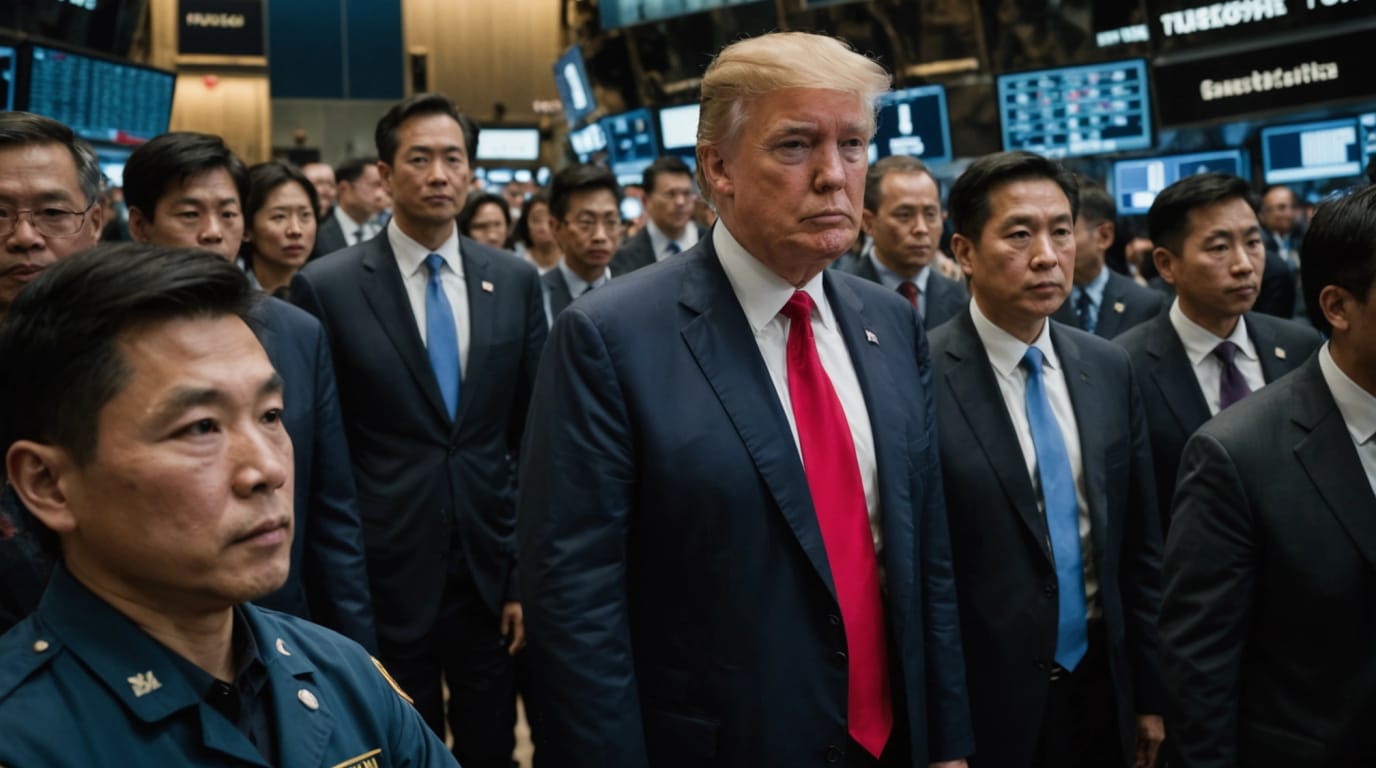
Asian stock markets experienced a surge Thursday following President Donald Trump's announcement of a 90-day pause on most planned tariffs. The move, however, excluded China, which faces significantly increased duties, creating a mixed reaction across the region. While many economies breathed a sigh of relief, the long-term implications of the U.S. trade policy remain uncertain.
Relief Rally Across Asia
Following Trump's announcement, Asian markets responded positively, mirroring gains on Wall Street. Japan's Nikkei 225 index skyrocketed 8.8 percent, a gain of over 2,000 points almost immediately after trading began. Taiwan's Taiex index surged 9.2 percent, while Australia's S&P/ASX 200 index jumped 6.3 percent in early trade. Singapore shares also saw big gains, with the benchmark STI going up by more than 8 percent in early trade, before moderating to 5.5 percent. South Korea's KOSPI index also piled on more than 5 percent.
The positive market reaction reflects investor relief that the U.S. is postponing reciprocal tariffs, allowing more time for negotiations. For export-centered Asian economies, this is especially important, given the growth impact steep U.S. tariffs would have had.
China Excluded from Tariff Pause
Despite the widespread pause, China faces increased tariffs. Trump raised duties on Chinese goods to 125 percent after China announced an 84 percent tariff on goods imported from the United States.
China's commerce minister said that China "firmly opposes" the U.S. tariffs and vowed to continue with countermeasures. A Chinese foreign ministry spokesperson said that China "will not flinch" when a trade war comes. The Chinese government also announced additional tariffs on the U.S., bringing the total baseline tariff rate on U.S. products up to 84 percent. The government also added six U.S. firms to its "unreliable entities list" and 12 U.S. firms to its "export control list." China has also filed a complaint against the U.S. with the World Trade Organization.
Impact on Currencies and Bonds
The currency markets also reacted to Trump's announcement. The Bloomberg Dollar Spot Index fell 0.2 percent, while the Japanese yen rose 0.6 percent to 146.85 per dollar. The offshore yuan fell 0.1 percent to 7.3548 per dollar. Yields on 10-year Treasuries edged lower in early trading.
Concerns and Criticisms
Despite the relief rally, some billionaire investors criticized the tariffs, and economists warned of a possible U.S. recession. Market experts cut their stock forecasts as the president pushed to change global trade rules.
Some analysts say the abrupt climbdown has only made things more confusing. The frequent implementation and revocation of measures contributes to an unstable and unpredictable overall environment.
Historical Context and Long-Term Implications
Trump's tariff policies are not new. During his first term, he launched a trade war with China, imposing tariffs on most of its goods. Beijing responded with its own retaliatory tariffs on U.S. products. Trump also used the threat of more tariffs to force Canada and Mexico to renegotiate a North American trade pact.
Economists have warned that the escalating trade tensions and tariffs will result in a marked reduction in economic activity, if not an outright recession. A study by the Tax Foundation found that Trump's tariffs will reduce U.S. GDP and represent the equivalent of a US$1,900 tax increase per U.S. household.
Sector-Specific Consequences
The implementation of these tariffs will have sector-specific repercussions, dampening sentiment across various industries. Sectors heavily reliant on trade could face severe economic fallout. For example, clothing prices will go up as higher import tariffs hit textiles from Southeast Asia and Bangladesh.
Global Reactions
Other countries are reacting to Trump's tariff policies. The European Union announced that it will delay for 90 days the implementation of its counter tariffs against the U.S. over the 25 percent duties Trump imposed on the bloc's steel and aluminum exports last month.
Taiwan will also increase its imports of U.S. goods. Taiwan's central bank chief warned that uncertainty remained in spite of the pause and that a U.S.-China trade war would still hurt the global economy.
Conclusion
While the pause in tariffs brought immediate relief to many Asian markets, the long-term implications of Trump's trade policies remain uncertain. The exclusion of China from the tariff pause and the potential for future trade wars continue to create instability in the global economy. The situation remains fluid, and businesses and investors must remain vigilant in monitoring developments and adapting their strategies accordingly.


