Assassinations Deepen Gulf Divide, Silence Diplomatic Avenues
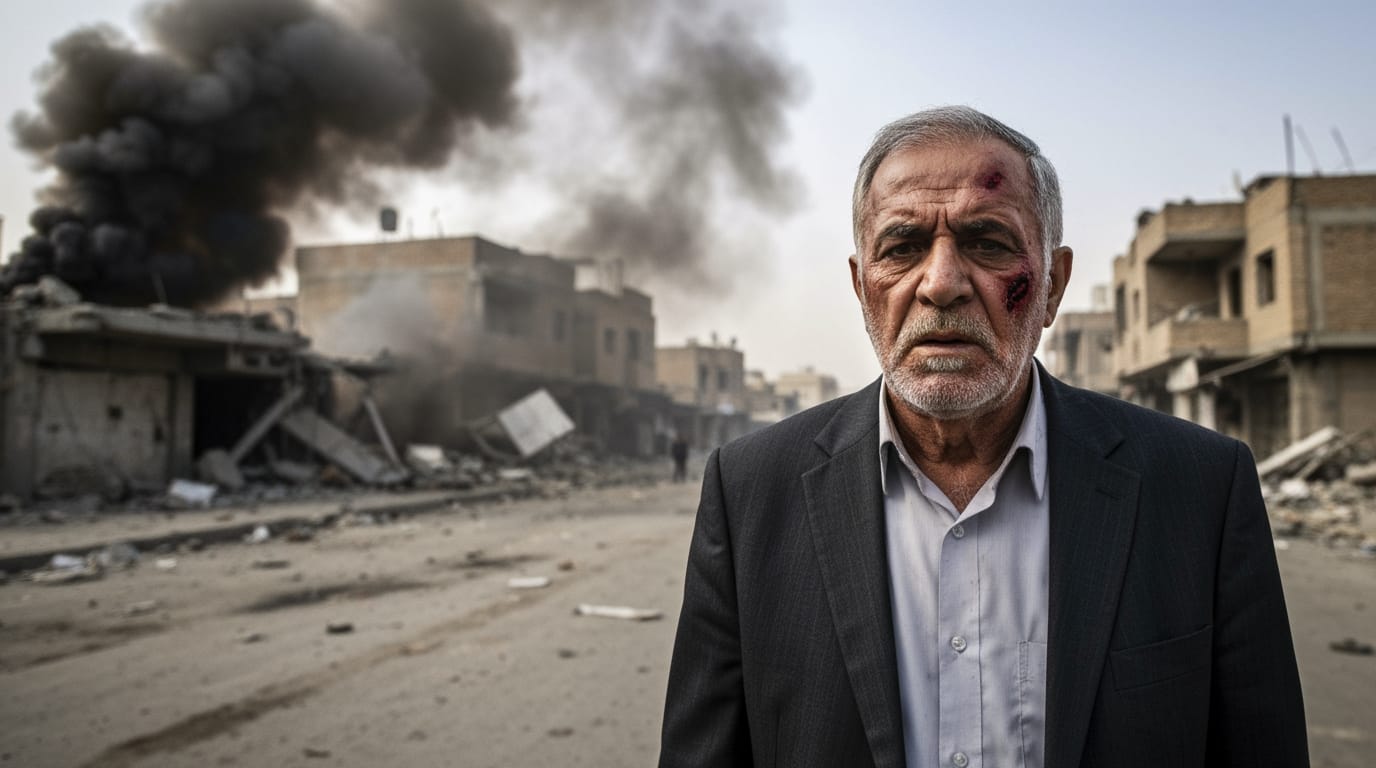
A relentless campaign of targeted assassinations targeting high-ranking Iranian officials and key figures has dramatically escalated tensions in the Middle East, leaving little room for traditional diplomatic engagement and fueling a dangerous cycle of retaliation. These precision strikes, largely attributed to the United States and Israel, have not only decimated Iran's leadership structure but have also fostered an irreparable trust deficit, pushing the region closer to an all-out conflict and effectively sidelining negotiation as a viable path forward. The cumulative effect of these killings, from military commanders to nuclear scientists and even the Supreme Leader himself, has created an environment where dialogue is perceived as weakness and compromise as capitulation, forcing a re-evaluation of regional stability and the future of international relations with Tehran.
The Anatomy of a Shadow War Turned Hot
The strategic targeting of Iranian personnel is not a new phenomenon, but its intensity and the seniority of its targets have escalated sharply. The killing of Major General Qassem Soleimani, commander of the Islamic Revolutionary Guard Corps' (IRGC) Quds Force, in January 2020 by a U.S. drone strike in Baghdad marked a pivotal moment. Soleimani, considered the second most powerful person in Iran, was a central figure in Iran's regional influence. His assassination was immediately condemned by Iran as an act of state terrorism and led to vows of "severe revenge," significantly elevating U.S.-Iran tensions and making diplomatic dialogue "more difficult."
This pattern continued with the November 2020 assassination of Mohsen Fakhrizadeh, a leading Iranian nuclear scientist, near Tehran, an act widely blamed on Israel. Fakhrizadeh was reportedly at the helm of Iran's alleged covert nuclear weapons program. His death was seen by many as an attempt to derail any potential return to the Joint Comprehensive Plan of Action (JCPOA) nuclear agreement under the incoming U.S. administration and exacerbated the mistrust between Iran and Western powers. While some argued such targeted killings could pressure Iran into negotiations, others contended they undermined diplomacy by removing potential interlocutors and provoking hardline responses.
The shadow war intensified further in 2022 with the assassination of IRGC Colonel Hassan Sayad Khodaei in Tehran, an act Iran also attributed to Israel, which only served to further escalate the covert conflict between the two regional adversaries. These incidents, while significant, now appear to be precursors to an even more aggressive phase of targeted killings that has unfolded recently.
Decimation of Leadership: A Strategy Backfiring?
The early months of 2026 have witnessed an unprecedented wave of high-profile assassinations within Iran, indicating a systematic campaign to dismantle the regime's command structure. On February 28, 2026, Supreme Leader Ayatollah Ali Khamenei was reportedly killed in a joint U.S.-Israeli attack, an event that sent shockwaves through the country and led to his son, Mojtaba Khamenei, being named as the new Supreme Leader. Days later, in mid-March, Iran's security chief Ali Larijani, widely regarded as a key policymaker and a figure potentially open to negotiation, was killed in an Israeli airstrike. This was followed swiftly by the assassination of Intelligence Minister Esmail Khatib in a targeted strike on Tehran, making him the third senior Iranian official killed within 48 hours. These recent "decapitation strikes" are seen by some as an attempt to force regime change or cripple Iran's ability to wage war and conduct its nuclear program.
However, analysts suggest this strategy may be counterproductive. Removing key leaders like Larijani, who possessed unique skills for engaging with Western governments, eliminates crucial interlocutors and leaves successors less willing to compromise. From Tehran's perspective, the damage caused by these attacks has created an insurmountable trust barrier. The assumption that removing leaders would bring about rapid regime change has proven to be a miscalculation; instead, it has ignited strong nationalist and Shiite ideological responses within Iran, hardening the regime's resolve and intensifying calls for retaliation rather than surrender. As one analyst noted, "For Iran's regime, merely surviving an armed conflict with the US constitutes victory."
The Widening Trust Chasm and Diplomatic Freeze
The cumulative effect of these assassinations has been to create a profound trust deficit that fundamentally undermines any prospect of meaningful diplomatic engagement. Iran has consistently stated it will not negotiate under duress, particularly after its leaders have been targeted. The current Iranian leadership has learned from experience that attacks can occur even while negotiations are ongoing, making any future diplomatic overtures suspect and effectively closing official channels for dialogue.
The assassination of Fakhrizadeh, for instance, significantly complicated efforts by the Biden administration to revive the JCPOA, as it intensified calls within Iran to harden its stance on nuclear issues. Similarly, Soleimani's death led Iran to announce it would no longer abide by the operational limits of the nuclear deal. With several of its top political and security officials "no longer around," the pool of potential negotiators who might possess the necessary trust and authority to engage in complex discussions with external powers has significantly shrunk. Furthermore, Iran has demanded guarantees that any new deal would not be unilaterally abandoned or have sanctions reimposed, reflecting its deep skepticism following past experiences. This erosion of trust has created an environment where, even if Washington were willing to talk, Tehran's official interest in starting negotiations would likely be minimal.
Regional Fallout and the Looming Threat
The targeted killings have not only crippled Iran's internal leadership but have also triggered significant regional instability. Iran has responded to the assassinations with retaliatory missile and drone attacks against Israel and U.S. installations across the Middle East. The conflict has expanded, with reports of continuous US-Israeli bombing campaigns targeting military, civilian, and energy-producing sites within Iran, and Iran striking back at similar targets in the region. This cycle of violence risks spiraling into a broader regional war involving multiple actors, with potentially devastating global consequences, including rising energy prices and economic uncertainty.
The focus on assassinating key figures has, paradoxically, made Iran's remaining leadership even less amenable to compromise, pushing them to double down on resistance. Iran's refusal to surrender is partly tied to its ability to control strategic choke points like the Strait of Hormuz, through which a significant portion of the world's oil supplies passes, giving it leverage in a protracted conflict. While some background channels for communication may still exist, perhaps via intermediaries like Iraq or Oman, significant diplomatic breakthroughs appear highly improbable in the current climate.
The strategy of targeted killings, while possibly intended to weaken Iran and force it to the negotiating table, has instead created a deeply entrenched state of distrust and animosity. By eliminating key figures and exacerbating the cycle of retaliation, these actions have effectively dismantled the foundations for diplomacy, leaving the region on a perilous trajectory with fewer off-ramps and an increasing risk of wider, more devastating conflict. The path to de-escalation appears narrower than ever, with assassinations having left a gaping void where negotiation might otherwise have thrived.


