Australia and Fiji Forge Historic Defense Alliance Amid Shifting Pacific Geopolitics
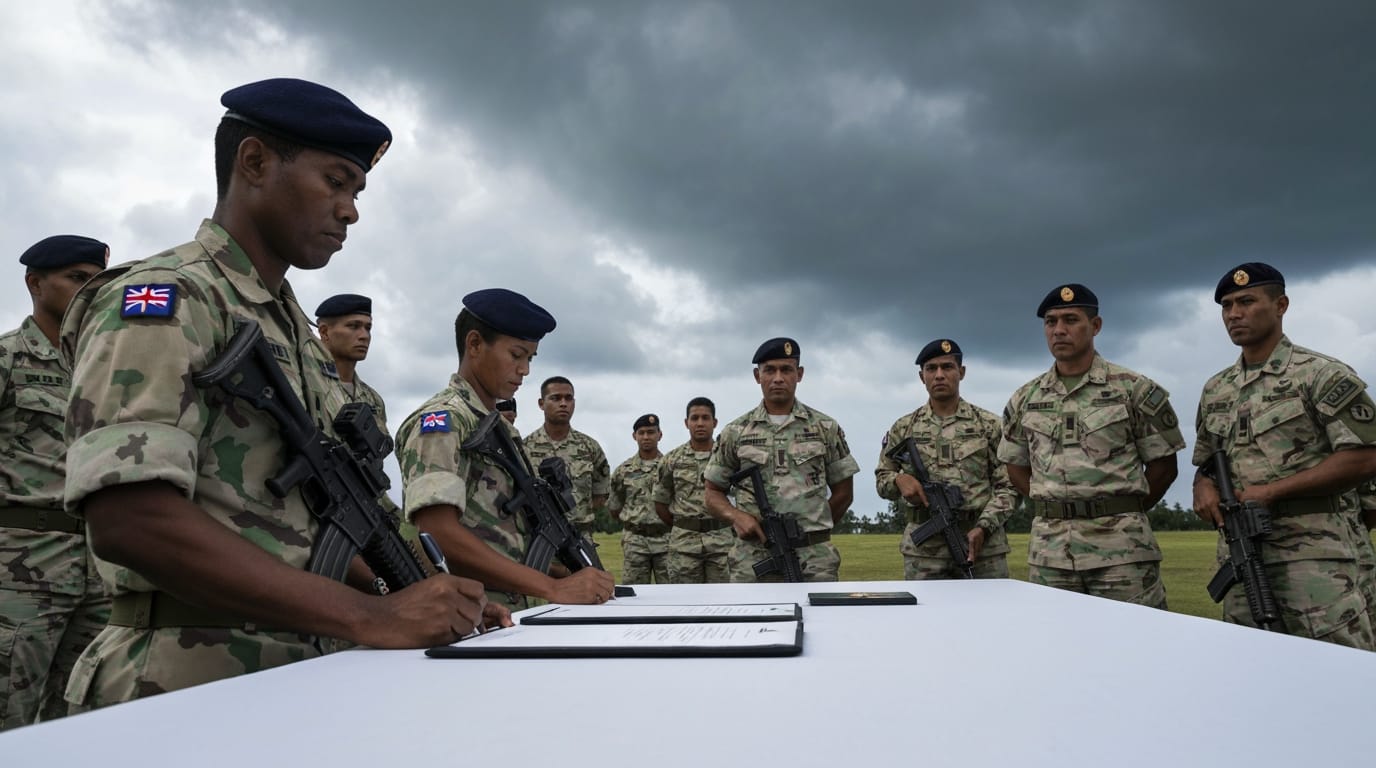
SUVA, FIJI – In a significant recalibration of regional security architecture, Australia and Fiji have cemented a new defense alliance, elevating their bilateral relationship to a formal treaty partnership. Signed in Suva on Monday, July 6, 2026, by Australian Prime Minister Anthony Albanese and Fijian Prime Minister Sitiveni Rabuka, the "Ocean of Peace Alliance" directly addresses the evolving geopolitical landscape of the South Pacific, particularly the expanding influence of China. This landmark agreement, coupled with the broader "Vuvale Union," signals a decisive move by Canberra and Suva to deepen cooperation across security, economic, and social spheres, establishing a mutual defense framework designed to safeguard regional stability.
A New Era of Mutual Defense
The newly minted "Ocean of Peace Alliance" marks a pivotal moment, positioning Fiji as only Australia's fourth treaty ally, alongside the United States, New Zealand, and Papua New Guinea. At its core, the alliance includes a mutual defense clause, committing both nations to "act to meet the common danger" should either country face an armed attack. The agreement explicitly states that an attack on one would be considered dangerous to the peace and security of the other, as well as the broader Pacific region. Furthermore, it establishes consultation mechanisms to discuss any security developments that could threaten the sovereignty, peace, or stability of either nation. This robust commitment represents Fiji's inaugural defense alliance, underscoring a shared resolve to bolster collective security in a strategically vital part of the world.
Beyond military cooperation, the accompanying "Vuvale Union" agreement broadens the scope of their partnership considerably. It outlines ambitious commitments to integrate security, economies, and people. Key provisions include strengthening Fiji's capabilities in interdiction, policing, prosecution, and combating transnational crime. The Union also extends to economic security, with initiatives focusing on critical infrastructure, health, trade, and labor mobility, along with programs aimed at uplifting education and skills development in Fiji. Australian Prime Minister Albanese underscored the profound significance of these pacts, stating they represent "one of the most significant endeavors Australia has undertaken with any country."
The Geopolitical Chessboard: Countering Beijing's Influence
The signing of these agreements is largely viewed through the lens of a growing strategic competition in the Pacific, primarily driven by China's increasing footprint in the region. Canberra and its allies have expressed escalating concern over Beijing's diplomatic, economic, and security engagements with Pacific Island Countries (PICs). A turning point came with China's security agreement with the Solomon Islands in 2022, which sparked fears of a potential permanent military presence in the Pacific—a development that would fundamentally alter regional power dynamics.
China's approach to the Pacific has evolved, moving beyond traditional diplomacy and development aid to encompass policing cooperation, security agreements, infrastructure projects, military assistance, and defense diplomacy. This assertive posture has prompted a concerted push by Australia, New Zealand, and the United States to reinforce existing alliances and forge new partnerships. Australia, in particular, has been proactive in signing security pacts with other Pacific nations, including Vanuatu, Tuvalu, and Papua New Guinea, aiming to solidify its position as the preferred security partner in the region. Fijian Prime Minister Rabuka has openly signaled a preference for traditional partnerships and in 2025, firmly rejected the notion of Fiji hosting a permanent Chinese military presence, stating, "If they want to come, who would welcome them? Not Fiji."
Regional Implications and a Blueprint for the Pacific
The "Ocean of Peace Alliance" and "Vuvale Union" are not envisioned as exclusive arrangements. The "Ocean of Peace Alliance," for example, is explicitly open to other Pacific nations, such as New Zealand, Papua New Guinea, and Tonga, to join in the future. This inclusive approach aims to foster a broader regional security framework, echoing Prime Minister Albanese's sentiment that "the Pacific family need to look after our own security."
These agreements are also designed to give practical effect to the "Blue Pacific Ocean of Peace Declaration," an initiative focused on building the region's collective capability to address shared security challenges, including transnational crime and the existential threat of climate change. The "Vuvale Union" is even seen by some as a potential "blueprint" for future engagements and partnerships across the wider Pacific, offering a comprehensive model for cooperation that extends beyond traditional defense. This strategic move by Australia and Fiji underscores a shared vision for a stable, prosperous, and secure Pacific, driven by regional solutions and strengthened partnerships.
Deep Roots and Future Outlook
The foundation for these agreements has been meticulously laid over several years. The "Vuvale Partnership," first established in 2019 and reinforced in 2023, has served as a crucial bedrock for deeper engagement, fostering stronger people-to-people, economic, and security links between the two nations. Australia has also actively supported Fiji in significant security infrastructure projects, such as the redevelopment of the Blackrock Peacekeeping, Humanitarian Assistance and Disaster Relief Camp, a world-class facility designed to enhance interoperability and Fiji's capacity for humanitarian response. Additionally, under the Pacific Maritime Security Program, Australia has provided Fiji with Guardian-class patrol boats to bolster its maritime security capabilities.
The signing of the "Ocean of Peace Alliance" and the "Vuvale Union" therefore represents a culmination of ongoing efforts and a bold step forward in solidifying the strategic alliance between Australia and Fiji. It reflects a growing recognition among Pacific nations of the need for robust, regionally-led security solutions. As geopolitical competition intensifies, these pacts serve as a clear declaration of intent, prioritizing regional solidarity and mutual defense to navigate the complex challenges and opportunities that lie ahead in the Indo-Pacific. The enduring impact of these treaties will hinge on their effective implementation and the continued commitment of both nations to their shared vision for a secure and prosperous Pacific.


