Germany Unveils Ambitious 2027 Budget with Record Borrowing Amid Shifting Fiscal Landscape
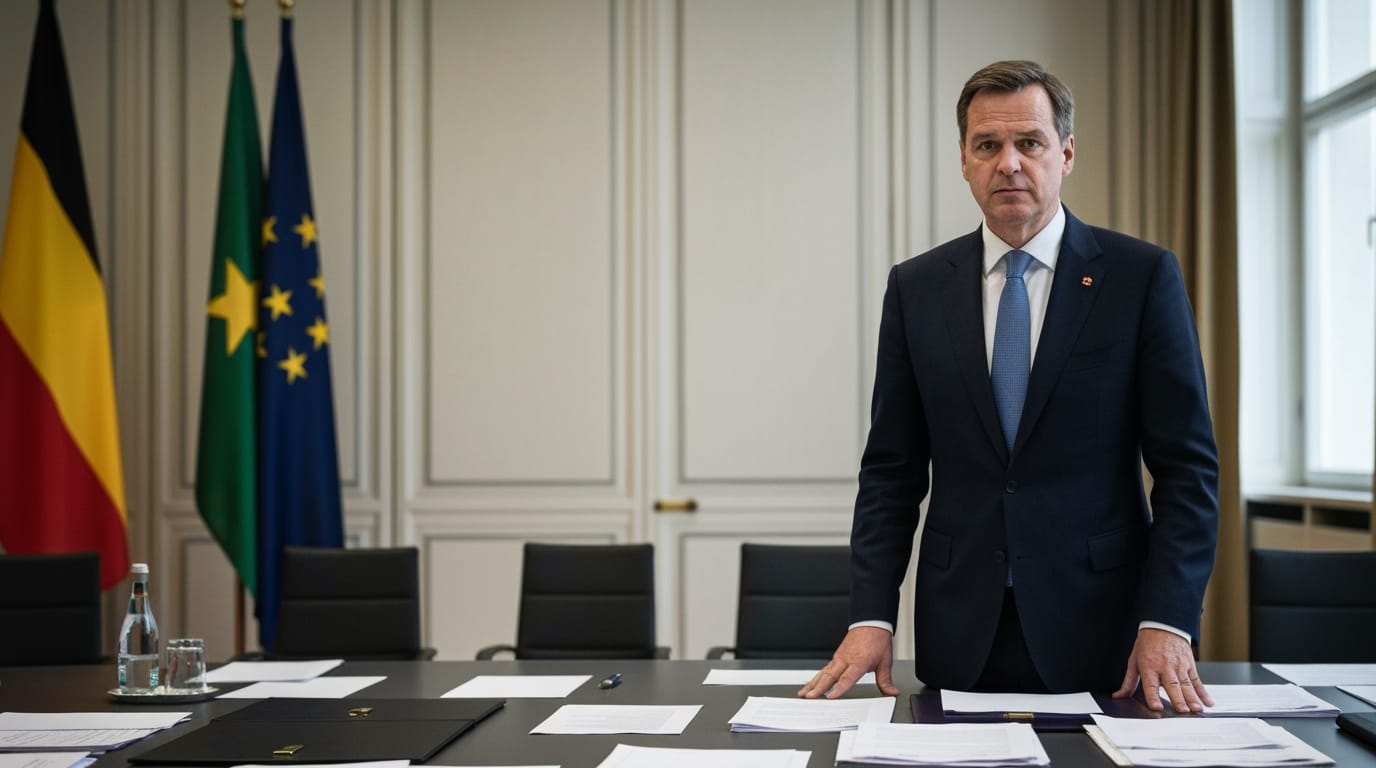
BERLIN – The German Federal Cabinet today approved the draft federal budget for 2027, marking a significant departure from decades of fiscal conservatism with plans for record new borrowing exceeding €203 billion. The ambitious financial blueprint, totaling approximately €555.4 billion in expenditures, prioritizes substantial investments in defense, infrastructure, and targeted tax relief, reflecting Berlin's response to evolving geopolitical realities and domestic economic challenges.
The decision signals a transformative shift for Europe's largest economy, which has long been a proponent of strict budgetary discipline. With the 2027 draft budget, the government aims to invigorate a sluggish economy, modernize critical infrastructure, and bolster national security, even as it grapples with a projected growing deficit and elevated inflation forecasts. The plan now moves to the Bundestag, where parliamentary discussions are slated to begin in September, with final approval anticipated by year-end.
A New Era of Fiscal Strategy
Germany's 2027 budget, extending its financial framework through 2030, represents a pivotal moment in the nation's economic policy. The planned new borrowing of €203.6 billion is a sharp increase from €50.5 billion in 2024 and even surpasses the €196.5 billion initially signaled for 2027. This dramatic rise underscores a strategic pivot towards expansive fiscal policy, driven by a confluence of factors including the need for greater investment, increased defense spending, and continued support for Ukraine.
The core budget alone will account for €118.7 billion in new debt for 2027. An additional €54.9 billion is allocated through an infrastructure fund, and a special defense fund contributes another €30 billion, demonstrating a concerted effort to channel funds into key strategic areas. Finance Minister Lars Klingbeil (SPD) played a central role in finalizing the draft, navigating complex negotiations to bridge an estimated €21 billion gap, partially by drawing on a €9.7 billion reserve. This balancing act highlights the intense pressure to reconcile expansive spending goals with fiscal constraints.
Unprecedented Boost for Defense and Strategic Investments
A cornerstone of the 2027 budget is an unparalleled commitment to defense. Core defense spending is set to climb to €109 billion, a 34% increase from €82 billion in 2026. When factoring in €11.6 billion for military aid to Ukraine and €9.4 billion for other security-related expenditures, total defense and security spending reaches €130.1 billion. This significant allocation aims to put Germany on track to meet NATO's ambitious target of spending 3.5% of its GDP on defense by 2029, a notable ramp-up in the country's military capabilities following years of underinvestment.
Beyond defense, the budget channels substantial resources into modernizing Germany’s aging infrastructure. Total investment is slated to reach €117.5 billion, nearly €40 billion more than initially planned, supported by a €500 billion infrastructure fund. Priority areas include transport, digitalization, and hospital infrastructure, reflecting a strategic focus on enhancing the nation’s long-term economic competitiveness and resilience. These investments are crucial for stimulating growth and addressing structural challenges that have hampered the German economy.
Economic Outlook and Fiscal Headwinds
Despite the bold spending plans, Germany faces a complex economic landscape. The budget projects a general government deficit climbing to 4.1% of GDP in 2027, with a growing shortfall that could reach approximately €107 billion by 2030, even with record borrowing. Interest payments on the accumulated debt are also expected to nearly double by the end of the decade, rising from €41.9 billion in 2027 to €80.7 billion in 2030, posing an increasing burden on future budgets.
The country's constitutional "debt brake," which limits structural net new borrowing to 0.35% of GDP, remains a critical framework. While special funds for defense and infrastructure largely operate outside this rule, the core budget is expected to utilize the debt brake's regular credit limit. This nuanced application reflects the government's attempt to balance increased spending with adherence to fiscal responsibility.
Economic forecasts for 2027 present a mixed picture. The Bundesbank anticipates a gradual economic recovery, projecting real GDP growth of 1.3%. However, the European Commission offers a more modest outlook of 0.9% GDP growth, while the Ifo Institute recently cut its forecast to 0.8%, citing elevated prices and ongoing Middle East tensions. Inflation is expected to remain above the European Central Bank's target, with projections ranging from 2.7% to 3% in 2027. Geopolitical risks, particularly sustained disruptions from conflicts in the Middle East, could also have "far-reaching consequences" for the German economy, according to the budget draft.
Targeted Relief and Social Considerations
Amid the significant spending and borrowing, the government also outlined plans for income tax reforms taking effect January 1, 2027. These measures are designed to provide approximately €10 billion in annual relief, primarily through increasing general tax-free allowances, child allowances, and adjusting tax brackets. The initiatives aim to benefit middle and low-income families, with particular advantages for households with children and two incomes, offering an annual saving of hundreds of euros. These targeted tax cuts come alongside reported "sweeping spending cuts across social programs," indicating a strategic reallocation of resources and a focus on bolstering household finances through tax adjustments rather than broad social expenditure increases.
The ruling coalition, led by Chancellor Friedrich Merz (CDU/CSU) and including the SPD, recently unveiled a comprehensive 34-measure plan to boost economic activity, reform the public pension system, and cut bureaucracy. This broader reform agenda underscores the government's multi-pronged approach to economic revitalization and social stability, even as the 2027 budget's fiscal expansion marks a stark departure from previous austerity measures.
Conclusion
Germany's 2027 draft budget represents a bold and necessary strategic pivot in response to a complex global environment. By sanctioning record borrowing to fund robust defense capabilities, critical infrastructure, and targeted tax relief, Berlin is undertaking a significant fiscal transformation. While the ambitious spending plans address pressing security concerns and aim to stimulate economic growth, they also introduce new challenges, particularly regarding long-term debt sustainability and adherence to domestic fiscal rules. As the budget moves to parliament, the debates will undoubtedly focus on balancing these competing priorities, shaping Germany's economic trajectory and its role on the international stage for years to come.


