China Conducts Long-Range Missile Test in South Pacific, Sparking Regional Alarm
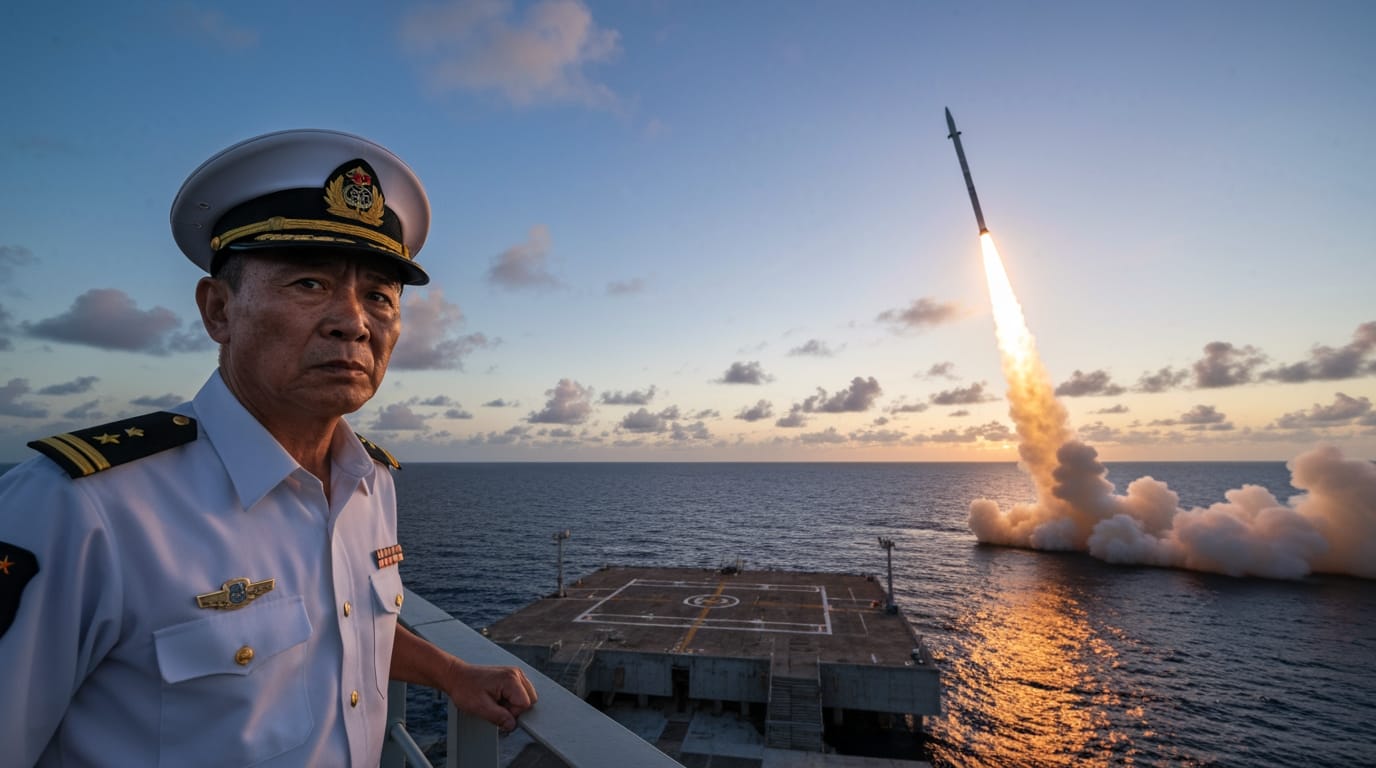
WELLINGTON, New Zealand – China's military has conducted a long-range ballistic missile test in the South Pacific, launching a projectile from a nuclear-powered submarine that landed in international waters, according to official Chinese state media. The test, which took place Monday at 12:01 p.m. local time, drew swift condemnation and "deep concern" from regional powers, including Australia, New Zealand, and Japan, highlighting escalating geopolitical tensions in a strategically vital area.
The People's Liberation Army Navy (PLAN) deployed a strategic missile equipped with a dummy warhead into "designated waters" of the Pacific, Xinhua reported, asserting the exercise was a "routine arrangement" of annual military training and adhered to international law. However, the precise location of the impact was not disclosed by Beijing, though New Zealand officials noted the missile landed within the South Pacific Nuclear Free Zone. The timing of the test, coming just hours after Australia and Fiji signed a significant defense agreement, has fueled speculation that China's action served as a calculated display of military might and strategic messaging to the region.
Test Details and Immediate Fallout
The submarine-launched ballistic missile (SLBM) test, utilizing a dummy warhead, was characterized by Chinese authorities as compliant with international practices and not aimed at any specific nation. While China provided advance notification to "relevant countries," including Australia, New Zealand, and Japan, hours before the launch, this transparency did little to assuage regional anxieties. The nature of the missile involved, though not explicitly identified by China, likely falls within the capabilities of its intermediate-range ballistic missile arsenal, such as the DF-26, known for its dual conventional and nuclear warhead capacity and a range of 3,000 to 4,000 kilometers. The DF-26, often referred to as the "Guam Express" or "Guam Killer," is capable of reaching key U.S. military installations in the Western Pacific.
Reactions from across the South Pacific and beyond were immediate and critical. Australian Foreign Minister Penny Wong described the missile test as "destabilizing to the region," underscoring Australia's growing concerns over China's rapid military build-up and a perceived lack of transparency regarding Beijing's strategic intentions. New Zealand Foreign Minister Winston Peters echoed these sentiments, labeling the development "deeply concerning" and "unwelcome." Peters emphasized that Pacific nations collectively desire their region to remain an "Ocean of Peace" and have no interest in it being used as a testing ground for missile capabilities. Japan also lodged "serious concerns" over China's increasing military activities and requested that Beijing reconsider such tests, especially those that could pose threats to Japanese airspace.
Geopolitical Chessboard: Timing and Intent
The timing of China's missile launch has drawn particular scrutiny from international observers. It occurred on the same day Australia and Fiji formalized a significant new mutual defense treaty, a pact widely seen as a collaborative effort to strengthen regional security ties and counter China's burgeoning influence in the Pacific. Some defense analysts have suggested the missile test was a deliberate strategic message, intended to demonstrate China's willingness to project military force and potentially intimidate smaller Pacific island states from forging closer security relationships with Western powers like Australia.
This incident adds to a pattern of increasing Chinese military assertiveness in the Indo-Pacific region. Beijing's military modernization efforts have seen substantial investment in advanced missile systems, naval expansion, and nuclear deterrence capabilities, allowing it to project strategic power well beyond its immediate coastal zones. Previous Chinese intercontinental ballistic missile tests in the Pacific, notably in 2024 and as far back as 1980, underscore a long-term trajectory of expanding operational reach. The latest launch reinforces China's declared intent to operate as a global military power capable of projecting force across vast oceanic distances.
China's Expanding Reach and Regional Stability
The South Pacific, historically a region of relative tranquility, has increasingly become a focal point for geopolitical competition. China's growing economic and military engagement, often presented as development and infrastructure initiatives, is viewed by many as a deeper strategic play to reshape the regional balance of power. This shift challenges the long-standing security dominance of nations like the United States and its allies. China's military activities, including increased naval deployments and exercises, extend beyond its immediate periphery into new areas such as Oceania. This expanding footprint has prompted countries in the region to bolster defense cooperation and military preparedness.
Pacific island nations, through forums like the Pacific Islands Forum, have articulated a clear vision for the region as an "Ocean of Peace," emphasizing their desire to avoid becoming a theater for external military competition. However, actions such as the recent missile test are perceived as directly conflicting with this objective, raising concerns that such demonstrations of military capability could destabilize regional harmony and normalize military activities that undermine peace.
International Law and the South Pacific Nuclear Free Zone
The missile test's location within the South Pacific Nuclear Free Zone has raised particular legal and diplomatic questions. This zone was established by the 1986 Treaty of Rarotonga, which prohibits nuclear weapons throughout the region. China ratified the protocols of this treaty in 1987, pledging not to test nuclear weapons within the zone or threaten their use against signatories. While China stated the missile carried a dummy warhead, the deployment of a "strategic missile" from a nuclear submarine in this sensitive area inevitably draws attention to Beijing's commitments.
Regarding the legality of missile tests in international waters, the United Nations Convention on the Law of the Sea (UNCLOS) upholds freedom of navigation on the high seas. China's notification of the test, framed as a routine exercise, aligns with its assertion of freedom of navigation. Generally, weapons testing in the "global commons" – comprising the high seas, international airspace, and even exclusive economic zones (EEZs) – does not inherently violate international law based solely on location. However, such activities must be conducted with "due regard" for the safety and rights of other states and users of these areas. Critics argue that while technically permissible, the scale and frequency of such tests, particularly in sensitive regions, challenge the spirit of cooperation and peace that underpins international maritime conduct.
Conclusion
China's recent long-range missile test in the South Pacific represents a significant moment in the evolving geopolitical landscape of the Indo-Pacific. While Beijing frames it as a routine military exercise conducted in accordance with international law, the action has been widely interpreted by regional powers as a provocative display of force and a strategic message. The test underscores China's accelerating military modernization and its growing capability and willingness to project power across vast distances. It also highlights the increasing competition for influence in the South Pacific, a region that seeks to maintain its status as an "Ocean of Peace" amidst mounting external military activities. As nations like Australia and New Zealand deepen their security alliances, the missile test serves as a stark reminder of the delicate balance of power and the imperative for continued diplomatic engagement to manage regional tensions and prevent further destabilization.# China's Long-Range Missile Test in South Pacific Fuels Regional Tensions
WELLINGTON, New Zealand – China’s military has conducted a long-range ballistic missile test in the South Pacific, launching a projectile from a nuclear-powered submarine into international waters. The test, carried out Monday at 12:01 p.m. local time (04:01 GMT), drew immediate and strong condemnation from key regional players, including Australia, New Zealand, and Japan, underscoring escalating geopolitical anxieties in a critical strategic area.
China's official state news agency, Xinhua, reported that the People's Liberation Army Navy (PLAN) launched a strategic missile carrying a dummy warhead into "designated waters" in the Pacific. Xinhua characterized the exercise as a "routine arrangement" of annual military training, asserting its compliance with international law and practice, and stating it was not directed at any specific country. Despite China providing prior notification to "relevant countries" hours before the launch, the precise impact location was not publicly disclosed by Beijing. However, New Zealand officials confirmed the missile landed within the South Pacific Nuclear Free Zone. The timing of the test, occurring mere hours after Australia and Fiji finalized a significant defense agreement, has intensified speculation that China's action was a calculated display of military might and strategic signaling to the region.
The Test and International Outcry
The submarine-launched ballistic missile (SLBM) test, involving a dummy warhead, was presented by Chinese authorities as a routine activity. While China's advance notification to Australia, New Zealand, and Japan aimed to demonstrate transparency, it largely failed to alleviate regional apprehension. Though China did not specify the missile type, capabilities align with its intermediate-range ballistic missile arsenal, such as the DF-26 (Dongfeng-26). The DF-26 is capable of carrying both conventional and nuclear warheads, boasts a range of 3,000 to 4,000 kilometers, and is often nicknamed the "Guam Express" or "Guam Killer" due to its ability to reach U.S. military bases in the Western Pacific, including Guam. Previous intercontinental ballistic missile (ICBM) tests by China into the Pacific occurred in 2024 and as far back as 1980.
The international reaction was swift and critical. Australian Foreign Minister Penny Wong described the missile test as "destabilizing to the region," expressing heightened concern over China's rapid military expansion and a perceived lack of transparency regarding Beijing's strategic intentions. New Zealand Foreign Minister Winston Peters labeled the development as "deeply concerning" and "unwelcome," reiterating that Pacific nations aspire for their region to remain an "Ocean of Peace" and object to its use as a testing ground for missile capabilities. Japan also voiced "serious concerns" over China's increasing military activities and urged Beijing to reconsider such tests, particularly those that could potentially threaten Japanese airspace.
Geopolitical Undercurrents and Strategic Messaging
The timing of China's missile launch has attracted significant attention from international observers. It coincided with the formalization of a new mutual defense treaty between Australia and Fiji, a pact broadly interpreted as a collaborative effort to bolster regional security and counteract China's expanding influence in the Pacific. Some defense analysts suggest that the missile test was a calculated strategic message, designed to showcase China's willingness to project military force and potentially deter smaller Pacific island states from strengthening security alliances with Western nations like Australia.
This incident contributes to a pattern of increasing Chinese military assertiveness across the Indo-Pacific region. Beijing's extensive military modernization program includes substantial investments in advanced missile systems, naval expansion, and nuclear deterrence capabilities, enabling it to project strategic power well beyond its immediate coastal waters. The latest launch reinforces China's stated ambition to operate as a global military power capable of deploying force across vast oceanic expanses. This growing military footprint in areas like Oceania and increased naval activity contribute to what Taiwan's intelligence chief recently described as an "upward trend" in Chinese naval deployments during peak exercise seasons.
China's Expanding Reach and Regional Stability
The South Pacific, historically a relatively peaceful area, has increasingly become a focal point for geopolitical competition. China's expanding economic and military engagement, often framed as development and infrastructure support, is viewed by many as a deeper strategic play to reconfigure the regional balance of power. This shift challenges the long-established security dominance of nations like the United States and its allies. China's burgeoning military activities, including enhanced naval deployments and exercises, are extending beyond its immediate periphery into new areas such as Oceania. This expanding presence has prompted countries in the region to reinforce defense cooperation and military readiness.
Pacific island nations, through platforms like the Pacific Islands Forum, have clearly articulated their vision for the region as an "Ocean of Peace," stressing their desire to avoid becoming a theater for external military competition. However, actions such as the recent missile test are perceived as directly conflicting with this objective, raising concerns that such demonstrations of military capability could destabilize regional harmony and normalize military activities that undermine peace and security.
International Law and the South Pacific Nuclear Free Zone
The missile test's trajectory through the South Pacific Nuclear Free Zone has raised specific legal and diplomatic questions. This zone was established by the 1986 Treaty of Rarotonga, which explicitly prohibits nuclear weapons throughout the region. China ratified the protocols of this treaty in 1987, committing not to test nuclear weapons within the zone or threaten their use against signatory states. While China stated the missile carried a dummy warhead, the deployment of a "strategic missile" from a nuclear submarine within this sensitive area inevitably draws scrutiny regarding Beijing's adherence to its commitments.
In the context of international law, the United Nations Convention on the Law of the Sea (UNCLOS) upholds freedom of navigation on the high seas. China's notification of the test, presented as a routine exercise, aligns with its assertion of freedom of navigation rights. Generally, weapons testing in the "global commons"—comprising the high seas, international airspace, and even exclusive economic zones (EEZs)—does not inherently violate international law based solely on location. However, such activities must be conducted with "due regard" for the safety and rights of other states and users of these areas. Critics argue that while technically permissible, the scale and increasing frequency of such tests, particularly in sensitive regions, challenge the spirit of cooperation and peace that underpins international maritime conduct.
Conclusion
China's recent long-range missile test in the South Pacific marks a significant development in the evolving geopolitical landscape of the Indo-Pacific. While Beijing characterizes it as a routine military exercise conducted in accordance with international law, the action has been widely interpreted by regional powers as a provocative display of force and a strategic message. The test underscores China's accelerating military modernization and its growing capability and willingness to project power across vast distances. It also highlights the increasing competition for influence in the South Pacific, a region that strives to maintain its status as an "Ocean of Peace" amidst mounting external military activities. As nations like Australia and New Zealand strengthen their security alliances, the missile test serves as a stark reminder of the delicate balance of power and the imperative for sustained diplomatic engagement to manage regional tensions and prevent further destabilization.


