Iran Gripped by Unprecedented Mourning as Millions Attend Funeral of Supreme Leader Ali Khamenei
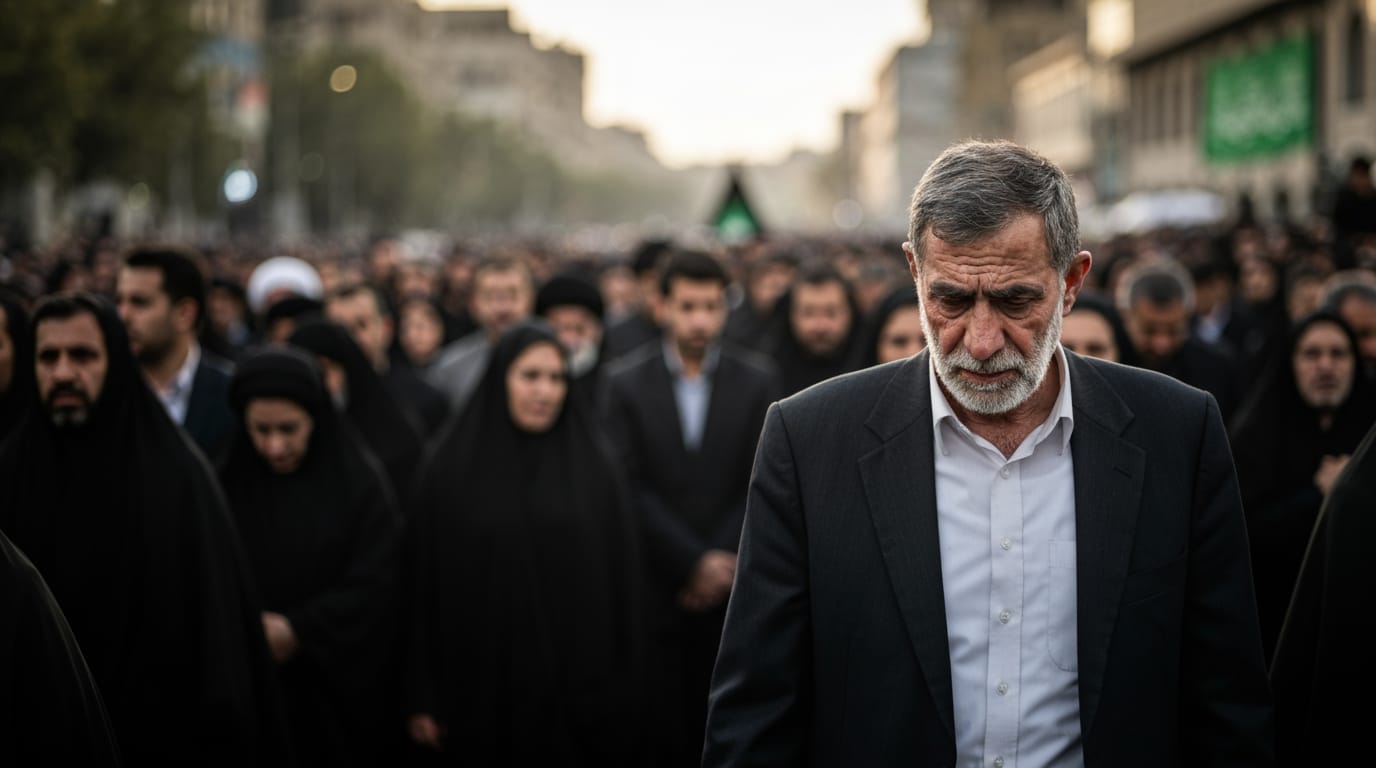
TEHRAN – In an extraordinary display of national mourning, millions of Iranians have converged on Tehran and other major cities this week to bid farewell to Ayatollah Ali Khamenei, the Supreme Leader who was killed in a joint US-Israeli airstrike on February 28, 2026. The multi-day funeral procession, a meticulously orchestrated series of ceremonies spanning Iran and parts of Iraq, aims to project an image of national unity and resilience following a period of intense conflict and the unexpected death of the country's long-serving leader.
The funeral, which began on July 3 and is set to conclude on July 9 with Khamenei's burial in Mashhad, was delayed for months due to ongoing military hostilities with the United States and Israel. The sheer scale of the turnout, with official estimates suggesting as many as 15 to 20 million participants, and some projections reaching up to 30 million, underscores the government's efforts to transform a national tragedy into a powerful statement of collective defiance and ideological commitment. This massive assembly dwarfs the estimated 10 million mourners at the 1989 funeral of Ayatollah Ruhollah Khomeini, the founder of the Islamic Republic, a comparison that highlights the intended political and social messaging behind the current events.
A Nation United in Grief and Defiance
The funeral ceremonies for the 86-year-old Supreme Leader have transformed Iran's urban landscapes into vast rivers of black-clad mourners. In Tehran, a central 6-mile (10-kilometer) procession route stretching from Imam Hossein Square to Azadi Square, a site historically significant for the 1979 revolution, has become the focal point of the public display of grief. Authorities have meticulously managed logistics, shutting down streets and airspace, and providing transportation, food, and lodging for pilgrims flocking from across the nation. The overwhelming participation, despite the summer heat and the complexities of coordinating such an immense crowd, is intended to showcase popular support for the Islamic Republic, portraying it as an enduring institution even after the loss of its paramount figure.
The atmosphere at the processions has been charged with deep emotion, punctuated by chants calling for "revenge" against the United States and Israel, whom Iranian officials accuse of orchestrating Khamenei's assassination. Mourners have been seen carrying flags emblazoned with slogans like "We will rise," alongside portraits of the late Supreme Leader, embodying a collective resolve. The display of solidarity is particularly striking given that only seven months prior, the country was grappling with widespread street protests that led to thousands of casualties. This orchestrated outpouring of grief, therefore, serves as a counter-narrative, aiming to rally public sentiment and shift blame for recent conflicts from the Iranian leadership to external adversaries.
Strategic Spectacle and Succession
The decision to hold a multi-city, multi-day funeral was a strategic move by the Iranian government, not merely a religious observance. Following two days of public farewell and prayer at Tehran's Grand Mosalla religious complex, the ceremonies are scheduled to move to the holy city of Qom. Commemorative processions are also planned in the Iraqi Shia holy cities of Najaf and Karbala, underscoring Iran's regional influence and its deep connections within the Shia world, before returning to Iran for the final burial in Mashhad. This elaborate itinerary extends the period of national mourning and continuously reinforces the image of widespread devotion.
A significant aspect of the ceremonies has been the conspicuous absence of Mojtaba Khamenei, the late leader's son, who was appointed as his successor on March 8, 2026. Despite appearing on posters across Tehran, the new Supreme Leader has not made any public appearances or statements, sparking speculation amidst reports of injuries sustained in the same attack that killed his father. His absence during such a pivotal national moment contrasts sharply with the public presence of other high-ranking political and military officials, including those who had been out of the public eye since the war began. The government's carefully managed narrative seeks to project continuity and stability, even as the new leadership remains largely out of public view.
Echoes of the Past, Eyes on the Future
The massive attendance at Ali Khamenei's funeral inevitably draws comparisons to the funeral of Ayatollah Ruhollah Khomeini in 1989. However, authorities have taken extensive measures to prevent a repeat of the chaos that marred Khomeini's burial, which saw crowd surges result in over ten deaths and thousands of injuries. The disciplined flow of mourners this week, though immense, reflects meticulous state planning and the deployment of a volunteer civic army to maintain order, a stark contrast to the previous event.
As the world watches the unfolding events, the funeral serves as a complex message from Iran to both its domestic audience and international observers. It is intended to be a powerful "referendum for the Islamic Republic," demonstrating its enduring popular legitimacy despite the turbulent circumstances of its leader's death and the ongoing regional conflicts. The Iranian government hopes these images of national unity and steadfastness will compel the international community, particularly Western powers, to reconsider their stance on Iran. The calls for revenge emanating from the crowds, coupled with the state's official rhetoric, signal a firm resolve to retaliate for Khamenei's assassination, even as US officials track threats against figures like former President Donald Trump and Israeli Prime Minister Benjamin Netanyahu. The week-long ceremonies are thus more than just a farewell; they are a calculated assertion of national identity and future intent in a deeply reshaped regional landscape.


