Philippine Senate Launches Historic Impeachment Trial Against Vice President Sara Duterte
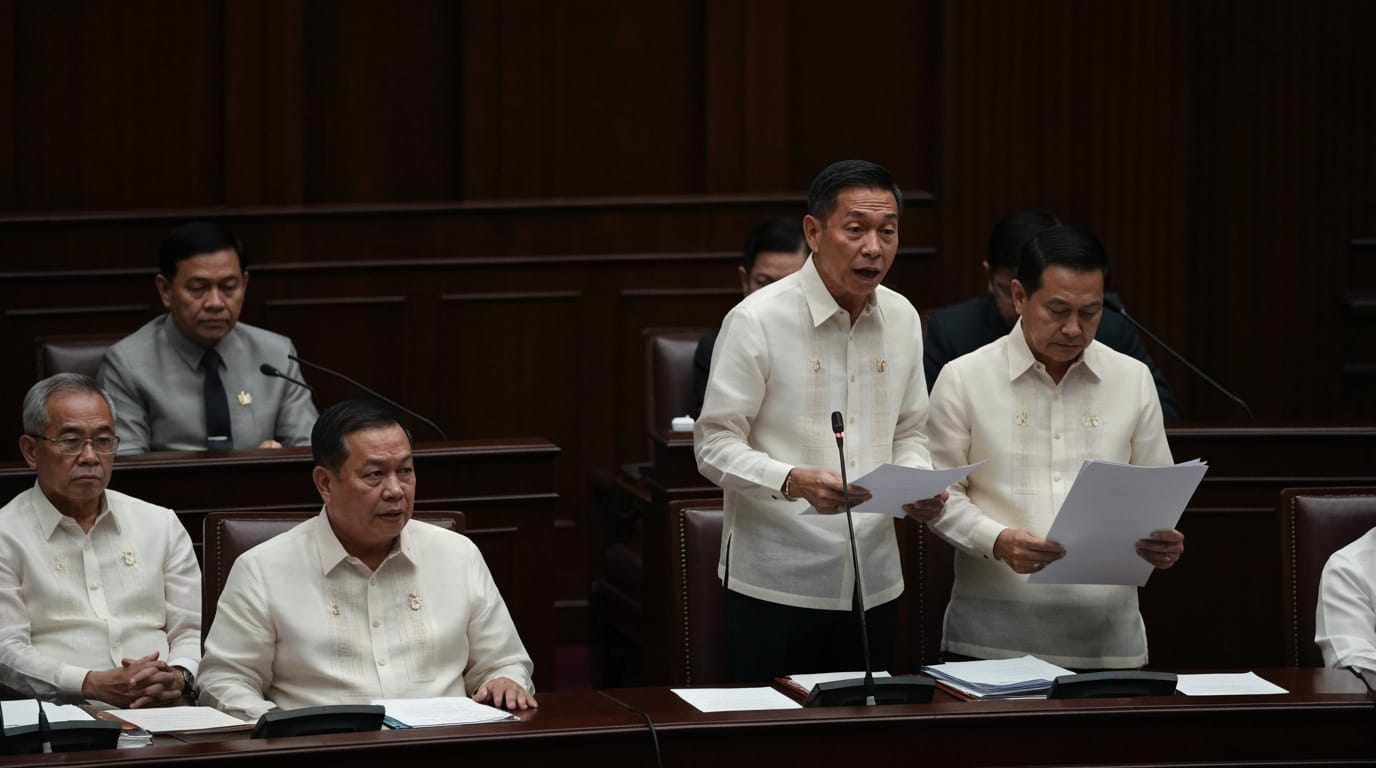
MANILA – In a politically charged atmosphere marking a deepening rift within the nation's leadership, the Philippine Senate officially commenced the impeachment trial of Vice President Sara Duterte on Monday, July 6, 2026. The unprecedented proceedings, unfolding amidst a heavy security presence and public demonstrations in Manila, are set to examine a litany of charges against the Vice President, ranging from alleged misuse of public funds to purported threats against top government officials. The trial's outcome holds profound implications for Duterte's political career, her anticipated 2028 presidential bid, and the stability of Philippine democracy.
Charges and a Deepening Political Divide
Vice President Sara Duterte, daughter of controversial former President Rodrigo Duterte, faces multiple articles of impeachment approved by the House of Representatives on May 11, 2026. The core accusations center on alleged misuse of confidential funds, bribery, amassing unexplained wealth, and grave threats against President Ferdinand Marcos Jr., First Lady Liza Marcos, and a former House speaker. Some complaints also cite her alleged role in extrajudicial killings during her father's administration and her stance on the West Philippine Sea dispute.
These proceedings emerge from an increasingly bitter political feud between Duterte and President Marcos Jr., despite their 2022 election victory on a unity ticket. This alliance, once seen as a formidable political force combining the Marcos name with the popular Duterte brand, has fractured publicly. Analysts suggest the impeachment trial is a direct manifestation of this widening chasm, which could reshape the country's political landscape in the lead-up to the next presidential elections.
This marks the second impeachment attempt against Duterte by the House of Representatives. An earlier set of complaints in 2025 led to her impeachment by the House, but the Supreme Court ultimately declared that effort unconstitutional on procedural grounds in July 2025, imposing a one-year bar on new impeachment complaints until February 6, 2026. Following the lifting of this bar, the House successfully impeached her again on May 11, 2026, with 257 votes, surpassing the required one-third threshold. This swift re-filing and approval underscore the determination of Duterte's political adversaries.
The Senate as an Impeachment Court
The Philippine Senate has now transformed into an impeachment court, tasked with hearing the evidence and ultimately deciding the Vice President's fate. The formal proceedings commenced with Senator Francis "Chiz" Escudero being elected as the presiding officer, following a constitutional debate and an 12-8 vote to replace Senate President Sherwin Gatchalian in that role. Senator Gatchalian, in opening the trial, emphasized the gravity of the senators' oath to deliver impartial justice in accordance with the Constitution and laws.
The process leading to today's trial has been meticulous. The Senate convened as an impeachment court on May 18, 2026, shortly after receiving the articles of impeachment from the House. A series of pre-trial conferences, extending over five working sessions from June 18 to 25, were conducted to evaluate and mark documentary evidence from both the prosecution and defense. This crucial organizational phase aimed to streamline the main trial by eliminating the need for evidence marking during the proceedings.
The prosecution panel, led by Batangas Representative Gerville Luistro, is expected to present its opening statement before calling witnesses and submitting documentary evidence for each article of impeachment. Following the prosecution's presentation, the Vice President's defense team, headed by lead counsel Sheila Sison, will present its own witnesses and evidence. Vice President Duterte was not present at the opening of the trial but was represented by her legal counsel.
For a conviction, a two-thirds majority of all members of the Senate is required. In the current 24-member Senate, this translates to at least 16 votes. The trial is anticipated to be lengthy, with a pre-trial plan outlining a duration of 92 days. Political observers recall the 2012 impeachment trial of a former Chief Justice, which spanned four months, as a potential indicator of the time frame for such complex proceedings.
High Stakes and Public Scrutiny
The impeachment trial of Vice President Duterte is not merely a legal battle but a political crucible, with immense ramifications for her future and the country. A guilty verdict would result in her removal from office and perpetual disqualification from holding any public office, effectively ending her political ambitions, including her strong standing as a frontrunner for the 2028 presidential elections. An acquittal, conversely, could significantly bolster her public image, especially if the process is perceived as fair and credible by the public.
The political volatility surrounding the trial was palpable on opening day. Over 6,000 police personnel, including anti-riot squads, were deployed to secure the Senate complex in Manila, where hundreds of anti-Duterte demonstrators converged, chanting calls for her conviction. The heightened security measures underscore the public's intense interest and the potential for civil unrest should the proceedings be seen as politically motivated rather than a pursuit of justice.
Adding another layer of complexity to the political landscape, Senator Jinggoy Estrada, an ally of the Duterte family, was arrested last month on a non-bailable plunder charge. On the very day the impeachment trial commenced, Senator Rodante Marcoleta was also arrested in connection with a graft case. While their legal issues are separate from Duterte's impeachment, their arrests highlight a turbulent political environment and could have indirect impacts on the composition and dynamics of the Senate as an impeachment court, particularly concerning the crucial votes needed for a conviction.
Public perception will be critical throughout the trial. Analysts emphasize that the legitimacy of the verdict will hinge on whether the public views the process as credible or merely a politically driven exercise. The transparency and fairness of the proceedings are paramount to maintaining confidence in the nation's institutions.
A Defining Moment for Philippine Governance
As the Philippine Senate embarks on this historic impeachment trial, the nation watches intently. The proceedings against Vice President Sara Duterte represent a defining moment for governance, accountability, and the future political trajectory of the Philippines. Beyond the immediate legal outcome, the trial will test the resilience of democratic institutions and shape the public's trust in its leaders. The weeks and months ahead promise to be a period of intense scrutiny and political maneuvering, ultimately determining not only the fate of the Vice President but potentially charting a new course for Philippine politics.