Hamas Dissolves Gaza Governing Body in Major Shift Towards Technocratic Rule
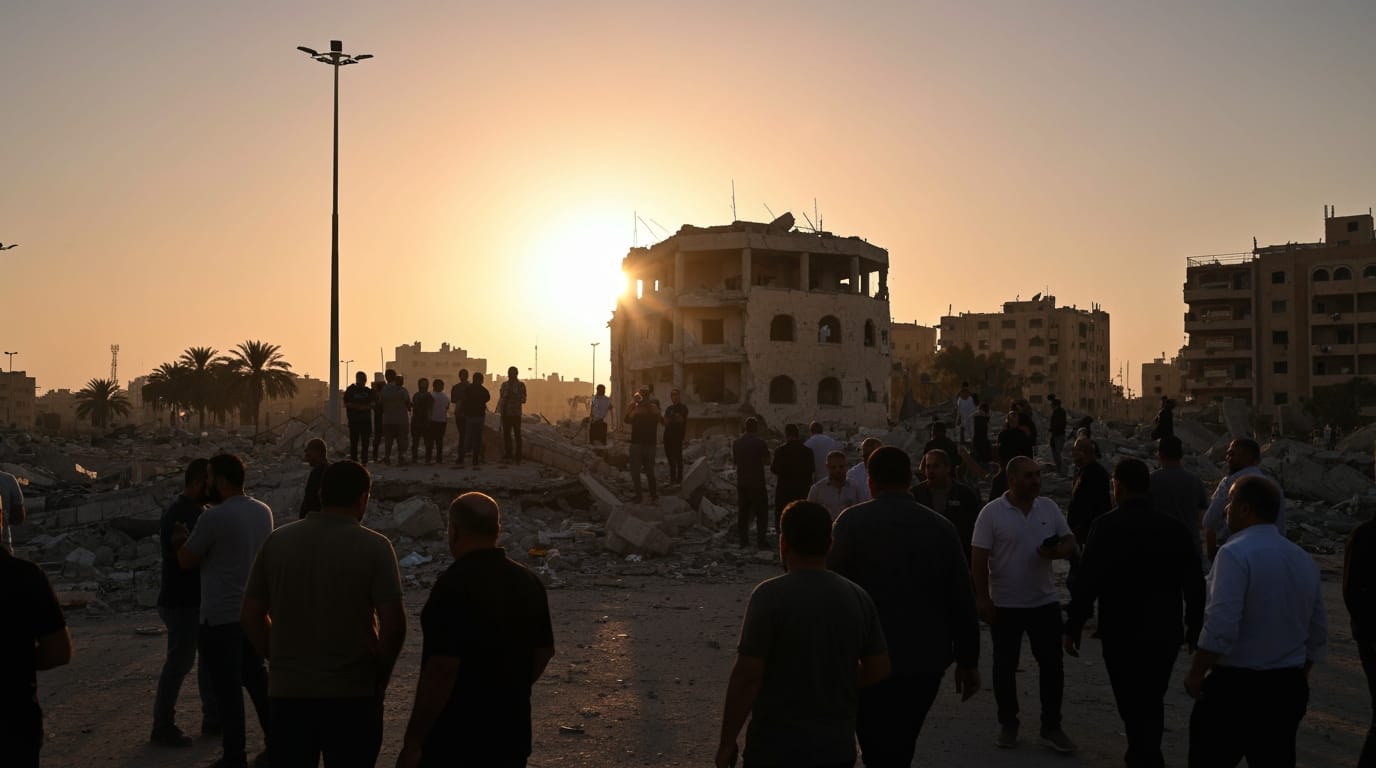
Gaza City, Gaza Strip – Hamas, the Islamist movement that has governed the Gaza Strip for nearly two decades, announced on Monday, July 6, 2026, its decision to dissolve the "Emergency Committee," the administrative body that effectively functioned as its government in the besieged territory. This significant political maneuver aims to clear the path for a Palestinian technocratic committee to assume civilian rule, marking a potential turning point in the long-stalled efforts for Palestinian unity and the administration of Gaza in the aftermath of a fragile ceasefire.
A Concession for Unity and Stability
The announcement, delivered by Hamas officials, signifies a substantial shift by the militant group, which seized control of Gaza from rival Palestinian movement Fatah in 2007. The move is specifically designed to enable the National Committee for the Administration of Gaza (NCAG), an internationally recognized technocratic body headed by Palestinian official Ali Shaath, to enter the Strip and assume administrative responsibilities. This development comes nine months after a ceasefire between Hamas and Israel took effect last October, brokered by US President Donald Trump and international mediators including Egypt, Qatar, and Turkey. While Hamas has previously expressed willingness to step aside from day-to-day governance, the dissolution of its governing committee represents the most concrete step yet towards implementing such a transition.
Hamas indicated that the resignation of the head of the Emergency Committee was the initial step in this dissolution process. The group further stated that "technical and professional staff" would remain in place to ensure the continuity of essential services for Gaza's civilian population. This assurance aims to prevent a governance vacuum and maintain stability during the transition period. All civil servants, according to Hamas, are prepared to continue their work under the NCAG's authority, highlighting an effort to streamline the handover of administrative power.
The Path to Reconciliation: A Decade-Long Divide
The decision to dissolve the Gaza governing body is deeply rooted in the complex political landscape of Palestinian internal divisions and the dire humanitarian situation in the Strip. Since Hamas's violent takeover in 2007, the Palestinian territories have been divided, with the Palestinian Authority (PA) led by Fatah governing parts of the West Bank, and Hamas ruling Gaza. This schism has severely hampered the Palestinian national cause and exacerbated the suffering of Gaza's two million residents, who face severe restrictions on movement, chronic unemployment, and a decaying infrastructure.
International pressure, coupled with the devastating impact of recurrent conflicts and a deepening humanitarian crisis, has consistently pushed for reconciliation between the rival factions. Egypt, in particular, has played a pivotal role in mediating numerous, often unsuccessful, unity talks. The current move by Hamas can be viewed as a direct response to these persistent calls for a unified Palestinian administration, a prerequisite for significant international reconstruction and development efforts in the war-torn enclave. The recent ceasefire agreement, which included provisions for long-term stability in Gaza, likely spurred Hamas to take this critical step, despite the unresolved issue of its disarmament.
Reactions and Remaining Hurdles
The announcement has been met with a cautious welcome from other Palestinian factions, who view it as a serious step towards enabling the NCAG to fulfill its governing role. However, the path to genuine unity and effective governance remains fraught with significant challenges. The NCAG, established by the Board of Peace under former US President Donald Trump during the ceasefire negotiations, has yet to enter the Gaza Strip. This delay is reportedly due to Israeli objections regarding its entry and, more broadly, the enduring issue of Hamas's refusal to disarm its military wing.
The dissolution of Hamas's administrative committee is largely considered a symbolic gesture by some analysts, intended to demonstrate the group's willingness to transfer authority without immediately ceding military control. The core challenges that have historically plagued reconciliation efforts—such as control over security forces, border crossings, the integration of civil servants, and the ultimate role of the Palestine Liberation Organization (PLO) as the sole legitimate representative of the Palestinian people—are still very much on the table. A new round of talks is anticipated in Cairo within the next two days, with the explicit goal of "narrowing the gaps" around the second stage of the ceasefire agreement. These discussions will be crucial in determining the practical implications and the true extent of this administrative transfer.
The Prospects for a Unified Future
The potential success of this transition holds immense implications for the future of Gaza and the broader Israeli-Palestinian conflict. A unified Palestinian administration, free from internal political strife, could significantly improve the delivery of humanitarian aid, facilitate economic recovery, and present a more cohesive voice in international negotiations. For the residents of Gaza, who have endured years of blockade and conflict, the prospect of stable, technocratic governance offers a glimmer of hope for improved living conditions and greater integration with the international community.
However, the road ahead is uncertain. While Hamas has taken a visible step towards administrative decentralization, the fundamental questions of power-sharing, security control, and the disarming of militant factions must still be addressed. The international community, led by the mediators of the ceasefire, will need to exert sustained pressure and provide robust support to ensure that this symbolic gesture translates into a lasting and effective change on the ground. The coming weeks, particularly the outcomes of the Cairo talks, will be critical in determining whether this significant announcement truly ushers in a new era of Palestinian reconciliation and stability for the long-suffering people of Gaza.