Australia and Vanuatu Ink Landmark Security Pact, Barring Foreign Military Bases

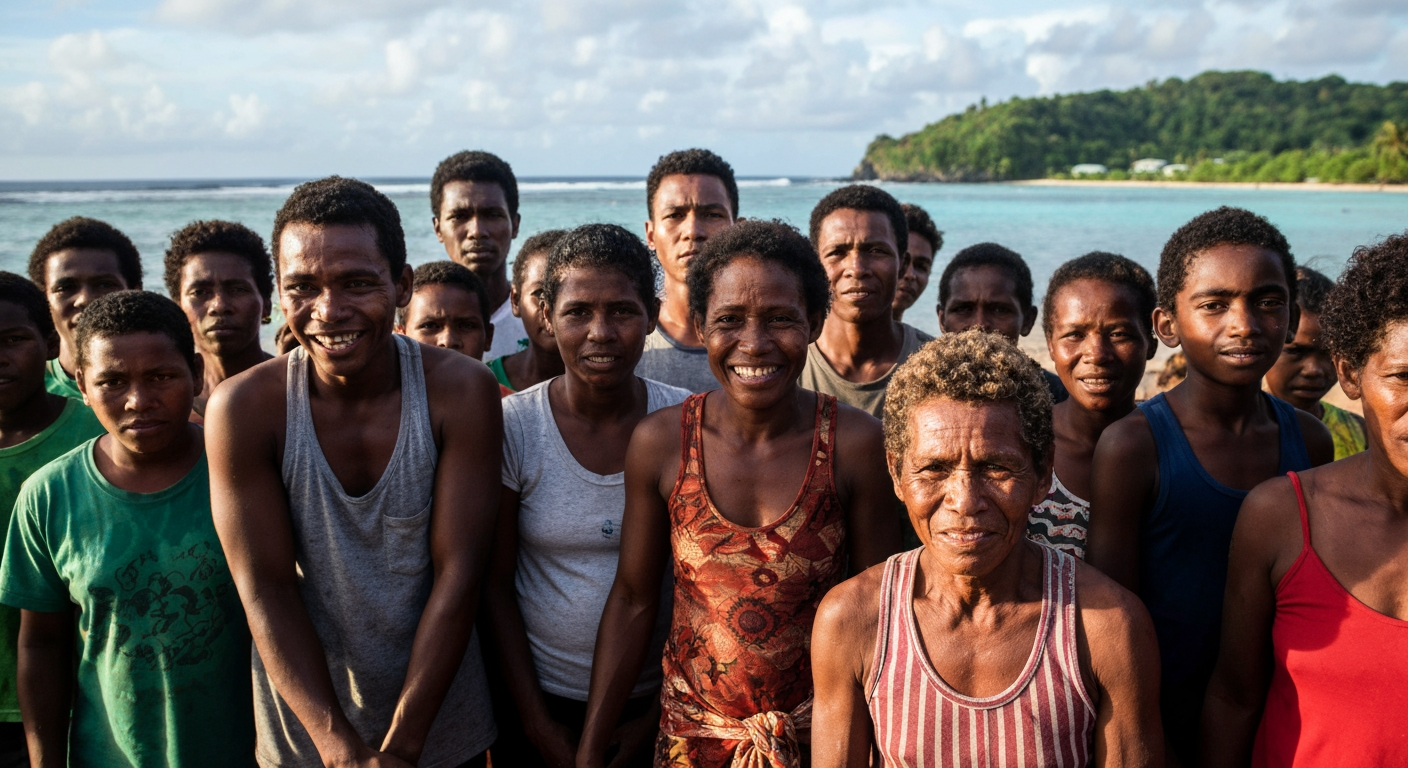
CANBERRA, Australia – Australia and Vanuatu have formalized a sweeping bilateral security and economic agreement, a pact that explicitly prohibits any foreign military base or infrastructure from being established on the island nation. Signed in Canberra on Monday, June 29, 2026, by Australian Prime Minister Anthony Albanese and his Vanuatu counterpart Jotham Napat, the "Nakamal Agreement" underscores a significant move to reinforce regional stability and address growing geopolitical competition in the South Pacific. The deal commits Australia to substantial economic support for Vanuatu, a nation increasingly central to the strategic interests of global powers.
A Firm Stance on Foreign Military Presence
The newly signed Bilateral Security Agreement unequivocally states that "Vanuatu shall not permit its territory to be used for any foreign military base or infrastructure." This provision marks a critical development, offering Australia a measure of certainty regarding Vanuatu's future security posture. Prime Minister Albanese emphasized this aspect, telling reporters that the agreement "provide[s] certainty for Australia that there will be no foreign military base" in Vanuatu. Vanuatu's Prime Minister Napat further clarified that the Nakamal Agreement commits his nation to rejecting the militarization of infrastructure, noting that an existing parliamentary act already prevents critical infrastructure from being used for military purposes.
Beyond the prohibition of foreign bases, the agreement outlines a broad spectrum of security cooperation. Australia is recognized as Vanuatu's "longstanding primary policing partner," with commitments to enhance assistance in police training, equipment, maritime security, cybersecurity, and intelligence cooperation. The pact also includes provisions for Australia to provide security assistance to Vanuatu upon written request, covering areas such as humanitarian aid and disaster relief, policing, law enforcement, border security, and defense. This comprehensive framework aims to deepen security ties and build resilience across various domains.
Geopolitical Currents in the South Pacific
The agreement arrives amidst intensified strategic rivalry in the South Pacific, with both Australia and the United States expressing concern over China's expanding influence in the region. Vanuatu, due to its strategic location, has become a focal point in this geopolitical dynamic. Australian concerns have been fueled by China's historical funding of significant infrastructure projects in Vanuatu, including a wharf in Luganville, once a major U.S. military base during World War II. This wharf, capable of berthing large vessels, has raised questions about its potential "dual-use" nature for both commercial and military purposes, despite assurances from both China and Vanuatu that it is not intended for military use.
China has long been a significant development partner for Vanuatu, serving as its largest external creditor and funding numerous infrastructure projects like the parliamentary building, presidential palace, roads, and a fishery processing plant. Moreover, China has established policing ties with Vanuatu, providing equipment such as drones, patrol boats, and vehicles, alongside training programs for local police forces. This extensive engagement highlights the complex web of relationships and influences at play in the Pacific.
Australia's "Pacific Step-Up" Strategy
This security agreement is a key component of Australia's broader "Pacific Step-up" strategy, an initiative launched in 2018 to significantly enhance its engagement with Pacific Island nations. The strategy aims to strengthen diplomatic, economic, and security cooperation to foster regional stability and proactively counter the growing presence of other global powers. The "Pacific Step-up" has involved substantial financial aid, including a record $1.4 billion in development assistance in 2019-2020, and significant infrastructure financing through facilities like the $2 billion Australian Infrastructure Financing Facility for the Pacific (AIFFP).
The deal commits Australia to $345 million in support for Vanuatu, specifically for developing critical infrastructure such as ports, digital networks, aviation, and energy facilities. Crucially, Vanuatu has agreed to ensure that such infrastructure remains free from "foreign interference" or militarization. This provision is seen as an effort to mitigate the risks associated with dual-use infrastructure and to ensure that development assistance aligns with regional security objectives. The Vanuatu agreement is the latest in a series of similar pacts Australia has pursued with Pacific nations, following concerns sparked by China's security agreement with the Solomon Islands in 2022.
Vanuatu's Sovereign Balancing Act
For Vanuatu, the agreement represents a continuation of its non-aligned foreign policy and its commitment to a rules-based global system. While Australia is recognized as its principal security partner, Vanuatu maintains relationships with a diverse array of international partners, including New Zealand, France, China, and the United States. The island nation has a long history of non-alignment, dating back to its independence in 1980. The government's primary concern remains bolstering its economy and ensuring national stability.
Prime Minister Napat underscored his country's commitment to sovereignty and the peaceful use of its infrastructure. The agreement also stipulates that while Vanuatu will consult with Australia on third-party engagement in critical infrastructure, it retains the autonomy to make its own decisions, without a proposed Australian veto power. This delicate balance allows Vanuatu to leverage diverse partnerships for its development needs while upholding its commitment to regional security and its own national interests.
The Nakamal Agreement reinforces the evolving security architecture of the Pacific. It highlights Australia's proactive efforts to cement its position as a primary security and economic partner in the region, particularly as geopolitical competition intensifies. For Vanuatu, the pact offers significant development aid and security assurances, while allowing it to reaffirm its sovereign right to control its territory and critical infrastructure, thus navigating the complex currents of international relations in a region of increasing strategic importance. The long-term implications of this agreement will undoubtedly shape the future of security cooperation and influence in the South Pacific.
Related Articles

South Africa Braces for Escalating Anti-Migrant Tensions as Protests Loom
South Africa Braces for Escalating Anti-Migrant Tensions as Protests Loom JOHANNESBURG – South Africa is on high alert as anti-migrant groups prepare for a series of nationwide protests, culminating in a looming...


Germany's Pension Overhaul: A Divisive Blueprint for Future Generations
Germany is grappling with a profound challenge to its social fabric as sweeping reforms to its public pension system ignite a fierce national debate, drawing both fervent praise for their forward-thinking approach and...


Curaçao's Impossible Dream Becomes Reality: A Small Island on Football's Grandest Stage
WILLEMSTAD, Curaçao – In an historic triumph that has captivated the footballing world, the small Caribbean island nation of Curaçao has secured its place in the upcoming World Cup, becoming the smallest country by...