Austrian Cow Challenges Perceptions of Bovine Intelligence with Groundbreaking Tool Use
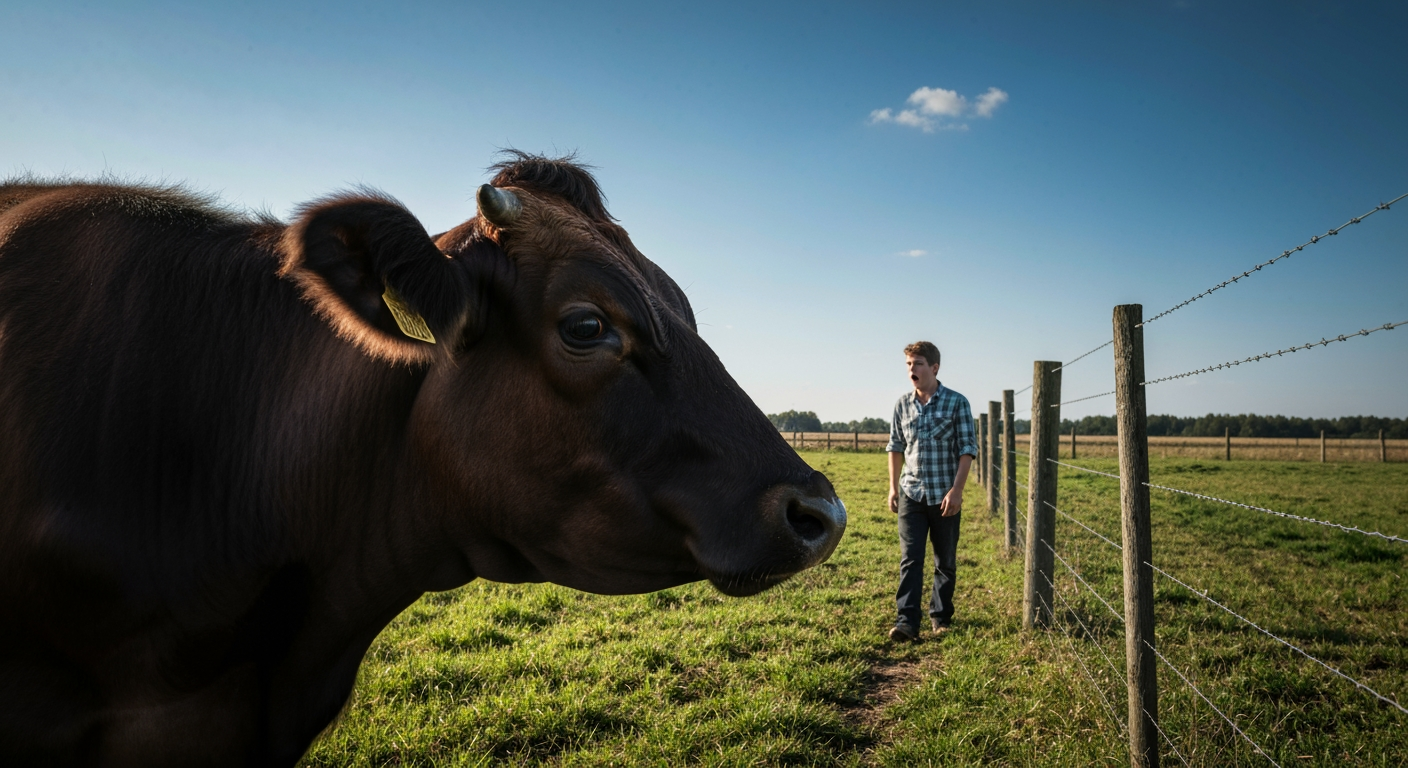
Nötsch im Gailtal, Austria – A pet cow named Veronika has recently stunned researchers and the scientific community by demonstrating a sophisticated ability to use tools, a behavior previously thought to be exclusive to a very limited number of species, including chimpanzees and humans. This remarkable discovery, detailed in a new study published in the Cell Press journal Current Biology, is prompting a significant re-evaluation of the cognitive capabilities of cattle and challenging long-held assumptions about livestock intelligence. The findings suggest that the common perception of cows as unintelligent animals may stem more from a lack of observation than from genuine cognitive limitations, opening new avenues for understanding animal cognition and welfare.
The Unveiling of Veronika's Ingenuity
The extraordinary behavior of Veronika, a Swiss Brown cow residing in Nötsch im Gailtal, Carinthia, Austria, first came to light through her owner, Witgar Wiegele, who observed her using sticks to scratch herself over a decade ago. This anecdotal evidence prompted scientists from the Research Institute for Human-Animal Interaction in Vienna, funded by the Swiss Messerli Foundation, to investigate further. Led by study leader Alice Auersperg and postdoctoral researcher Antonio Osuna-Mascaro, the team conducted controlled trials at Veronika's farm. What they witnessed quickly dispelled any initial skepticism.
During these trials, Veronika consistently showcased a unique form of multi-purpose tool use: employing a deck brush to scratch different areas of her body. Researchers observed her selecting the bristled end of the brush for firmer areas, such as her back, while skillfully manipulating the smoother handle for more sensitive regions like her udder or belly flaps. This differentiated approach, involving the precise manipulation of an object with her tongue and teeth to utilize its varied properties, is remarkably rare in the animal kingdom. Such sophisticated tool use, especially involving multiple parts of a single object, has only been convincingly documented in chimpanzees outside of human beings. The study recorded 76 instances of tool use across seven sessions, each comprising 10 trials, highlighting the consistency and dexterity of Veronika's actions.
Beyond the "Stupid Cow" Stereotype: A Look at Broader Bovine Intelligence
Veronika's actions underscore a growing body of evidence indicating that cattle possess a level of intelligence far exceeding popular belief. Researchers have long established that cows are capable of understanding cause-and-effect relationships, a key indicator of advanced cognitive abilities. For example, they can learn to activate a drinking fountain by pushing a lever when thirsty or release grain by pressing a button with their heads when hungry. Moreover, studies suggest that cows not only solve problems but also derive excitement and enjoyment from the intellectual challenge, akin to human responses to successful problem-solving.
Their cognitive prowess extends to impressive memory capabilities, allowing them to remember individuals and locations over extended periods. Cows also exhibit complex social structures, akin to wolf packs, with distinct social dynamics and hierarchies within their herds. Each animal can recognize at least 50 other members of their herd, and social relationships play a crucial role in their lives. They tend to choose leaders based on positive social skills, intelligence, inquisitiveness, self-confidence, and experience, rather than simply physical dominance. Furthermore, individual personalities are pronounced among cattle; some are quick learners, others are more timid, some are adventurous, and some are friendly or even devious. They form strong friendships and can even hold grudges, demonstrating a rich emotional and social landscape that challenges the simplistic "stupid cow" moniker. The particularly strong mother-calf bond, where mothers mourn and frantically search for their calves after separation, further illustrates their emotional depth.
Implications for Animal Welfare and Human Perception
The groundbreaking revelations about Veronika's tool use and the broader understanding of bovine intelligence carry significant implications for animal welfare, agricultural practices, and human-animal interactions. The fact that Veronika, at 13 years old, has lived in a stimulating environment may have contributed to the development of her skills, suggesting that environmental factors play a crucial role in expressing cognitive potential. Researchers emphasize that Veronika is likely not an anomaly, but rather a testament to the untapped cognitive potential of cattle that has been overlooked for millennia. This perspective calls into question traditional livestock management, particularly in conditions that restrict natural behaviors and social structures.
For instance, confined settings, such as crowded feedlots, disrupt the complex social hierarchies of cows, leading to increased stress and conflict. Recognizing their need for social interaction, problem-solving, and a stimulating environment could lead to more humane and sustainable farming practices. The study also prompts a deeper ethical consideration of how humans perceive and interact with animals widely considered "livestock." If cows are capable of such sophisticated behaviors and possess complex emotional and social lives, the industry might need to reassess standards of care to better accommodate their cognitive and emotional needs.
A New Chapter in Understanding Our Bovine Companions
The case of Veronika the tool-using cow marks a pivotal moment in our understanding of animal intelligence. It not only shatters the long-held misconception of cows as unintelligent creatures but also opens a new chapter in scientific inquiry into bovine cognition. The findings from the University of Veterinary Medicine, Vienna, emphasize that the observed intelligence in cattle might simply be a reflection of how little attention has been paid to their complex behaviors. As research continues to uncover the intricate mental lives of animals like Veronika, the call for a more nuanced and respectful approach to all species, including those traditionally viewed as commodities, grows louder. This paradigm shift encourages further investigation and a rethinking of our roles as stewards of the animal kingdom.
Related Articles


Skull Bone Marrow Reveals Hidden 'Immune Hubs,' Reshaping Brain Defense Paradigm
ST. LOUIS, MO – In a discovery poised to fundamentally alter our understanding of brain immunity, scientists at Washington University School of Medicine in St. Louis have identified previously unrecognized lymph...


Unpacking the Link: How Dietary Fats Influence Colorectal Cancer Risk
Colorectal cancer, a significant global health concern, is increasingly linked to modern dietary habits, with particular attention turning to the role of fatty foods. While the relationship is complex and nuanced,...