Bangladesh's Yunus Seeks Economic Support From China Amidst Shifting Geopolitical Landscape
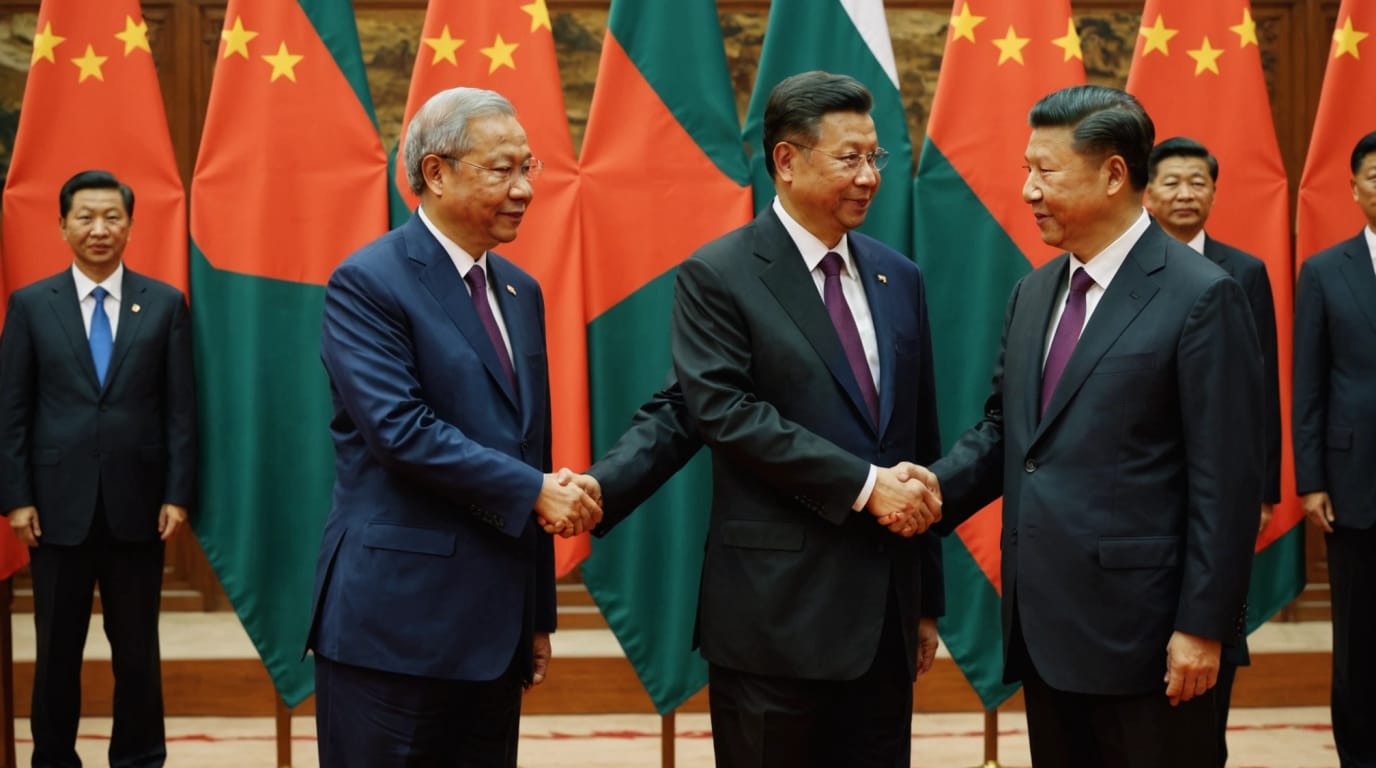
BEIJING - Bangladesh's Chief Adviser Muhammad Yunus met with Chinese President Xi Jinping on Friday, seeking to bolster economic ties and cooperation between the two nations amid a backdrop of evolving regional dynamics. The meeting, held in Beijing, marks a significant step in Bangladesh's foreign policy as the nation navigates its relationships with major global powers.
Calls for Reduced Interest Rates and Investment
During the meeting, Yunus urged China to reduce interest rates on Chinese loans to Bangladesh from 3% to a range of 1-2%. He also requested a waiver of commitment fees on Chinese-funded projects. These requests come as Bangladesh seeks to optimize its financial arrangements with its international partners and ensure the sustainability of its development projects. Yunus also met with Chinese Executive Vice Premier Ding Xuexiang on the sidelines of the Boao Forum for Asia Annual Conference, seeking support for various development projects. These projects include the relocation of Chinese manufacturing industries to Bangladesh, specifically in sectors like ready-made garments, electric vehicles, light machinery, high-tech electronics, chip manufacturing, and solar panel production.
Xi Jinping Pledges Deeper Cooperation
President Xi Jinping assured Yunus of China's commitment to deeper cooperation, stating that Beijing is ready to work with Bangladesh to elevate bilateral cooperation to a new level. Xi emphasized that China views Bangladesh as a trustworthy neighbor, friend, and partner, underscoring the importance of mutual trust in their relationship. He also affirmed China's support for Bangladesh's sovereignty, independence, and territorial integrity. The two leaders also discussed potential collaboration in infrastructure construction, water conservancy, and the digital, marine, and environmental sectors.
A Shift in Regional Relations
Yunus's visit to China occurs amidst strained relations between Bangladesh and India following the ouster of former Prime Minister Sheikh Hasina in August 2024. Hasina's removal led to a cooling of relations with India, which had been a strong supporter of her government. Yunus's decision to make China his first state visit highlights the changing dynamics in the region. Some analysts view this as a strategic move by Bangladesh to diversify its partnerships and reduce its reliance on any single nation.
50 Years of Diplomatic Ties
The meeting also served as an opportunity to commemorate the 50th anniversary of diplomatic relations between China and Bangladesh. Xi Jinping noted that 2025 is designated as the year of people-to-people exchanges between the two countries, expressing his desire to further strengthen these connections. Ding Xuexiang conveyed that China would provide full support to Bangladesh's government in investment, trade, cultural ties, and people-to-people exchanges as they celebrate this milestone.
Russia's Interest in Bangladesh
On the sidelines of the Boao Forum, Yunus also met with Russian Deputy Prime Minister Alexey Overchuk, who expressed Russia's interest in increasing exports of wheat and fertilizer to Bangladesh. They also discussed the progress of the Russia-funded Rooppur Nuclear Power Plant project. Furthermore, Yunus sought support from former UN Secretary-General Ban Ki-moon for a smooth transition to democracy in Bangladesh.
Conclusion
The meeting between Yunus and Xi Jinping signifies a pivotal moment in Bangladesh-China relations. As Bangladesh seeks to navigate a complex geopolitical landscape, strengthening ties with China offers new avenues for economic growth and development. The discussions on reducing interest rates, relocating industries, and enhancing cooperation across various sectors demonstrate a commitment to a deeper and more strategic partnership. The coming months will reveal the extent to which these discussions translate into tangible benefits for both nations.


