Banksy Unveils Poignant New London Mural as Year Draws to a Close
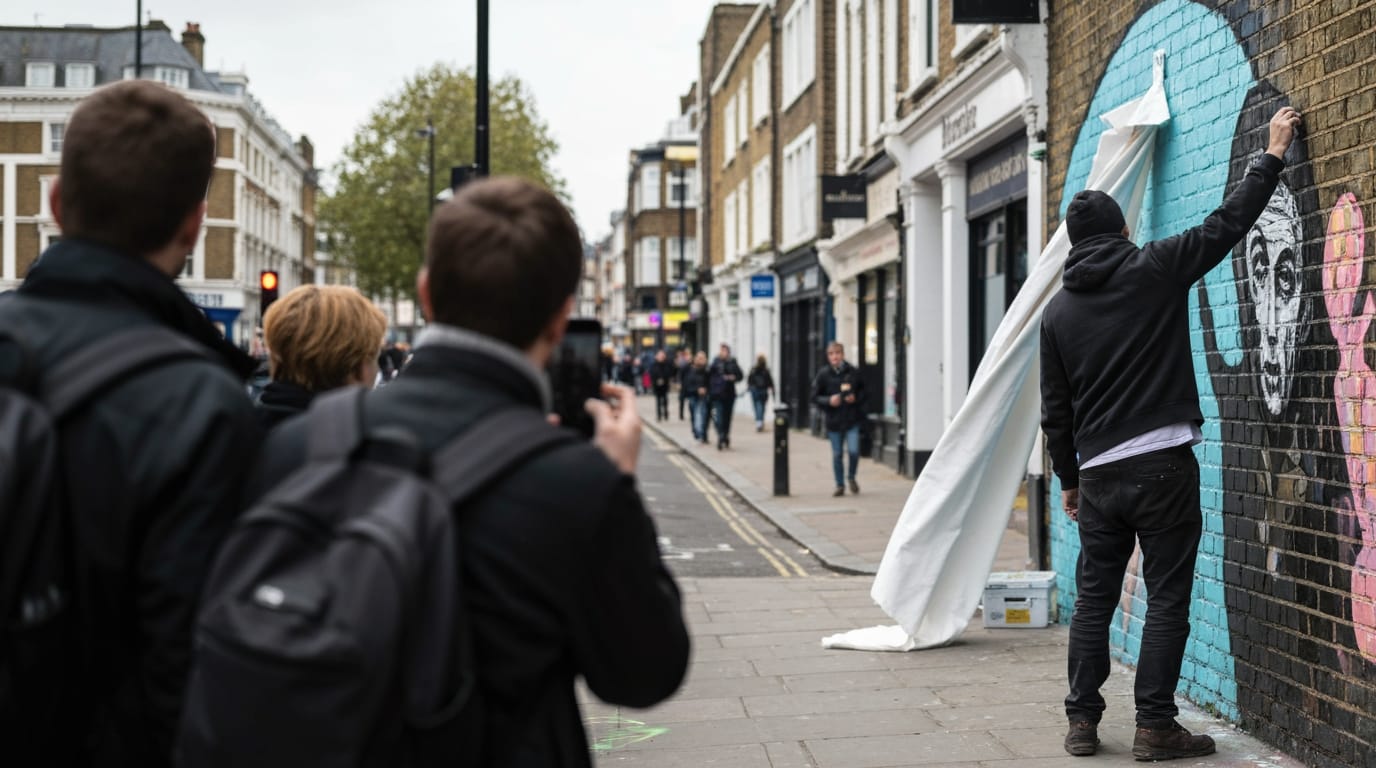
London’s streets have once again become a canvas for the elusive artist Banksy, who confirmed a new mural in West London on Monday, December 22, 2025. The artwork, depicting two children gazing skyward, emerged just days before Christmas, sparking immediate public fascination and widespread speculation about its deeper meaning. Appearing in two separate locations, the piece adds another layer to Banksy's ongoing commentary on societal issues, particularly at a time often associated with reflection and empathy.
The Stargazers of Bayswater
The confirmed mural, located on Queen's Mews in Bayswater, West London, features two figures in winter attire – coats, bobble hats, and wellington boots – lying on their backs, with one child pointing upwards towards the night sky. Banksy authenticated the Bayswater piece by sharing photographs of it on his official Instagram account, his customary method of claiming authorship. The understated, black-and-white stencil artwork, painted above a row of garages, offers a striking visual against the urban backdrop, drawing onlookers who have begun to gather and interpret its silent narrative.
A Mirror Image at Centre Point
Adding to the intrigue, an identical mural surfaced concurrently at the base of the prominent Centre Point tower in central London. While Banksy's representatives have yet to officially claim the Centre Point version, its striking similarity to the Bayswater piece has led many to attribute it to the renowned street artist. The dual appearance amplifies the artwork's impact and potential messaging. The Centre Point location, in particular, carries significant historical weight regarding homelessness in London. Built in the 1960s, the skyscraper notably stood vacant for over a decade, becoming a potent symbol of housing inequality. The homelessness charity Centrepoint even derived its name from the building, which its founder, Rev Ken Leech, once described as "an affront to the homeless." Today, the tower houses luxury apartments, creating a poignant contrast with the themes suggested by the mural.
Interpretations of Hope and Hardship
Initial interpretations of the "stargazing children" artwork frequently revolve around themes of child homelessness and the search for hope, especially resonant during the Christmas season. Artist Daniel Lloyd-Morgan remarked to the BBC that the artwork highlights the plight of children who are not experiencing a joyful Christmas, suggesting that the public often "walk past homeless people and they don't see them lying on the street." He added that the children's upward gaze could symbolize a search for something like the North Star, a beacon of hope. Banksy expert Jason Tomkins noted that the boy in the mural appears to be the same figure from Banksy's 2018 "Season's Greetings" artwork in Port Talbot, further suggesting a continued narrative or thematic thread within the artist's work. Beyond social commentary, some observers also view the piece as a reflection on the innocence and boundless imagination of children, capable of finding wonder even amidst harsh realities.
Banksy's Consistent London Presence
This latest installation concludes a year marked by significant Banksy activity across London. In September 2025, the artist unveiled a politically charged mural on the Royal Courts of Justice building. That piece depicted a bewigged judge striking a blood-splattered protester with a gavel, a clear commentary interpreted by many as a critique of the crackdown on protests by groups like Palestine Action. The Royal Courts of Justice mural was swiftly covered and subsequently removed by authorities, citing the historical significance and listed status of the building. Prior to that, in 2024, Banksy captivated the city with a series of animal-themed artworks, including goats, elephants, monkeys, and a rhino, appearing in various locations across the capital. These interventions underscore Banksy’s continued engagement with London’s urban landscape, using its walls to provoke thought and highlight pressing societal concerns.
The new "stargazing children" murals encapsulate Banksy's characteristic ability to blend artistic simplicity with profound social commentary. By placing such an evocative image in plain sight, particularly at locations with historical connections to hardship, the artist compels viewers to confront uncomfortable truths. As Londoners navigate the festive season, these silent figures serve as a potent reminder of the often-unseen struggles within the city, cementing Banksy’s role as an influential, albeit anonymous, chronicler of contemporary life.


