Bayreuth Festival Reinstates Holocaust Memorial Event After Widespread Outcry
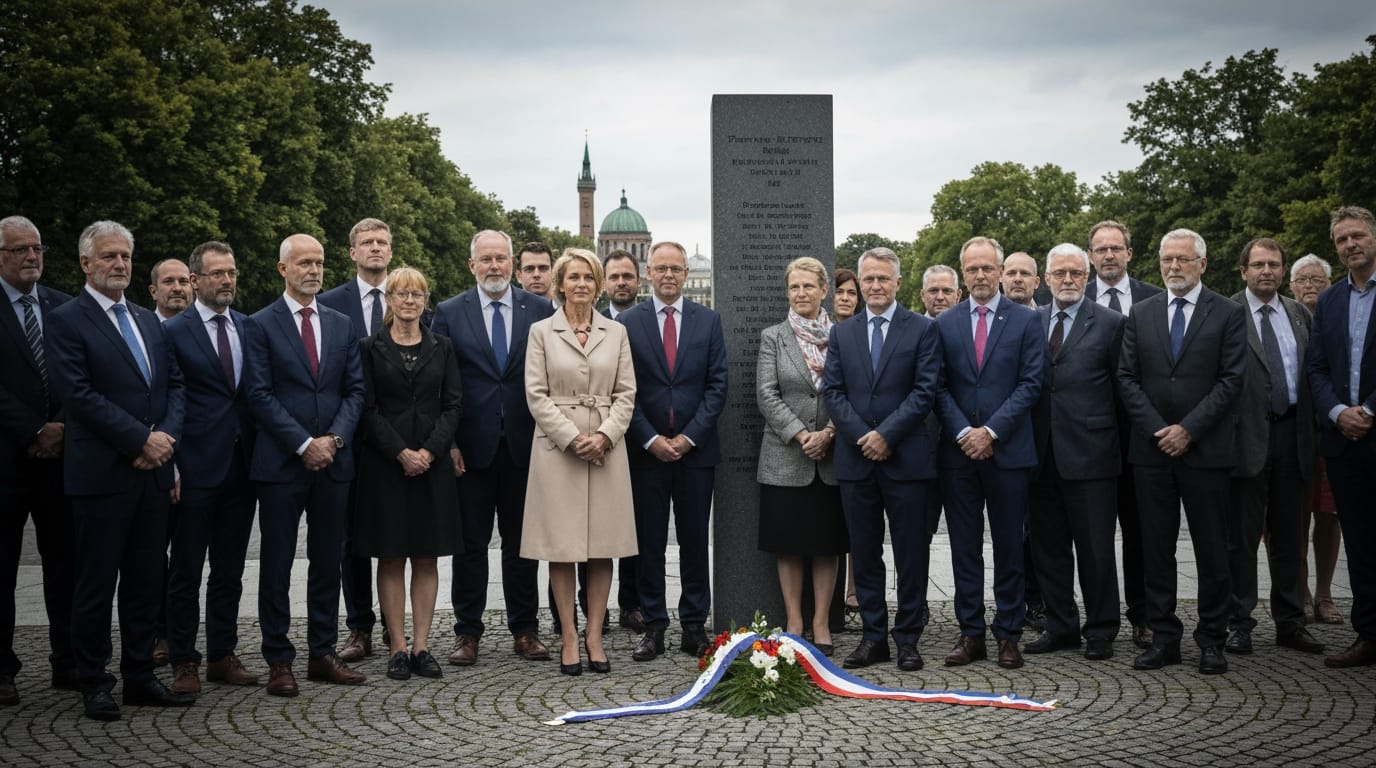
Bayreuth, Germany – The esteemed Bayreuth Festival, a global beacon for Wagnerian opera, has reversed an earlier decision to cancel a Holocaust memorial event, reinstating the program following significant public condemnation and accusations of downplaying its founder's antisemitic legacy. The "Silenced Voices" event, featuring prominent Jewish author and television presenter Michel Friedman, is now scheduled to proceed as planned on July 26, ahead of the festival's 150th-anniversary celebrations. This dramatic turnaround comes after festival director Katharina Wagner, great-granddaughter of composer Richard Wagner, issued an apology and personally re-extended the invitation to Friedman.
The controversy ignited when festival organizers initially announced the cancellation of the memorial event, citing "security concerns" and logistical challenges. The decision was met with immediate and fierce criticism from Jewish community leaders, political figures, and cultural commentators who viewed it as an alarming retreat from the festival's responsibility to confront its complex and often troubling past. The reinstatement underscores the persistent tension between celebrating artistic genius and acknowledging the dark historical shadows cast by figures like Richard Wagner.
Initial Cancellation Cites Security, Sparks Backlash
The "Silenced Voices" memorial concert was conceived as a critical component of the Bayreuth Festival's efforts to engage with the notorious antisemitism of its namesake, Richard Wagner. Scheduled for the morning of July 26, just hours before the official opening of the 150th-anniversary festival, the event aimed to provide a platform for reflection on Wagner's problematic views and their devastating historical impact. Michel Friedman, a respected publicist whose parents and grandmother survived Auschwitz with the help of Oskar Schindler, was slated to deliver a keynote address on Wagner, antisemitism, and historical memory. Friedman had accepted the invitation, stating his participation was intended "so that the Wagner family's history of antisemitism does not have the last word."
However, the festival abruptly announced its cancellation. Heinz-Dieter Sense, the interim managing director of the Bayreuth Festival, explained to Bavarian Broadcasting that the decision stemmed from the "impossible" task of managing the "highest security level" for two major events consecutively. Sense cited the short time frame between the morning memorial and the afternoon performance as a prohibitive factor, stating, "If no one can guarantee that it's feasible, then I can't hold the event." This explanation, however, failed to quell the growing chorus of criticism. Many found the security rationale unconvincing, especially given the established protocols for major public events. The city council of Bayreuth had also referenced "budget pressures" leading to cuts in other planned festival events, including a drone show and a street art project, though these were not directly linked to the memorial's cancellation.
Historical Baggage and Renewed Scrutiny
The cancellation immediately drew sharp condemnation, highlighting the persistent scrutiny faced by the Bayreuth Festival regarding its historical connections to antisemitism and the Nazi regime. Michel Friedman himself was among the most vocal critics, telling the Süddeutsche Zeitung that the cancellation "rendered absurd the seriousness of confronting the anti-Semite Wagner." He further asserted that "cancelling events for security reasons is suicide in a democracy," directly challenging the festival's stated justification. Charlotte Knobloch, a Holocaust survivor and former president of the Central Council of Jews in Germany, also voiced her dismay, emphasizing the vital importance of such commemorative events.
The historical context surrounding Richard Wagner and his festival is deeply entrenched in the darkest chapters of German history. Wagner, a 19th-century composer renowned for his operatic masterpieces, was also a virulent antisemite. His essay "Judaism in Music" (Das Judenthum in der Musik), published under a pseudonym in 1850 and later under his own name, explicitly attacked Jewish composers and their alleged "Judaizing" influence on German art and culture. These writings contributed to the broader antisemitic currents in 19th-century Europe and, disturbingly, found a fervent admirer in Adolf Hitler. Hitler championed Wagner's music and ideology, making the Bayreuth Festival a cultural showcase for the Nazi regime during the Third Reich. The festival's location, the "Grüner Hügel" (Green Hill), became symbolically linked to this period, raising ongoing questions about how the festival adequately addresses this "historical baggage."
Critics argued that by canceling an event specifically designed to tackle this legacy, the festival risked appearing to silence uncomfortable truths rather than openly engaging with them. The perception was that, despite ongoing efforts, the festival was still struggling to fully reconcile its artistic mission with its profound historical responsibility. Concerns were raised that such a decision could embolden those who wish to downplay or ignore the historical realities of Wagner's antisemitism and its devastating consequences. For many, the incident served as a stark reminder of the continuous need for vigilance and proactive education against hatred and prejudice.
Festival Leadership Reverses Course, Issues Apology
In the face of mounting national and international criticism, the Bayreuth Festival's leadership moved swiftly to reverse the controversial decision. Katharina Wagner, who has headed the festival since 2008 and is the great-granddaughter of the composer, publicly apologized for the cancellation. "I am truly very sorry," she stated, acknowledging the gravity of the situation and the negative perception it had generated.
Following her apology, Wagner personally reached out to Michel Friedman, re-inviting him to deliver his planned address. Friedman accepted the invitation, signaling a willingness to move past the initial misstep and fulfill the original intent of the memorial. Bavaria's antisemitism commissioner, Ludwig Spaenle, also played a role in mediating a solution, working with festival organizers to ensure the event could proceed safely and effectively. The festival announced that the "Silenced Voices" event would indeed take place on the morning of July 26, prior to the premiere of Wagner's opera 'Rienzi'. This swift reversal was seen by many as a crucial step in reaffirming the festival's commitment to historical remembrance and an open discussion of its founder's legacy. It demonstrated a responsiveness to public opinion and a recognition of the profound importance of addressing such sensitive topics, particularly in Germany, where the memory of the Holocaust holds immense significance.
The Path Forward: Balancing Art and Accountability
The reinstatement of the "Silenced Voices" event marks a critical moment for the Bayreuth Festival. It underscores the ongoing imperative for cultural institutions to confront, rather than shy away from, difficult historical truths. The controversy served as a potent reminder that the legacy of Richard Wagner cannot be separated from his antisemitism, and that any celebration of his artistic achievements must be accompanied by a clear and unequivocal acknowledgment of his hateful ideologies. The festival's decision to reinstate the event, while prompted by public pressure, ultimately reinforces its stated dedication to engaging with its past.
Moving forward, the Bayreuth Festival faces the continuous challenge of balancing its role as a leading operatic institution with its historical accountability. The "Silenced Voices" event, with Michel Friedman's address, will now serve not only as a memorial but also as a symbol of the festival's renewed commitment to transparent dialogue. It highlights the importance of fostering an environment where uncomfortable questions can be asked and historical injustices remembered, ensuring that artistic celebration does not inadvertently overshadow the lessons of history. The global community will be watching to see how the festival continues to navigate this complex terrain, ensuring that the voices silenced by hate are never forgotten.