Comedy Titan Mel Brooks Poised to Mark a Century of Laughter
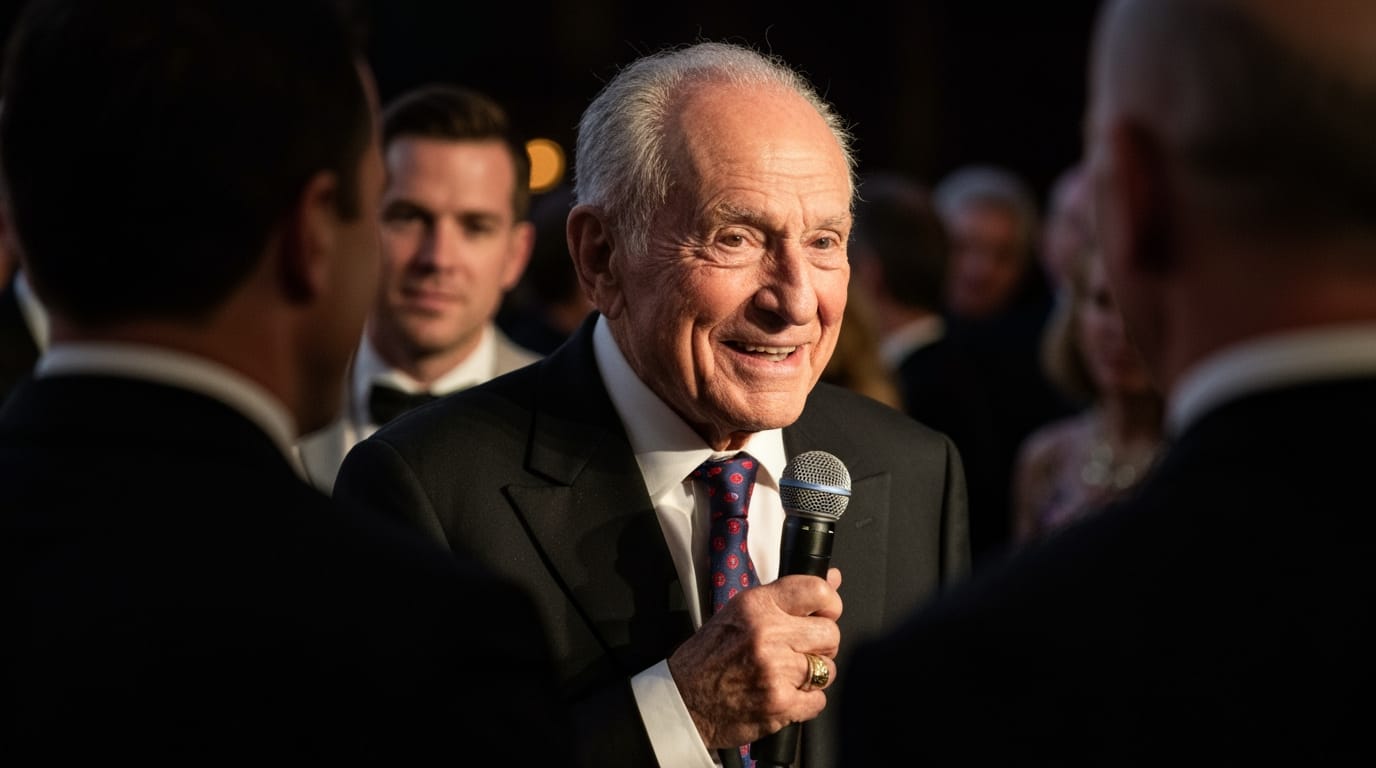
NEW YORK, NY — In an industry often defined by fleeting trends and rapidly changing tastes, one name has consistently delivered comedic genius for over seven decades. Melvin James Brooks, better known as Mel Brooks, will celebrate his 100th birthday on Sunday, June 28, 2026, a remarkable milestone for an artist whose indelible contributions have shaped the landscape of American humor. As the world prepares to fete the legendary filmmaker, actor, comedian, and songwriter, his enduring legacy of uproarious parodies and sharp social commentary continues to resonate with generations.
Brooks, born Melvin James Kaminsky on June 28, 1926, in Brooklyn, New York, rose from humble beginnings to become one of only 22 individuals to achieve EGOT status, winning an Emmy, Grammy, Oscar, and Tony Award. His career is a testament to the power of laughter as both entertainment and a potent tool for confronting societal absurdities. From the chaotic writers' room of early television to the grand stages of Broadway and the silver screen, Brooks' distinctive brand of humor, often characterized by its outrageousness and satirical edge, has consistently pushed boundaries and delighted audiences worldwide.
From Brooklyn to the Borscht Belt: Early Stirrings of a Comic Mind
Brooks' comedic journey began in the vibrant, working-class neighborhoods of Brooklyn. Born to Jewish immigrant parents, his early life was marked by the loss of his father at age two, an event he has often cited as a catalyst for his lifelong pursuit of laughter. After serving in the United States Army during World War II, where he was involved in the Battle of the Bulge, Brooks returned home and channeled his prodigious energy into entertainment. He started as a drummer and pianist in the Catskills resorts and nightclubs, where he first discovered his talent for comedy, occasionally filling in for ailing emcees with stand-up routines and impressions.
His professional breakthrough arrived in the early 1950s when he joined the writing staff of Sid Caesar's innovative variety show, "Your Show of Shows." This highly influential program became a crucible for comedic talent, where Brooks honed his craft alongside future luminaries such as Carl Reiner, Neil Simon, and Larry Gelbart. It was during this period that Brooks and Reiner developed their iconic "2000 Year Old Man" sketch, an improvisational routine that evolved into successful comedy albums and cemented Brooks' reputation as a master of wit and character. The sketch featured Reiner interviewing Brooks as an ancient, kvetching man, offering observations on everything from historical events to daily life.
A Directorial Vision: Parody as High Art
The late 1960s saw Brooks transition from television writing to filmmaking, a move that would ultimately define his public persona. His directorial debut, "The Producers" (1967), initially faced a slow reception but eventually achieved cult status and earned Brooks an Academy Award for Best Original Screenplay. This groundbreaking film, which satirized Nazi Germany through a deliberately offensive Broadway musical, established Brooks' audacious style: using humor to disarm and confront uncomfortable realities.
The 1970s marked a prolific period for Brooks, as he directed a string of highly successful and influential comedy films that cemented his place as a master of parody. "Blazing Saddles" (1974) unapologetically skewered the Western genre while boldly addressing racism and political corruption, becoming the second-highest-grossing film of 1974. Released in the same year, "Young Frankenstein" (1974), co-written with star Gene Wilder, was a loving homage and hilarious spoof of classic horror films, earning Academy Award nominations for its screenplay and sound. Other notable directorial efforts included "Silent Movie" (1976), in which Brooks also took his first leading role, and "High Anxiety" (1977), a parody of Alfred Hitchcock's thrillers. His films often featured ensemble casts and innovative techniques, such as breaking the fourth wall, directly engaging the audience in the comedic experience.
Broadway Triumphs and EGOT Laurels
Brooks' creative ambition extended beyond film into the world of musical theater. In 2001, he made a spectacular comeback with the Broadway adaptation of "The Producers," transforming his 1967 film into a musical sensation. The show was a monumental success, winning an unprecedented 12 Tony Awards, including Best Musical, Best Book of a Musical, and Best Original Score, with Brooks personally receiving three of these honors. This achievement officially earned him the coveted EGOT title, a rare distinction recognizing excellence across the major entertainment awards. He followed this success with a musical based on "Young Frankenstein" in 2007, further cementing his impact on live theater.
Throughout his career, Brooks has also been a recipient of numerous other prestigious accolades. These include a Kennedy Center Honor in 2009, a star on the Hollywood Walk of Fame in 2010, the AFI Life Achievement Award in 2013, and an Honorary Academy Award in 2024 for his lifetime contributions to comedy.
A Lasting Legacy of Laughter and Provocation
As Mel Brooks approaches his centennial, his influence on comedy and popular culture remains profound and far-reaching. His work is celebrated for elevating outrageousness and vulgarity to a high comic art form, while simultaneously using satire to dissect and challenge societal norms. Brooks' unique ability to blend slapstick, clever wordplay, and incisive social commentary has inspired generations of filmmakers and comedians, with many owing a debt to his distinctive comedic lens.
A recent documentary, "Mel Brooks: The 99-Year-Old Man!", directed by Judd Apatow, explored the humorist's life and career, revealing his candid reflections on his vast body of work and his knack for blurring the lines between performance and personal narrative. Despite his monumental accomplishments, Brooks has often maintained a grounded approach to his craft. He famously stated, "I was born to make people laugh. So, I do that."
This weekend, as tributes and celebrations unfold across the country—including a musical tribute in South Pasadena, California, and various film screenings—the world acknowledges a century lived in pursuit of laughter. Mel Brooks' career, spanning nearly the entire history of modern entertainment, from radio to film and Broadway, showcases an artist who not only witnessed cultural shifts but actively provoked them through his fearless and infectious humor. His work continues to serve as a reminder that sometimes, the most profound truths are best delivered with a punchline.