Bear Rampage in Fukushima Injures Four, Highlights Growing Wildlife Conflict Across Japan
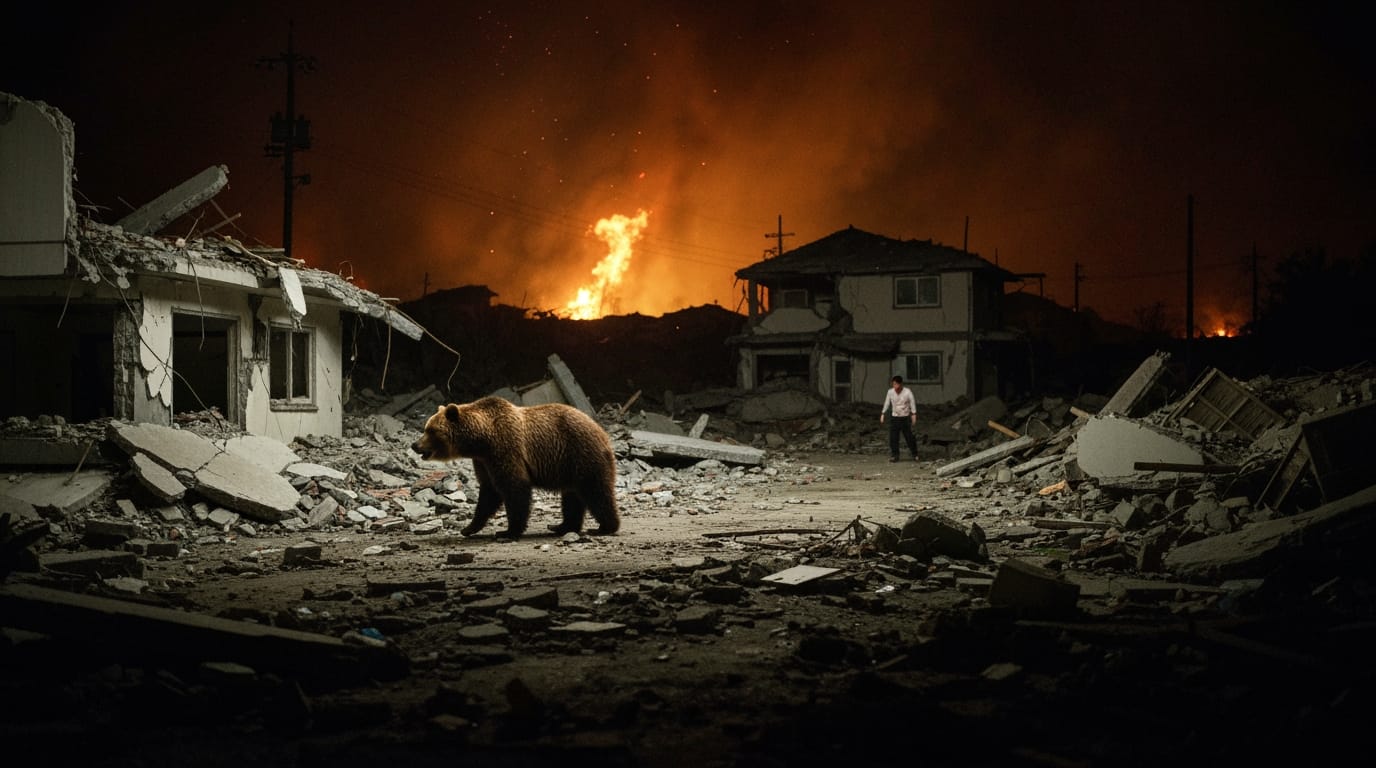
Fukushima City, Japan – A bear rampage in Fukushima's Sasakino district on Tuesday left four individuals injured, underscoring a mounting national crisis as wild bears increasingly venture into populated areas across Japan. The attacks, which began at a factory and extended into a residential neighborhood, prompted immediate school closures and a large police response to contain the animal. This incident adds to a disturbing trend of escalating human-bear encounters that have seen record numbers of attacks and fatalities in recent years.
The chaotic sequence of events unfolded around 6:30 a.m. when authorities received an emergency call from Fukushima Steel Works, a local factory, reporting that employees had been attacked. Security camera footage captured a black bear appearing near the factory entrance, chasing a man in his 20s and throwing him to the ground. The bear then moved further into the facility, injuring a second male employee, reportedly in his 60s. As the rampage continued, the bear subsequently attacked a woman in her 80s in a nearby residential area and a man in his 60s at an electronic equipment manufacturer. While one victim sustained moderate injuries, the others suffered minor wounds, and all were reported to be conscious with non-life-threatening conditions.
In response to the sudden and dangerous intrusion, police and fire department officials quickly mobilized. By Tuesday afternoon, the bear had not been captured and was believed to be contained within a company compound, which was subsequently surrounded by uniformed police officers equipped with long sticks. As a precautionary measure, two nearby schools, including Noda Elementary School, suspended in-person classes, transitioning to online learning and advising residents to avoid non-essential outings. Authorities are actively considering declaring an emergency, which would grant permission for the animal to be shot. Reports of bear sightings in the area had been circulating since Monday evening, signaling the potential for such an incident.
The Fukushima attacks are not an isolated event but rather a stark illustration of a national wildlife management challenge. Japan has witnessed a dramatic surge in bear sightings and attacks as the animals increasingly encroach upon human habitats. In 2025, the Environment Ministry reported a record 13 fatalities and over 230 injuries from bear attacks, surpassing all previous annual figures. The preceding fiscal year, ending in March, saw nationwide bear sightings soar to over 50,000, more than double the record set just two years prior. Even in April of the current year, one person was killed and five others were injured in separate bear-related incidents. Last year, the northern prefecture of Akita alone reported 60 bear attacks, resulting in four deaths, prompting the deployment of military personnel to assist in mitigation efforts.
Several interconnected factors contribute to this escalating conflict. Bears are emerging from hibernation particularly hungry, leading them to search for food in areas closer to human habitation. Habitat loss and food scarcity, often exacerbated by poor harvests of natural staples like acorns and beechnuts, potentially linked to climate change, drive bears into communities. Compounding this, the traditional "satoyama" or natural boundaries between forests and populated areas have become blurred due to decades of rural depopulation, effectively expanding bear territories. In Fukushima, specifically, the exclusion zone established after the 2011 nuclear disaster has created expansive, undisturbed areas where bear populations can thrive, contributing to their increased presence in northern Japan.
Furthermore, the demographic shift in Japan, characterized by a rapidly aging and declining rural population, means there are fewer people trained in hunting and wildlife management to control bear numbers effectively. The Japanese government estimated the bear population at around 57,800 in March, though the specific year for this estimate was not provided across all reports. Recognizing the severity of the situation, officials have adopted a roadmap for bear population management, which includes provisions for systematic culling. The growing threat has led to bears being sighted in highly unusual locations, including airport runways, golf courses, near schools, and even inside supermarkets and hot spring resorts, prompting the U.S. State Department to issue warnings to Americans in Japan last year.
The recent bear rampage in Fukushima serves as a grim reminder of the intensifying friction between human development and wildlife in Japan. The incident highlights the urgent need for comprehensive and sustained strategies to manage bear populations and ensure public safety. As experts continue to analyze the underlying causes, local communities face the immediate challenge of coexisting with a wild species increasingly pushed into their neighborhoods, necessitating robust responses from authorities and heightened vigilance from residents. The Tuesday attacks in Fukushima are a stark embodiment of a broader ecological and societal issue demanding attention at both local and national levels.