Poland's Top Court Rejects EU Same-Sex Marriage Recognition, Deepening Legal Divide
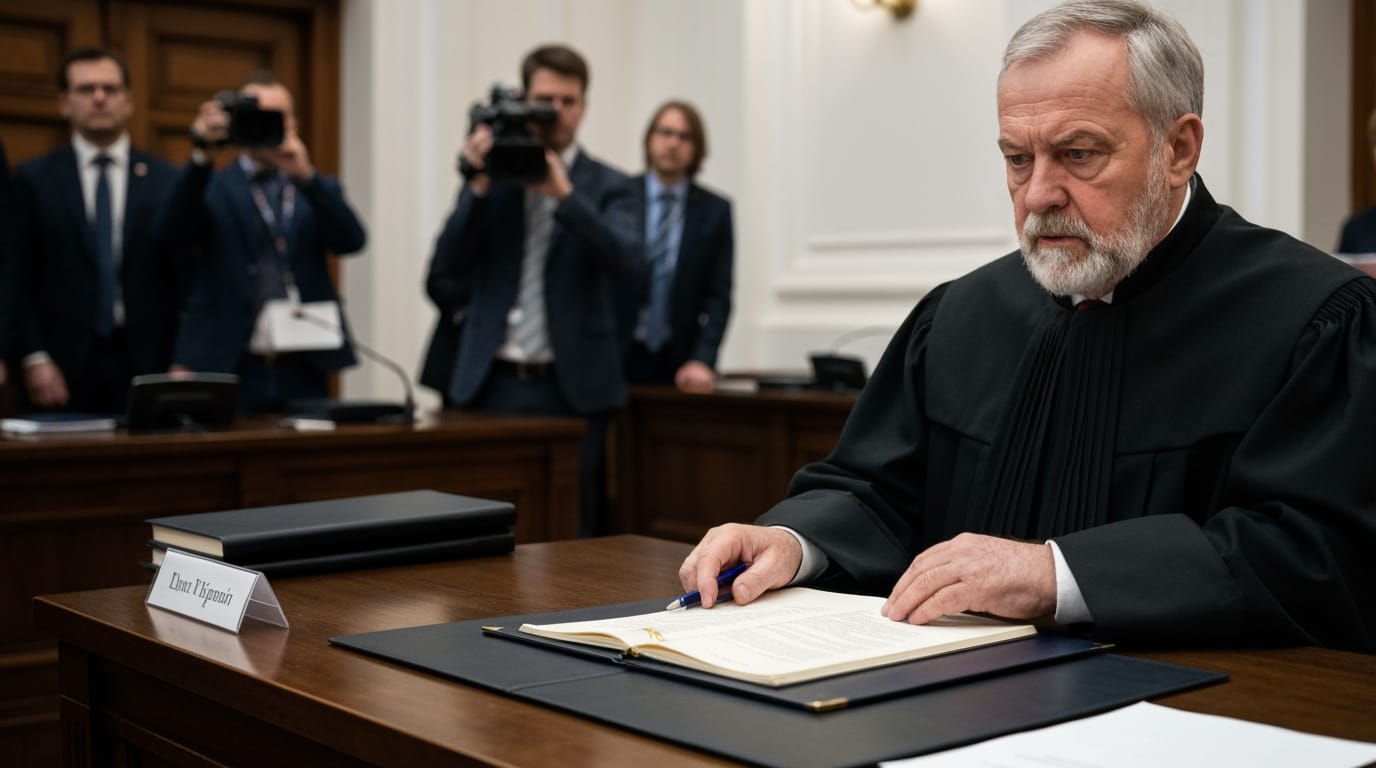
WARSAW, Poland – Poland's highest court has moved to block the recognition of same-sex marriages performed in other European Union member states, directly challenging the principle of EU law supremacy and isolating the nation further on LGBTQ+ rights. The decision by the Constitutional Tribunal, announced Tuesday, July 28, 2026, halts a recent government initiative aimed at easing administrative burdens for same-sex couples and contradicts earlier rulings by Poland's Supreme Administrative Court and the European Court of Justice. This latest development plunges thousands of Polish same-sex couples into renewed legal uncertainty and intensifies the long-standing conflict between national sovereignty and fundamental EU legal principles.
The ruling underscores Poland's persistent adherence to a conservative interpretation of marriage, which is constitutionally defined as a union between a man and a woman, despite increasing pressure from European institutions and evolving public opinion within the country. Critics argue the decision not only infringes upon the rights of its own citizens but also strains Poland's relationship with the broader European bloc.
The Controversial Tribunal Ruling
The Constitutional Tribunal's decision, presented by Judge Stanisław Piotrowicz, explicitly states that the transcription of foreign marriage certificates into Polish registers can only apply to unions that align with the constitutional principle of heterosexual marriage – meaning exclusively between a woman and a man. The Tribunal's move effectively voids, within its specified scope, a regulation issued by the digital affairs ministry on May 22, which was intended to allow local registry offices to record same-sex marriages contracted abroad by replacing gender-specific form fields.
This latest judicial pronouncement directly contradicts a landmark ruling by Poland's Supreme Administrative Court (SAC) from March 2026. The SAC had confirmed that same-sex marriages contracted in other EU member states must be recognized domestically for administrative and residency purposes, even ordering local civil registry offices to transcribe such certificates into the Polish system. Following this, the capital city of Warsaw had already begun registering same-sex marriages, with Mayor Rafał Trzaskowski announcing the city's intent to proactively recognize other such unions without waiting for specific court orders. The Constitutional Tribunal's ruling now casts a shadow over these progressive steps, creating a complex legal quagmire for couples and administrative bodies alike.
The challenge to the digital affairs ministry's regulation was brought by lawmakers from the opposition Law and Justice (PiS) party, represented by MP Marcin Warchoł. They argued that the minister had overstepped his authority by regulating a matter—the legal definition of spouses' sex—that should be governed by statute, suggesting that recognizing such unions would amount to amending the constitution itself. Judge Piotrowicz echoed this sentiment, stating that any change of this magnitude to the institution of marriage would necessitate amending Poland's supreme law and a systemic overhaul of existing legislation, including the family code and civil status records law.
Clash with European Legal Framework
The Constitutional Tribunal's ruling places Poland in direct opposition to numerous judgments from the European Court of Justice (ECJ) and the European Court of Human Rights (ECHR). In November 2025, the ECJ delivered a landmark decision in the case of Jakub Cupriak-Trojan and Mateusz Trojan, a Polish couple married in Berlin whose marriage was refused transcription in Poland. The ECJ ruled that all EU member states must recognize same-sex marriages lawfully concluded in another member state for the purposes of free movement and family life, even if their domestic legislation does not permit such unions. The court emphasized that refusing such recognition infringes upon the freedom to move and reside, as well as the fundamental right to respect for private and family life, potentially causing "serious inconvenience at administrative, professional and private levels". While the ECJ clarified that this does not compel member states to legalize same-sex marriage domestically, it prohibits discrimination against same-sex couples by not recognizing their marriages performed elsewhere in the EU.
Further reinforcing this stance, the ECHR has repeatedly condemned Poland for violating the human rights of same-sex couples by failing to provide a specific legal framework for the recognition and protection of their unions. A December 2023 ECHR ruling in the case of Przybyszewska and Others v Poland found that the government had breached Article 8 of the European Convention on Human Rights (right to respect for private and family life). The court rejected arguments that the traditional concept of marriage justified non-recognition, asserting that securing rights for same-sex couples does not inherently weaken the rights of heterosexual couples. These rulings underscore a widening legal chasm between Poland's highest court and European legal norms, raising questions about the country's commitment to its EU obligations.
Domestic Political Landscape and Human Impact
At the heart of Poland's resistance lies Article 18 of its 1997 Constitution, which states that "marriage as a union of a man and a woman… shall be placed under the protection and care of the Republic of Poland". This article is frequently interpreted by conservative elements, including President Karol Nawrocki, as an explicit ban on same-sex marriage. President Nawrocki, a staunch Catholic, has consistently opposed efforts to expand LGBTQ+ rights and recently vetoed two bills that would have allowed same-sex couples to enter into "cohabitation contracts," arguing they would undermine the special status of marriage.
Despite this conservative pushback, there have been efforts by the pro-European government led by Prime Minister Donald Tusk to address the issue. Tusk's administration has worked on legislation to regulate civil partnerships, including same-sex relationships, and the Prime Minister himself issued a public apology to same-sex couples for the "years of rejection and humiliation" they experienced from the Polish state. However, these efforts have faced strong internal resistance, including from conservative factions within his own coalition.
The immediate impact of the Constitutional Tribunal's ruling falls heavily on thousands of Polish same-sex couples who married abroad. Rights organizations estimate that 30,000-40,000 Polish citizens have entered into same-sex marriages in other countries. These couples now face a renewed "legal vacuum" where their relationships may not be formally recognized in their home country, leading to practical difficulties in areas such as inheritance, healthcare access, social benefits, and taxation. Without recognition, they are effectively forced to live as unmarried persons in their own country, facing administrative, professional, and private inconveniences.
Interestingly, public sentiment in Poland shows a growing disconnect from the hardline stance of some political figures. Polling data suggests that while support for same-sex marriage stands at around 31%, a significant majority of Poles, 62%, back some form of legal recognition for same-sex unions. This indicates a societal shift that the country's legal and political institutions are struggling to reconcile.
The Path Forward
The Constitutional Tribunal's ruling creates a significant legal paradox within Poland, pitting the country's highest court against both the Supreme Administrative Court and the highest European judicial bodies. This complex situation is likely to fuel continued legal challenges and activism from LGBTQ+ rights organizations, who have previously organized protests calling on the government to implement court rulings recognizing same-sex marriages from abroad.
The broader context of LGBTQ+ rights in Poland has been marked by controversy, including the establishment of "LGBT-free zones" in approximately 100 regions of the country between 2019 and 2020, intended to make queer people feel unwelcome. While the current government has shown some willingness to address these issues, the influence of conservative elements and the Catholic Church remains strong. The ongoing tension between traditional values and Poland's obligations as an EU member state will undoubtedly continue to shape the discourse around LGBTQ+ rights for the foreseeable future.
The Constitutional Tribunal's decision represents a significant setback for LGBTQ+ rights in Poland and deepens the country's legal and political isolation within the European Union. By rejecting the recognition of same-sex marriages performed abroad, the court has prioritized a strict interpretation of national constitutional law over the principles of free movement and non-discrimination enshrined in EU law. This ruling leaves thousands of Polish same-sex couples in a precarious legal position, denying them the full spectrum of rights and protections enjoyed by married heterosexual couples and by same-sex couples in many other EU states. The long-term implications for Poland's relationship with the EU, its judicial independence, and the fundamental rights of its citizens remain a critical area of concern.


