Beijing's Delicate Diplomatic Dance: Xi Engages Trump, Putin in Same-Day Calls Amid Global Tensions
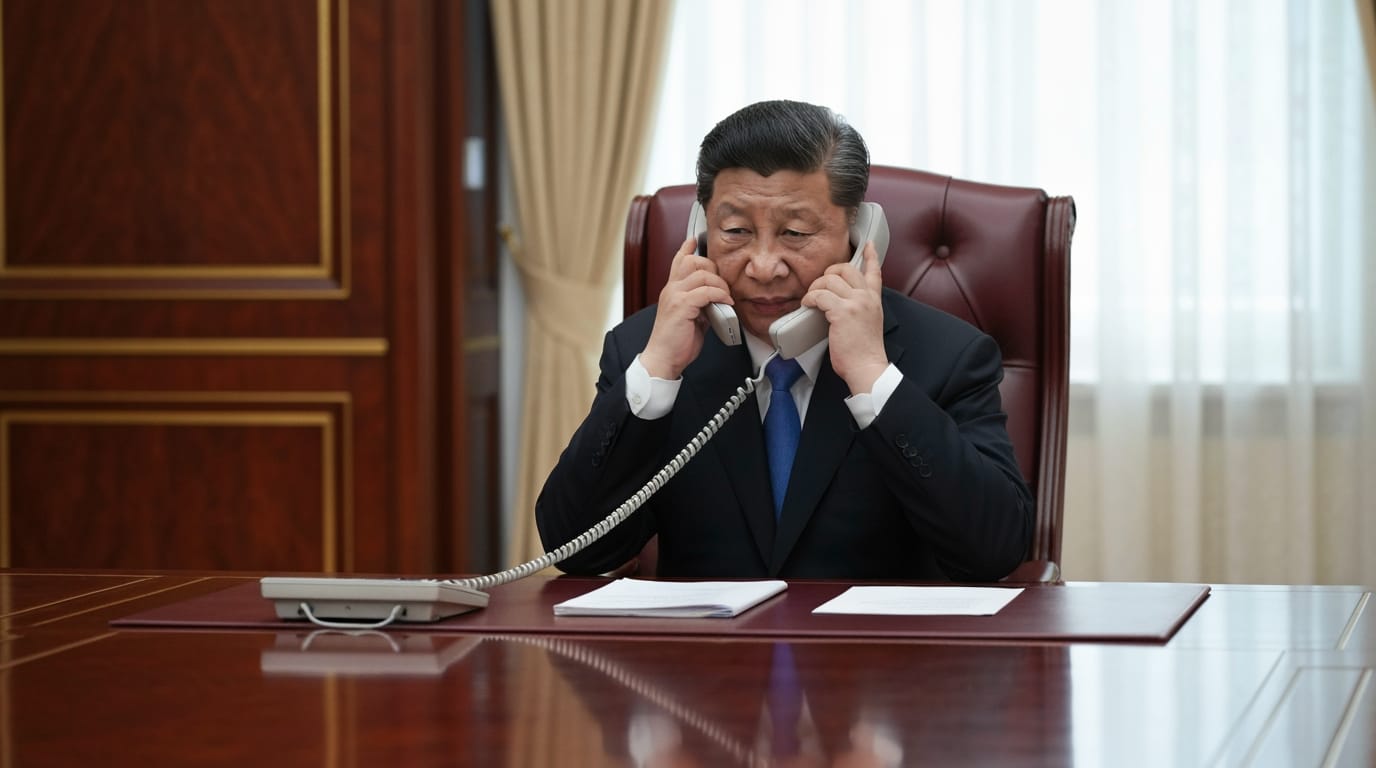
BEIJING – Chinese President Xi Jinping engaged in a high-stakes diplomatic maneuver on Wednesday, February 4, 2026, holding separate and extensive discussions with both U.S. President Donald Trump and Russian President Vladimir Putin within hours, underscoring Beijing's pivotal role in an increasingly volatile international landscape. The back-to-back engagements highlighted China's strategic balancing act as global power dynamics shift, with leaders from three of the world's most influential nations addressing a wide array of critical geopolitical and economic issues.
The unprecedented sequence of calls saw President Xi first convene a virtual meeting with President Putin, followed by a telephone conversation with President Trump, setting the stage for forthcoming high-level meetings and signaling China's intent to actively shape global discourse. This diplomatic convergence comes amid escalating tensions between Washington and Tehran, ongoing peace efforts in the Russia-Ukraine war, and the impending expiration of a crucial nuclear arms treaty between the United United States and Russia.
Solidifying the Sino-Russian Partnership
The virtual meeting between President Xi and President Putin, marking their first engagement of 2026, emphasized the robust and strategic partnership between China and Russia. According to state media, President Xi called for both nations to collaborate on a "grand plan" to further develop ties, noting that the international situation had grown "increasingly turbulent." President Putin reciprocated, describing the relationship as "exemplary" and an "important stabilizing factor" amidst global instability. Discussions reportedly focused on deepening strategic cooperation, maintaining global stability, and coordinating their positions on key international issues. Putin also accepted an invitation from Xi to visit China in the first half of 2026, further cementing their alliance. The leaders also exchanged views on their respective relations with the United States, with Kremlin aide Yuri Ushakov noting a near coincidence in their assessments. Both countries underscored their commitment to upholding the UN-centered international system and basic norms of international law.
The discussions also touched upon the Russia-Ukraine conflict, with Xi expressing support for the ongoing US-brokered peace talks in Abu Dhabi, an acknowledgment that suggests Beijing's desire to see a resolution to the nearly four-year conflict. This outreach from Beijing to both sides of the conflict highlights China's complex diplomatic posture.
Navigating U.S.-China Relations Amidst Trade and Security Concerns
Hours after his discussion with President Putin, President Xi spoke with U.S. President Trump. Trump characterized the call as "all very positive," emphasizing his "extremely good" personal relationship with President Xi and the importance of maintaining strong bilateral ties. The wide-ranging conversation covered crucial subjects including trade, military matters, the sensitive issue of Taiwan, the Russia-Ukraine war, and the situation in Iran.
A significant outcome reported by the U.S. side was China's agreement to increase its purchases of U.S.-produced soybeans and other agricultural products, a move that could help ease lingering trade tensions. Trump also expressed anticipation for his planned visit to China in April. However, China's readout of the call highlighted Beijing's firm stance on Taiwan, with Xi reiterating that "Taiwan will never be allowed to separate from China" and cautioning the U.S. to handle arms sales to the self-governing island "with prudence." This divergence on Taiwan underscores persistent friction points in the US-China relationship despite efforts to stabilize broader ties.
The call also coincided with a ministerial meeting convened by the Trump administration in Washington to discuss rebuilding global supply chains of critical minerals without relying on Beijing, further illustrating the multifaceted competition between the two economic giants.
A Multipolar World in Focus
The simultaneous high-level engagements underscore China's strategic approach to global leadership, positioning itself as a central player capable of maintaining dialogue with both rivals and partners. This diplomatic dexterity reflects Beijing's growing influence and its careful navigation of an increasingly multipolar international order. The timing of these calls is particularly noteworthy, occurring as the New START treaty, the last remaining nuclear arms control agreement between Russia and the United States, was set to expire. President Trump has previously indicated a desire to involve China in any new nuclear arms treaty, adding another layer of complexity to the trilateral dynamic.
China's parallel engagement with the U.S. and Russia also sends a clear message regarding its independent foreign policy, refusing to be drawn exclusively into either camp. This approach allows Beijing to pursue its national interests while promoting what it describes as global strategic stability. The confluence of discussions on trade, military issues, regional conflicts like Ukraine and Iran, and arms control highlights the intricate web of interdependencies and rivalries that define contemporary international relations.
Conclusion: Beijing's Balancing Act on the Global Stage
President Xi Jinping's unprecedented same-day dialogues with U.S. President Donald Trump and Russian President Vladimir Putin represent a significant diplomatic event, showcasing China's determined effort to assert its influence across divergent geopolitical fronts. While the calls outwardly projected a tone of constructive engagement and cooperation on various fronts, they simultaneously laid bare the persistent challenges and differing perspectives that continue to shape the relationships between these global powers. As the world grapples with ongoing conflicts, economic realignments, and shifting alliances, Beijing's ability to maintain lines of communication with both Washington and Moscow underscores its pivotal role in attempting to manage global turbulence and redefine the international order. The success of this delicate balancing act will undoubtedly have profound implications for global stability in the years to come.


