Benin Coup Attempt: A Critical Test for Nigeria's Regional Influence
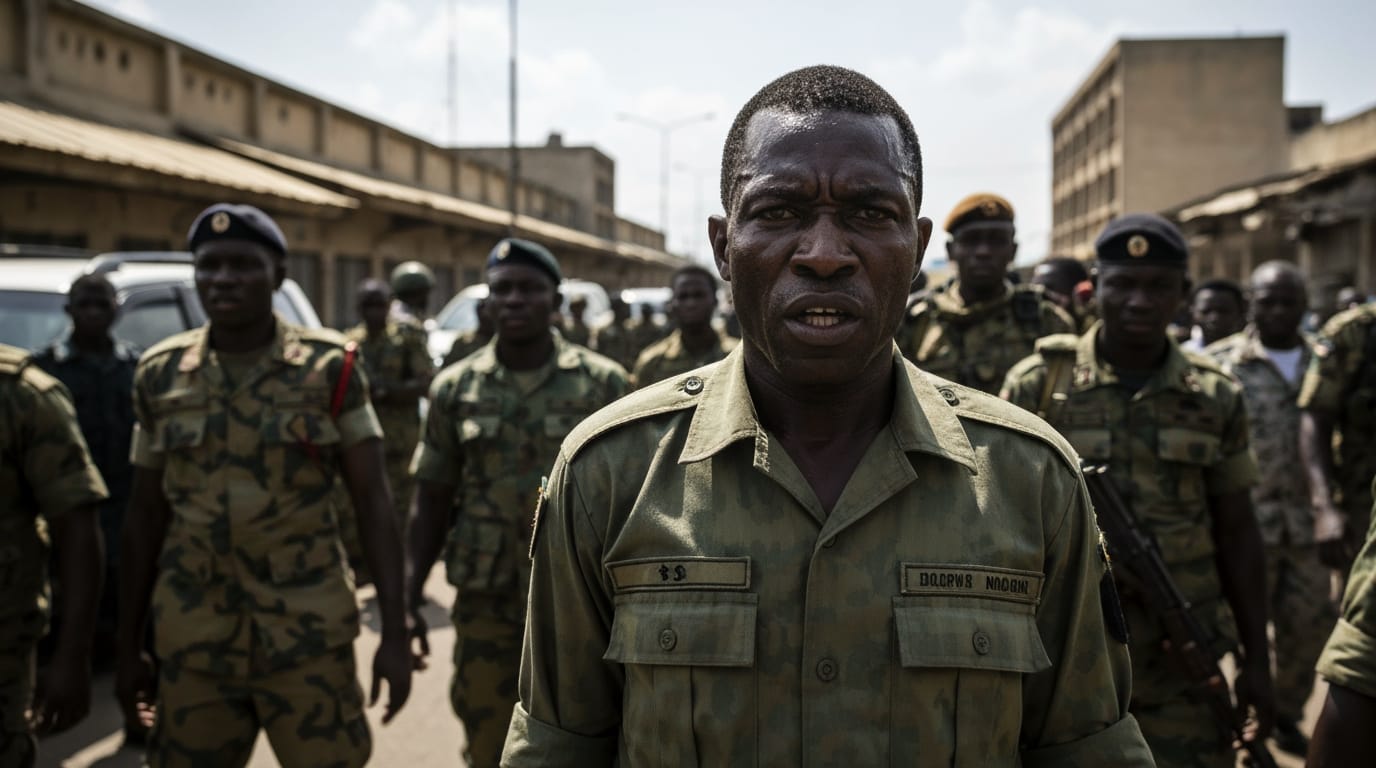
COTONOU, BENIN – A swiftly foiled coup attempt in the Republic of Benin on December 7, 2025, has placed West Africa’s fragile security landscape under renewed scrutiny, sparking intense debate over Nigeria’s evolving role as the region’s traditional hegemon. While Nigeria's rapid military intervention was credited with averting a governmental collapse in its coastal neighbor, the incident underscores deeper currents of instability across the sub-region and raises questions about the long-term efficacy of Nigeria's leadership in preventing such crises.
The events of early December saw soldiers briefly seize the national broadcaster in Benin, declaring President Patrice Talon's government overthrown. This bold move, which cited grievances ranging from deteriorating security to dissatisfaction with national governance, was met with an immediate plea for assistance from the Beninese government. In a decisive response that garnered regional and international attention, Nigerian President Bola Tinubu authorized the deployment of Nigerian Air Force jets to conduct strikes on plotter positions and dispatched ground troops to Cotonou under the banner of the ECOWAS Standby Force. Within hours, Beninese authorities announced the coup attempt had been thwarted, marking a rare and significant success for regional stability efforts.
A Swift Response in Cotonou
The attempted takeover in Benin began on December 7, 2025, when a faction of soldiers, reportedly led by Lieutenant Colonel Pascal Tigri, stormed state media outlets and announced the ousting of President Patrice Talon. Accounts from the ground suggested an attack on Talon's residence in Cotonou and those of other high-ranking military officials. The mutineers voiced widespread discontent, echoing concerns about security in the northern regions and broader governance issues.
Benin's government swiftly appealed for external military support. Nigeria, a key regional power and its immediate neighbor, responded with unprecedented speed. President Bola Tinubu, acting within the framework of the Economic Community of West African States (ECOWAS), ordered Nigerian military assets into action. Nigerian Air Force jets reportedly carried out targeted strikes, while ground forces were deployed to Cotonou as part of the ECOWAS Standby Force. Beninese Interior Minister Alassane Seidou later confirmed that the attempted coup had been suppressed, crediting loyalist troops and the swift regional assistance. This decisive, coordinated action stood in stark contrast to ECOWAS's struggles to reverse successful military takeovers elsewhere in the Sahel in recent years.
Reasserting ECOWAS's Resolve and Nigeria's Role
The successful foiling of the Benin coup attempt represented a critical moment for ECOWAS, a bloc that has faced significant criticism for its perceived inability to enforce democratic norms across West Africa. Since 2020, the region has witnessed a troubling series of military coups in Mali, Burkina Faso, Guinea, and Niger, leading to the withdrawal of these states from the community and undermining ECOWAS's authority.
In this context, Nigeria's decisive intervention in Benin was widely lauded by the regional body and the Beninese government. It marked ECOWAS's firmest and most successful stance against an unconstitutional power grab since 2017. For Nigerian President Bola Tinubu, who previously faced diminished stature after his efforts to dislodge coup leaders in Niger faltered in 2023, the Benin crisis presented a crucial opportunity. Analysts suggest that Tinubu leveraged this moment to underscore Nigeria's unwavering opposition to military takeovers and to actively reassert its leadership within the regional bloc. Benin's Foreign Minister, Olushegun Bakari, explicitly stated that the request for external support was not due to the Beninese army's incapacity, but to ensure a "surgical operation" with minimal civilian casualties, highlighting the strategic cooperation involved.
The Undercurrent of Waning Influence
Despite the immediate success in Benin, the coup attempt itself, and the broader regional context, continue to fuel discussions about Nigeria's overall waning influence in West Africa. For decades, Nigeria, with its vast population and economic might, served as a diplomatic leader and a bulwark of stability on the continent. However, over the past fifteen years, this clout has reportedly diminished, with Nigeria's contributions to regional peace and security efforts declining.
Several factors contribute to this perceived decline. Domestically, Nigeria grapples with severe internal challenges, including pervasive insecurity from various insurgent groups, economic volatility, and governance shortcomings. These internal pressures have stretched the Nigerian military thin, diverting resources and focus from regional leadership roles. Moreover, the string of successful coups in the Sahel and the subsequent formation of the Alliance of Sahel States (AES) by Mali, Niger, and Burkina Faso, in direct opposition to ECOWAS, represents a significant fracture in regional unity and a direct challenge to Nigeria-led diplomacy. The belief that Nigeria and France unduly dominate ECOWAS has fueled some of this resentment.
Benin, long considered one of Africa's more stable democracies, has also experienced democratic backsliding under President Patrice Talon since 2016. Concerns over his consolidation of power, changes to electoral rules, and a crackdown on political opponents have led to a "deepening crisis" and increased political and social tensions, creating an environment susceptible to unrest. This internal fragility, coupled with the spillover of jihadist violence from the Sahel into Benin's northern borders, has further exacerbated security challenges, providing a fertile ground for destabilization attempts. The fact that a coup attempt could even occur in a nation previously seen as a democratic outlier highlights a worrying regional trend that Nigeria has struggled to contain universally.
Navigating a Complex Future
The intervention in Benin, while a notable achievement, represents a single battle won in a broader, ongoing struggle for regional stability and influence. President Tinubu's decisive action undoubtedly prevented Benin from falling into military rule and offered a much-needed morale boost to ECOWAS. However, it does not fundamentally alter the complex geopolitical landscape of West Africa, where Nigeria's traditional leadership role remains under pressure.
The challenges facing Nigeria—internal insecurity, economic woes, and the growing assertiveness of military regimes in neighboring states—are formidable. While the Benin operation showcased Nigeria's capacity for rapid military response when called upon, the long-term restoration of its regional influence will hinge on its ability to address these domestic issues comprehensively and to forge a more coherent and effective regional strategy. The foiled coup in Benin, therefore, serves not as a definitive reversal of waning power, but as a critical reminder of the stakes involved and the constant need for vigilance and robust leadership in a turbulent West Africa.


