Benin's Finance Minister Romuald Wadagni Secures Landslide Presidential Victory with Over 94% of Vote
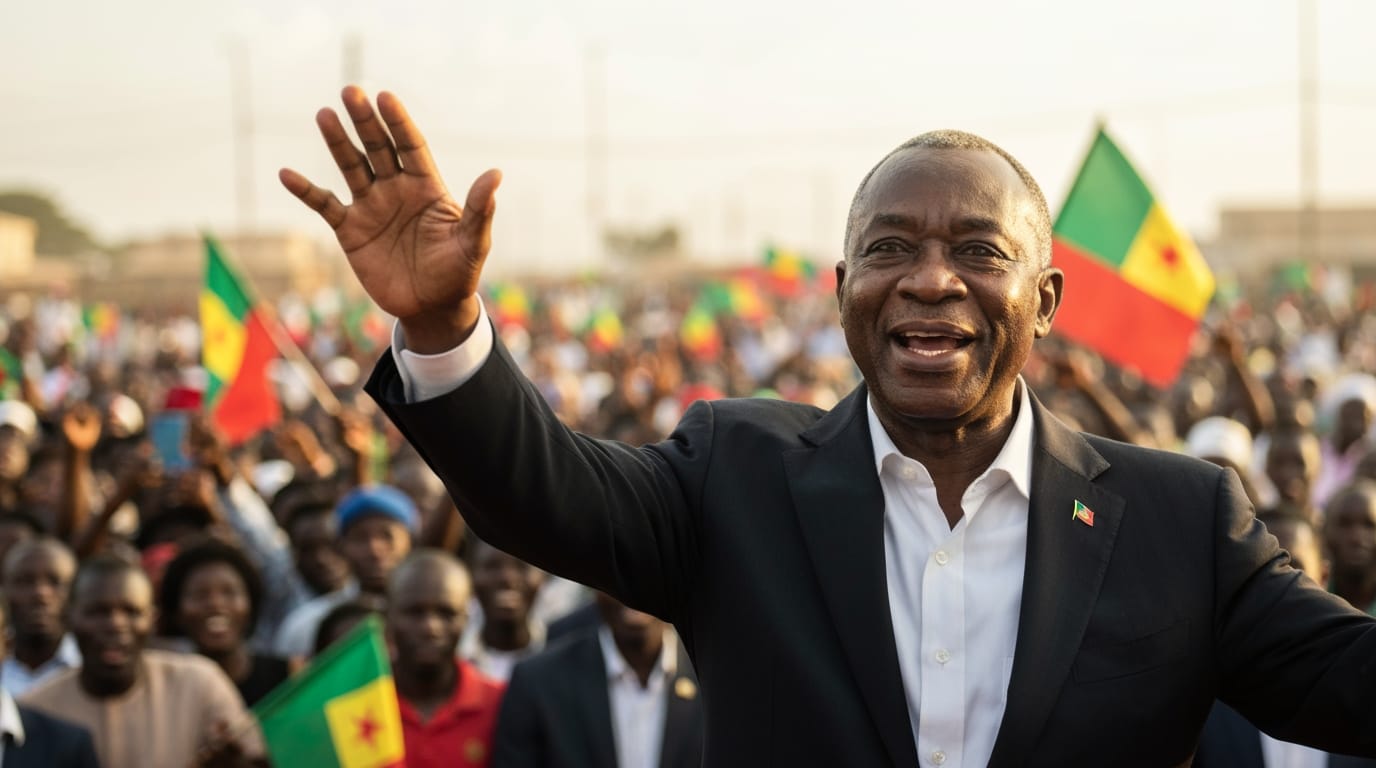
Cotonou, Benin – Romuald Wadagni, Benin's long-serving Finance Minister, has swept to power as the nation's next president, securing an overwhelming 94.05% of the vote in the April 12, 2026, presidential election. The outcome marks a significant, albeit largely anticipated, transition of leadership in the West African nation, as Wadagni succeeds his political mentor, outgoing President Patrice Talon, who publicly endorsed his candidacy. The election's results highlight a complex political landscape where economic stability has been prioritized amid growing concerns over democratic pluralism.
An Election of Apparent Unity
Provisional results released by the Autonomous National Electoral Commission (CENA) on April 13, 2026, confirmed Romuald Wadagni's commanding victory. Campaigning as an independent, Wadagni garnered 4,252,347 popular votes, translating to 94.05% of the total valid ballots cast. His running mate was Mariam Chabi Talata, who previously served as Vice President under Patrice Talon. The only other candidate on the ballot, Paul Hounkpè of the Cowry Forces for an Emerging Benin (FCBE), secured 5.95% of the vote. The election saw a voter turnout of 58.75%, an increase from previous presidential elections. Hounkpè conceded the election and congratulated Wadagni shortly after the provisional results were announced, contributing to a generally peaceful electoral process. International observers from ECOWAS also welcomed the climate of peace and the election's organization.
The Path to Power: Electoral Reforms and Opposition Sidelined
Wadagni's path to the presidency was significantly shaped by a series of electoral and constitutional reforms implemented during President Talon's tenure. These changes, particularly a 2019 amendment to the electoral code, introduced a sponsorship system requiring presidential candidates to obtain endorsements from at least 10% of Parliament members and/or mayors, equating to 16 elected officials. Critics argued that this system effectively concentrated power within the ruling coalition, making it exceedingly difficult for independent or opposition candidates to qualify.
Indeed, the parliamentary elections in January 2023 saw the two pro-Talon parties, Progressive Union for Renewal (UPR) and the Republican Bloc (BR), win a supermajority of seats, controlling 81 out of 109. The main opposition party, The Democrats, despite crossing the electoral threshold in 2023 to secure 28 seats, failed to field a presidential candidate for the 2026 election, as their leader, Renaud Agbodjo, was barred from competing due to insufficient parliamentary endorsements. This followed a pattern seen in the 2021 election, where major opposition figures were either disqualified, arrested on politically motivated charges, or forced into exile. For instance, Reckya Madougou, a prominent opposition figure, was arrested in March 2021 on charges of "financing terrorism," and academic Joël Aïvo was arrested later that year. These actions have drawn criticism from human rights organizations and international bodies, with Freedom House downgrading Benin's status to "partly free."
Romuald Wadagni: Architect of Economic Progress
Romuald Wadagni, born in 1976, has been a central figure in Benin's economic resurgence over the past decade, serving as the Minister of Economy and Finance since April 2016. Prior to his political career, he spent 17 years at the consulting firm Deloitte, honing his expertise in finance. Under President Talon, Wadagni has been widely credited with steering Benin's economy through a period of significant growth and reform.
His tenure as Finance Minister focused on fiscal discipline, improving public finances, and making Benin more attractive to international donors and investors. Key initiatives included an accelerated modernization of administration, simplification of business registration, and robust anti-corruption efforts. These policies contributed to an impressive economic growth rate, reaching 7.5% in 2024, driven by services, industrial expansion, and a resilient agricultural sector. The poverty rate also saw a modest decline from 40.1% in 2015 to around 38% in 2023. Wadagni's campaign emphasized his proven economic track record and promised to expand access to clean water and guarantee emergency healthcare, aiming to build upon the established economic foundations.
Benin's Evolving Democratic Landscape
Benin, once hailed as a beacon of democracy in West Africa following its transition from Marxism-Leninism in the early 1990s, has witnessed a gradual erosion of its democratic norms in recent years. The systematic exclusion of opposition figures and the tightening of electoral laws under President Talon have led observers to classify Benin as transitioning from a multiparty democracy to a more semi-authoritarian system. Concerns have also been raised regarding the independence of the judiciary, with allegations of political influence over appointments to the Constitutional Court.
While the 2026 election itself was reported to be peaceful, with commendations from regional bodies, the preceding period of candidate exclusion and political tensions cannot be overlooked. This has created a political environment where power is highly concentrated, and genuine competition appears constrained. Despite the absence of widespread violence during the 2026 voting, the broader context of reduced political space continues to be a significant point of scrutiny for international watchdogs and some domestic civil society groups.
Challenges and Prospects for the New Administration
As President-elect, Romuald Wadagni inherits a nation with a robust economic trajectory but also confronting substantial challenges. Paramount among these is the escalating jihadi insurgency in Benin's northern regions, which has seen increased activity from groups like Al-Qaeda's Sahel branch (JNIM). Wadagni's administration will face immense pressure to bolster security and protect its citizens, particularly in the less-developed northern areas.
Economically, despite impressive growth, issues such as social inequality between urban and rural areas, as well as high youth unemployment, persist. Wadagni's focus on infrastructure development and economic diversification aims to address these disparities and foster more inclusive growth. His prior experience in managing public finances and attracting foreign investment suggests a continuation of the business-friendly policies that have defined the past decade. The new president will also need to navigate the delicate balance of maintaining economic momentum while potentially addressing calls for greater democratic freedoms and political openness.
In conclusion, Romuald Wadagni's decisive victory in the 2026 presidential election signals a continuation of the policy direction established by his predecessor, Patrice Talon. While his extensive experience as Finance Minister positions him well to sustain Benin's economic progress, his mandate will be closely watched for its approach to national security, social equity, and the delicate evolution of Benin's democratic institutions. The challenge for the new leadership will be to build on the economic successes while simultaneously addressing the underlying concerns about political inclusiveness and human rights to ensure a stable and prosperous future for all Beninese citizens.