Berlin and Rome Forge New European Alignment Under Merz and Meloni
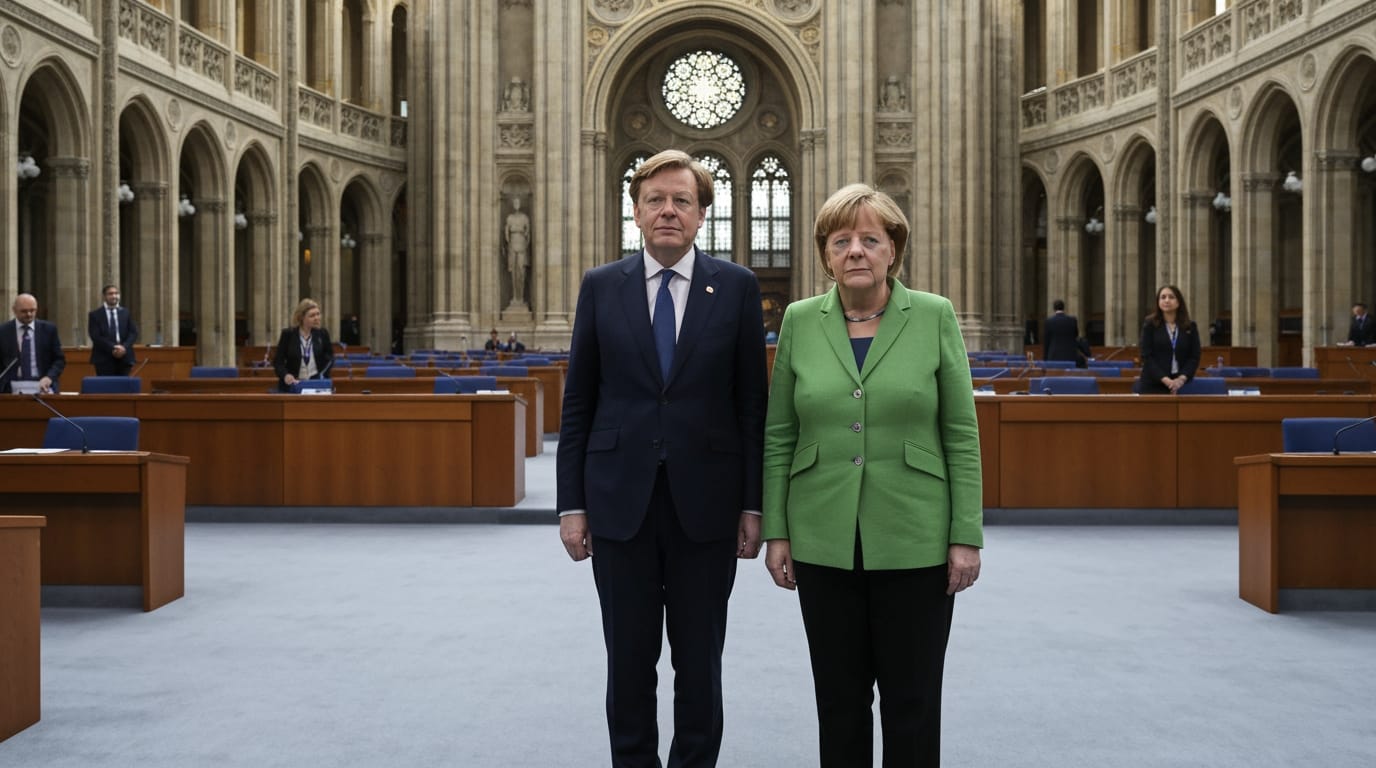
In a significant realignment of European power dynamics, Germany and Italy are cultivating an increasingly robust partnership, championed by German Chancellor Friedrich Merz and Italian Prime Minister Giorgia Meloni. This evolving alliance is reshaping traditional European relationships, particularly a perceived cooling of ties between Berlin and Paris, and is poised to influence key policies ranging from economic competitiveness to migration and international diplomacy within the European Union. The convergence marks a strategic shift, underscoring a shared vision for a more assertive and economically resilient Europe in a complex global landscape.
A Shifting European Geopolitical Landscape
The ascendance of Friedrich Merz to the German Chancellery in May 2025 and Giorgia Meloni's leadership in Italy since October 2022 has heralded a new chapter in German-Italian relations. While Meloni's national-conservative roots initially raised concerns among some European leaders, her pragmatic governance has fostered a growing alignment with Berlin, particularly under Merz. Observers note a departure from the historical Franco-German axis as the primary engine of European policy, with Rome now playing a more central role alongside Berlin. Manfred Weber, leader of the European People's Party, has described the burgeoning relationship as a "close alliance," reflecting a new comfort level between the two leaders on crucial European issues.
This strategic rapprochement was evident in a high-level Italy-Germany Business Forum held recently in Rome, accompanied by an intergovernmental summit that included nine German ministers meeting their Italian counterparts. Such events underscore the deepening cooperation beyond mere rhetoric, reflecting shared economic interests and a joint ambition to address Europe's most pressing challenges.
Economic Powerhouses Chart a Course for EU Competitiveness
At the heart of the burgeoning Berlin-Rome partnership is a shared commitment to bolstering the European Union's economic competitiveness. Both Merz and Meloni have voiced concerns that Europe risks falling behind economic rivals like the United States and China. They are jointly advocating for comprehensive reforms aimed at simplifying EU procedures, easing regulatory burdens, and strengthening the single market.
Germany stands as Italy's largest trading partner, with bilateral trade reaching approximately €156 billion in 2024. This economic interdependence is substantial, with Italian industries, especially automotive, advanced manufacturing, chemicals, and pharmaceuticals, deeply integrated into German value chains. This deep commercial connection provides a strong foundation for their policy alignment. In a joint policy paper, both nations called for urgent action, emphasizing that the current trajectory for Europe is unsustainable. They proposed fast-track approval processes, routine repeal of outdated regulations, and stricter scrutiny of new rules to foster a more business-friendly environment. Furthermore, Merz and Meloni support deeper integration across services, energy, capital markets, and digital industries, including the ambitious goal of a pan-European stock exchange. Merz specifically highlighted the need for rapid progress on a capital markets union, asserting that European leaders must reduce their dependence on U.S. capital markets.
United Fronts on Migration and Global Diplomacy
Beyond economic cooperation, the German-Italian partnership is making its mark on sensitive European issues such as migration and foreign policy. On migration, both leaders advocate for a more stringent approach, focusing on reducing the number of irregular arrivals, strengthening external border controls, and enhancing repatriation efforts. Friedrich Merz has actively engaged in discussions on this front, notably attending a preparatory meeting for an EU summit hosted by Prime Minister Meloni that centered on immigration. Germany has also joined a "hardline migration group" that includes Italy, signaling a unified stance on seeking "innovative solutions" to manage migration flows within the bloc.
In the realm of international diplomacy, both Merz and Meloni have adopted a cautious and pragmatic approach to dealing with global complexities, particularly concerning the United States. Unlike some other European leaders who have advocated for more confrontational stances, Merz and Meloni prioritize dialogue, especially in their interactions with figures like former U.S. President Donald Trump. Meloni has reportedly cultivated good personal ties with Trump, a factor that could influence transatlantic relations. Merz has acknowledged a shift in U.S. foreign policy towards a more power- and interest-driven approach, urging Europe to demonstrate strength and avoid passivity.
The two nations are also collaborating on critical defense and security matters, with plans for new cooperation initiatives expected to be finalized soon. Italy, under Meloni, supports European strategic autonomy primarily when it complements NATO, reinforcing the transatlantic bond rather than weakening it. This reflects a shared understanding of the need for European defense capabilities while maintaining strong alliances. Italy and Germany have also been invited to participate in a "Gaza Peace Council," indicating their increasing influence in addressing complex international conflicts.
Bridging Divides: From Skepticism to Strategic Alliance
The evolution of the relationship between Merz and Meloni is notable given their initial political differences and past perceptions. Historically, Merz had expressed reservations about engaging with Meloni, labeling her political alignment as being behind a "firewall". However, this stance has dramatically shifted, with the German Chancellor now actively seeking her collaboration on key European dossiers. This transformation highlights a pragmatic recognition of shared interests and policy priorities that transcend ideological divides.
The foundation for this intensified cooperation was laid even before Merz became Chancellor. In November 2023, then-German Chancellor Olaf Scholz and Prime Minister Meloni signed a German-Italian action plan, aiming to elevate their bilateral partnership and strengthen strategic cooperation both bilaterally and at the EU level. Merz has since built upon this framework, and a joint press conference in Rome in May 2025 further cemented their shared agenda, covering critical areas like EU cooperation, migration, economic policy, and security.
Conclusion: A New Chapter for European Leadership
The strengthening alliance between Germany, under Friedrich Merz, and Italy, led by Giorgia Meloni, marks a pivotal moment for European politics. Driven by a mutual desire for enhanced economic competitiveness, a more unified approach to migration challenges, and a pragmatic stance in international relations, Berlin and Rome are forging a partnership that is increasingly influential within the European Union. This collaboration signals a potential recalibration of power within the bloc, moving beyond traditional alignments and fostering a more diverse leadership dynamic. As both leaders continue to advocate for a streamlined, economically robust, and geopolitically assertive Europe, their coordinated efforts are set to define a new chapter for the continent's future direction.


