Berlin Hails "Fresh Start" as New Hungarian Government Steers Towards Pro-EU Course
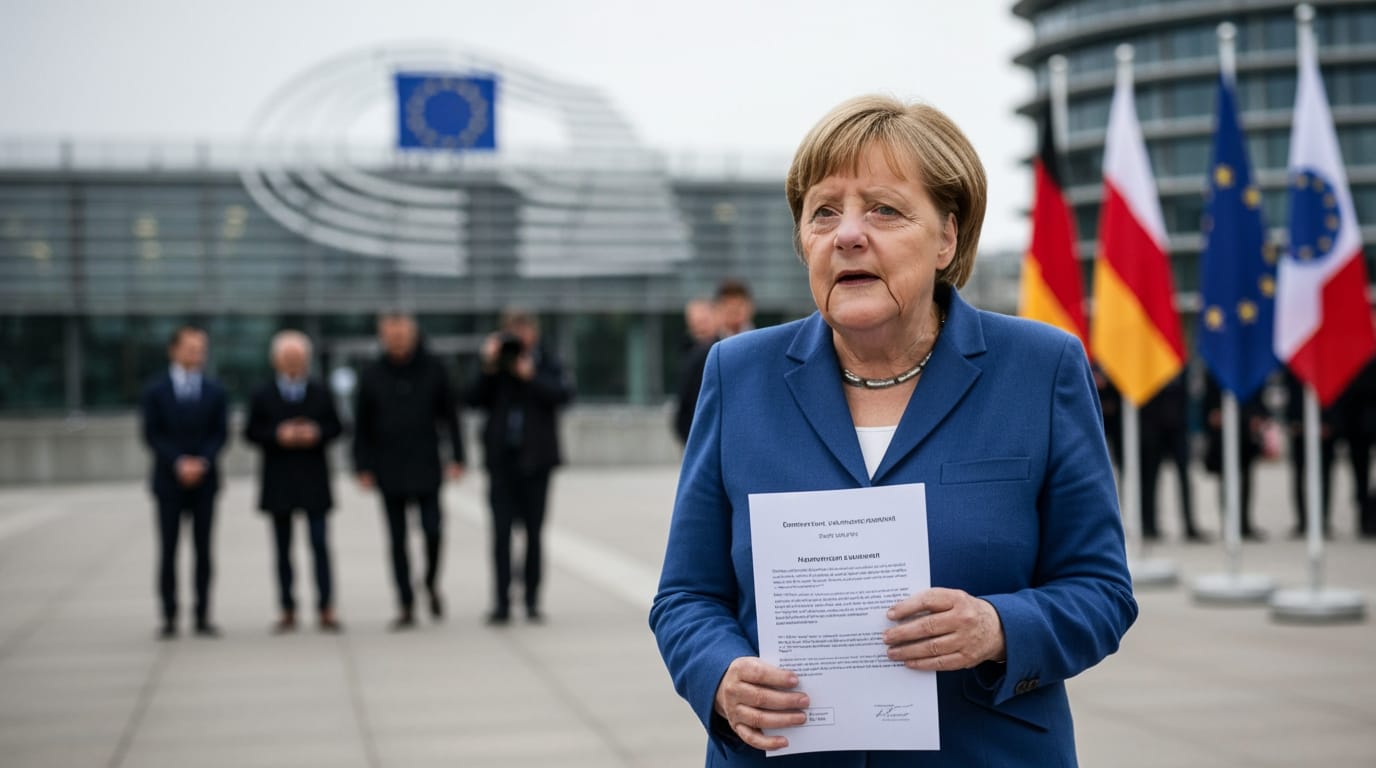
BERLIN – A significant political realignment is underway in Central Europe, with Germany's leadership extending a warm welcome to Hungary's new government under Prime Minister Péter Magyar. German Chancellor Friedrich Merz has voiced strong support for Budapest's declared commitment to a pro-European path, signaling a hopeful departure from years of strained relations and deepening divisions within the European Union. This shift follows Magyar's decisive victory in the April 2026 parliamentary elections, which brought an end to the 16-year tenure of Viktor Orbán. Merz's endorsement underscores a renewed optimism in Brussels and Berlin that Hungary is poised to reintegrate fully into the European mainstream.
A Decisive Endorsement from Berlin
German Chancellor Friedrich Merz wasted no time in expressing his approval and eagerness for cooperation with Hungary's new leadership. Following Péter Magyar's victory, Merz offered his "heartfelt congratulations," stating his anticipation of "working with you" and urging them to "join forces for a strong, secure and, above all, united Europe.". This sentiment was reinforced during Magyar's inaugural official visit to Berlin, where Merz hailed a "fresh start" in relations. "Democracy and the rule of law in Hungary are strong again," Merz asserted, adding, "We trust him to lead Hungary back to the heart of Europe.". Merz lauded Magyar for demonstrating that the political pendulum can swing "impressively, to the centre," moving away from illiberal or authoritarian tendencies.. This explicit welcome from Germany's head of government marks a pivotal moment, signaling a desire to mend fences and foster closer ties after a period marked by friction.
Hungary's Transformative Political Shift
The foundation for this diplomatic thaw was laid by Hungary's April 2026 parliamentary elections, which saw a monumental upset. Péter Magyar, leading the Tisza Party, secured a comfortable two-thirds constitution-making majority in Parliament, capturing 141 out of 199 seats with the support of 53% of Hungarian voters.. This outcome effectively ended Viktor Orbán's 16-year dominance, during which his Fidesz party had consistently pursued national conservative, Christian nationalist, and increasingly Eurosceptic policies.. Orbán's era was characterized by what critics termed "illiberal democracy," involving controversial legislative and procedural changes that drew significant international criticism and legal action from the European Commission..
Magyar, a former government official and Fidesz member turned fierce critic, campaigned on a platform promising sweeping political regime changes, anti-corruption measures, and accountability.. His "Respect and Freedom Party" presented itself as a center-right, pro-European conservative formation, committed to restoring the rule of law and rebuilding trust with the European Union.. The landslide victory and the subsequent swearing-in of Magyar's government on May 12, 2026, were met with widespread relief across European capitals, signifying a potential end to the isolation Hungary had experienced under Orbán..
The Unlocking of Billions and Renewed Trust
One of the most immediate and tangible results of Hungary's political shift has been the unlocking of substantial European Union funds that had been frozen due to concerns over rule-of-law violations under the previous administration. European Commission officials confirmed that approximately $19 billion (€16.4 billion) will be released to Hungary.. This includes $11.6 billion in COVID-19 recovery funds and over $7.3 billion in cohesion funds designed to support struggling economies..
The release of these funds is directly linked to the rapid reforms undertaken by Prime Minister Magyar's government. Budapest has moved swiftly to reverse democratic backsliding, enacting crucial changes to restore judicial independence, academic and media freedom, and initiating broad anti-corruption efforts.. A significant step in this process was Hungary's formal submission of a request to join the European Public Prosecutor's Office (EPPO), the EU's anti-corruption watchdog that Orbán's government had long refused to engage with.. Observers have noted Magyar's decisive approach, describing him as someone capable of "getting things done fast" to meet the EU's "27 super-milestones" required for fund release.. The European Commission president, Ursula von der Leyen, signaled that the money would be released contingent on Magyar delivering on his reform commitments, while hailing the "winds of change" in Hungary..
From Confrontation to Cooperation: Merz's Shifting Stance
The current supportive stance from Chancellor Merz represents a stark contrast to his previous interactions with the Orbán government. For years, Merz was a vocal critic of what he perceived as Hungary's obstructionist and illiberal policies. He had previously threatened "harsher conflicts" with Hungary and Slovakia if they continued to defy the majority EU approach on sanctions against Russia.. In March 2026, just weeks before the Hungarian election, Merz strongly condemned Orbán's actions, particularly for blocking a substantial €90 billion EU loan for Ukraine, calling it a "gross violation of loyalty" to the European Union.. He had even suggested that the EU had "further options" to pressure member states, including infringement proceedings for breaches of the rule of law and the withdrawal of European funds..
This dramatic shift in tone from the German Chancellor underscores the magnitude of the political transformation in Budapest. Merz's earlier threats and criticisms highlight the depth of the distrust and frustration that had accumulated during Orbán's leadership. His current embrace of Magyar's government signifies a genuine belief in Hungary's commitment to returning to EU norms and values, and a recognition of the significant reforms already initiated.
Navigating Remaining Hurdles: Ukraine and EU Accession
Despite the overall positive outlook, some challenges persist, particularly concerning Hungary's approach to the ongoing conflict in Ukraine and Kyiv's aspirations for EU membership. While the change in Budapest has cleared the way for the unblocking of €90 billion in aid for Ukraine, a measure Orbán had previously opposed, new Prime Minister Magyar has thus far declined to authorize weapons deliveries to Ukraine..
Furthermore, Magyar has indicated that progress on the rights of the 150,000 ethnic Hungarians in Ukraine to use their native tongue is "essential" for Budapest to agree to Ukraine joining the EU.. He pointed to ongoing "technical negotiations" with Ukraine on minority rights, with a meeting with President Volodymyr Zelenskyy expected soon.. Merz acknowledged these bilateral issues but stressed that they "must not be at the expense of European support, nor should it deter us from our goal of formally opening the accession negotiations with Ukraine.". These nuanced positions indicate that while Hungary is re-engaging with the EU mainstream, it will continue to articulate its national interests, particularly on sensitive issues affecting its ethnic minorities and regional stability.
A New Chapter for Hungary and the EU
The strong backing from German Chancellor Friedrich Merz for Prime Minister Péter Magyar's pro-European agenda heralds a new chapter for Hungary within the European Union. The end of the Orbán era, coupled with Magyar's swift implementation of reforms and commitment to the rule of law, has opened the door for the release of crucial EU funds and a significant improvement in diplomatic relations. While lingering differences, particularly regarding Ukraine, remain on the agenda, the overall trajectory points towards greater unity and cooperation. This political realignment is a testament to the EU's enduring power of attraction and the capacity for internal course correction within its member states, offering renewed hope for a more cohesive and effective European Union.


