Berlin Rejects US Criticism, Reaffirming European Sovereignty and Democratic Principles
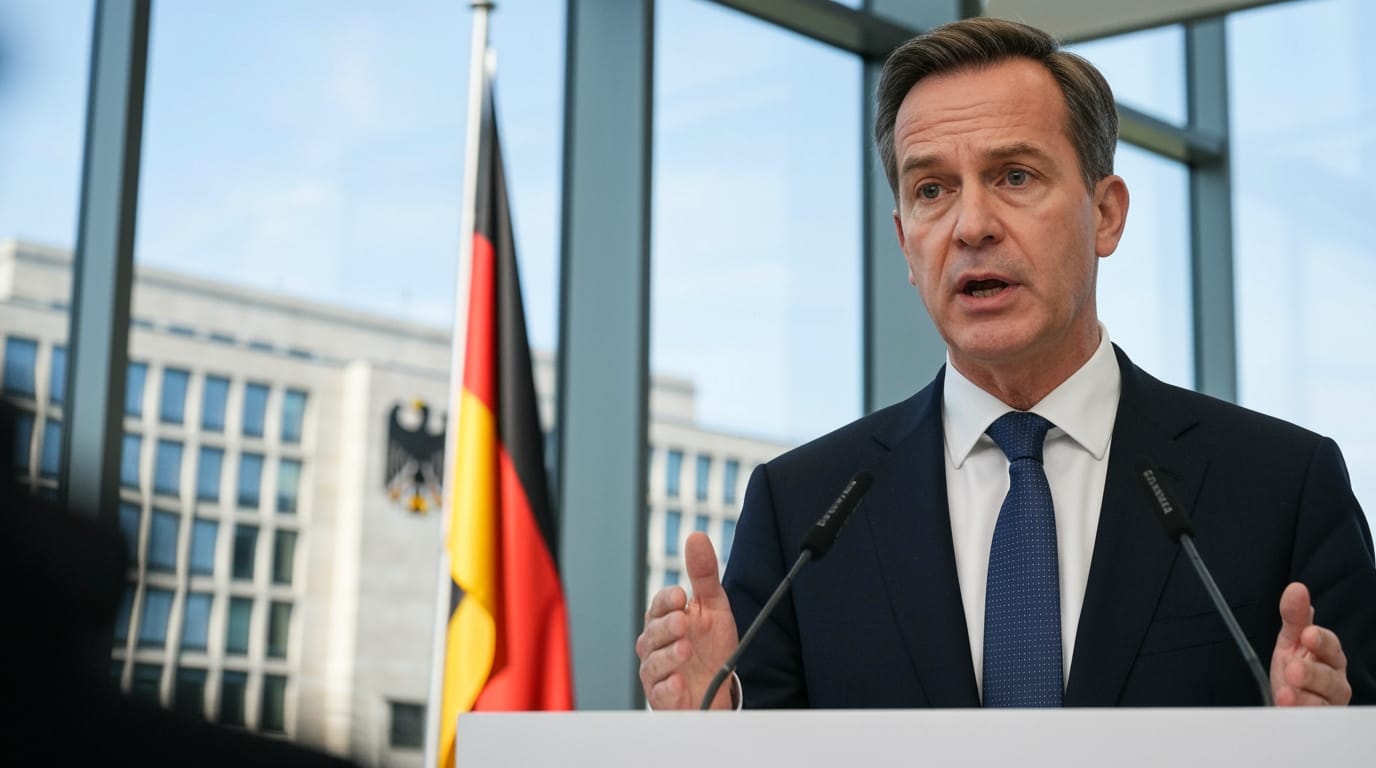
Berlin has forcefully pushed back against a series of pointed criticisms from the United States regarding Europe’s democratic health, migration policies, and commitment to free speech, underscoring a significant widening of ideological and strategic fissures across the transatlantic alliance. German officials, from the Foreign Minister to the Chancellor, have articulated a firm stance against what they perceive as unwarranted interference and a misrepresentation of European values, particularly following the release of the US National Security Strategy and subsequent remarks by high-ranking American officials. The public rebukes signal a challenging new chapter in US-European relations, as Germany asserts its commitment to its constitutional order and the integrity of its democratic processes.
The Catalyst: US National Security Strategy and Vance’s Assertions
The latest surge in transatlantic friction was ignited by the US National Security Strategy document, released in late 2025, which contained contentious observations about Europe. The 33-page document posited that Europe’s economic decline was overshadowed by the “real and more stark prospect of civilizational erasure” within the next two decades. It alleged that European Union activities and other transnational bodies undermine political liberty and sovereignty, while migration policies are “transforming the continent and creating strife.” Furthermore, the strategy accused Europe of “censorship of free speech and suppression of political opposition,” along with "cratering birthrates" and a "loss of national identities and self-confidence".
These criticisms were echoed and amplified by US Vice President JD Vance during his speech at the Munich Security Conference in February 2025. Vance asserted that European governments were enforcing anti-democratic policies and suppressing critical voices, specifically criticizing the exclusion of far-right parties like Germany’s Alternative for Germany (AfD) from political processes. He claimed that the “threat from within”—a retreat from fundamental values and issues like alleged tech censorship and illegal immigration—was more concerning for Europe than external actors such as Russia or China. These remarks, delivered at a forum traditionally dedicated to fostering transatlantic unity on defense, reportedly stunned European officials and drew immediate condemnation. US President Donald Trump endorsed Vance's message, describing it as "very good" and "brilliant". The US strategy notably also revealed a stance supportive of Europe's nationalist far-right parties, aiming to "cultivate resistance to Europe's current trajectory within European nations".
Berlin's Unwavering Defense of Democratic Values
German officials swiftly and unequivocally rejected the American narrative. Foreign Minister Johann Wadephul dismissed allegations concerning free speech and democratic freedoms, stating firmly that Europeans, particularly Germans, “do not need advice from the Donald Trump administration on issues of democracy and freedoms”. Wadephul emphasized that Germany's constitutional order not only guarantees the separation of powers—executive, legislature, and judiciary—but also, rightly, ensures a free media. He acknowledged the US as a vital ally within NATO but drew a clear line, asserting that questions of free expression and the organization of free societies do not fall under the purview of external admonishment.
Defense Minister Boris Pistorius also strongly criticized Vice President Vance’s assertions at the Munich Security Conference, calling them “not acceptable”. Pistorius stressed that while European democrats take a firm stance against right-wing extremism, they remain fully committed to basic rights and freedoms. He highlighted that in Germany’s democracy, every opinion has a voice, and far-right parties conduct their election campaigns like any other. Adding to this, Chancellor Olaf Scholz delivered a powerful rebuttal, receiving applause from the audience. Scholz condemned any external intervention in Germany's democracy, elections, and opinion-forming process, especially when perceived to be in the interest of specific parties. He reiterated a strong consensus among German parties that the extreme right should be outside of political control and decision-making processes, with no cooperation with them.
Migration Policy: A Matter of National Sovereignty
Another significant point of contention revolves around migration policy. The US National Security Strategy and statements from American officials heavily criticized Europe’s approach to migration, linking it to societal strife and the erosion of national identities. Reports even indicated that the US State Department directed American diplomats to lobby against pro-migration policies in Europe and advocate for stricter regulations.
German Chancellor Friedrich Merz firmly rejected this pressure, asserting that migration policy decisions are the sovereign right of European nations. He stated that Europe, and Germany in particular, would chart its own course, emphasizing that "Migration policy is our business, and we decide it as we see fit." Merz added, "We don't need any admonitions from outside. Furthermore, we are in the process of formulating a new, common European asylum and immigration policy. We can do that on our own, and we will do it on our own". This highlights a deep-seated belief in self-determination on crucial domestic policy issues, further stressing the German government's commitment to its own path despite external pressure.
Transatlantic Discord and the Pursuit of European Strategic Autonomy
These recent exchanges underscore a fundamental transformation in transatlantic relations, moving away from what was once perceived as a "community of values" towards a more "transactional alliance". The US National Security Strategy explicitly calls for Europe to assume greater responsibility for its own security and address trade imbalances, signaling an accelerated shift from burden-sharing to burden-shifting. This has significant implications for Germany, which is acutely vulnerable to US trade policies and deeply reliant on the US for European security.
Moreover, the German government expressed disagreement with the US National Security Strategy's relatively weak criticism of Russia, a stance that contradicts NATO's collective assessment of Russia as a threat to transatlantic security. This divergence on a core security issue further complicates the relationship.
In response to these developments, the long-standing debate within Europe about "strategic autonomy" has gained renewed urgency. European leaders, including those in Germany and France, have long sought to reduce their military and financial dependence on the US, an ambition that intensified during previous periods of strained relations with Washington. The concept of strategic autonomy emphasizes Europe's capacity to act independently in security and defense matters, including developing its own industrial base and military capabilities, without necessarily replacing NATO but rather complementing it. While some German officials had previously viewed such ambition as an "illusion" that might undermine NATO, the current US posture appears to be galvanizing efforts towards a more self-reliant Europe.
Beyond security, Germany has also pushed back against perceived US overreach in social policy. The Federation of German Industries (BDI) and the German Foreign Ministry have challenged US attempts to enforce Diversity, Equity, and Inclusion (DEI) initiatives on German companies, affirming the primacy of local legal frameworks and corporate autonomy.
Conclusion
The recent diplomatic tensions reveal a hardening resolve within Germany to protect its sovereignty and democratic principles against what it views as ideological and unwarranted criticism from the United States. While German officials consistently reaffirm the enduring importance of the transatlantic alliance and the US as a key NATO partner, they are equally firm in asserting Europe’s right to self-determination on matters of internal governance, societal values, and migration policy. The current dynamic is compelling Europe, and Germany in particular, to critically re-evaluate its reliance on the US and to accelerate its pursuit of strategic autonomy, potentially reshaping the future landscape of global alliances and international relations. The path forward for US-German and broader US-European relations remains uncertain, marked by a palpable shift from unquestioning partnership to a more assertive, and at times confrontational, dialogue.


