Berlin Urges Restraint as Middle East Crisis Deepens Following Iran Leader's Death
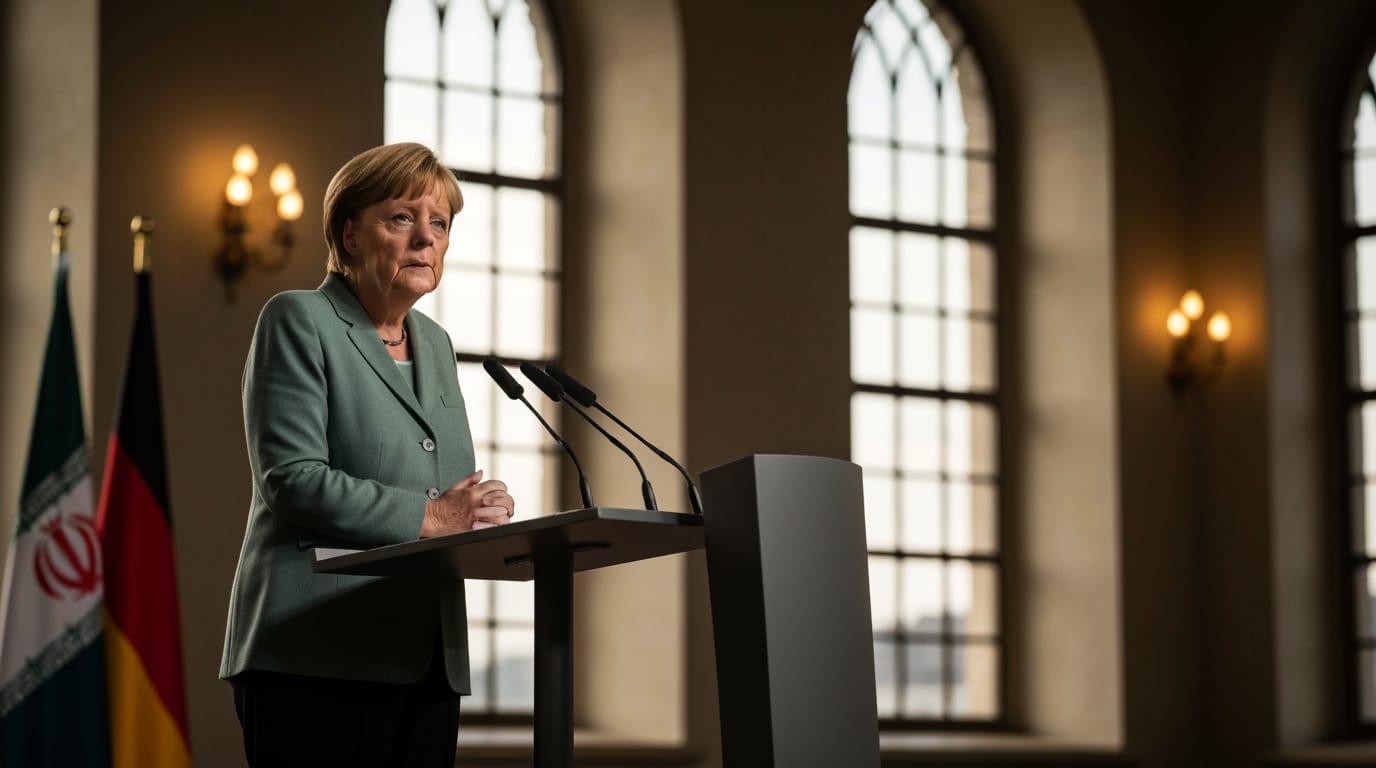
BERLIN, Germany – Germany's Chancellor Friedrich Merz has struck a profoundly cautious tone amid rapidly escalating tensions in the Middle East, urging Iran to cease its "indiscriminate attacks" and warning of an "uncertain political future" for the nation following the reported death of Supreme Leader Ayatollah Ali Khamenei in recent U.S.-Israeli strikes on Tehran. Merz’s statements, delivered as regional instability threatens to spiral, underscore Berlin’s delicate balancing act between condemnation of Iranian actions and a concerted effort to prevent a broader conflagration.
The unexpected demise of Iran's long-reigning spiritual and political head, reported on Sunday, March 1, 2026, has plunged the region into further turmoil, prompting immediate retaliatory actions from Iran and drawing urgent calls for de-escalation from international powers. Chancellor Merz confirmed he is set to travel to Washington for talks with U.S. President Donald Trump, where the volatile situation in the Middle East will undoubtedly dominate discussions.
A Region on the Brink: Khamenei's Death and Iranian Retaliation
The recent U.S.-Israeli strikes targeting Tehran, which reportedly led to the death of Ayatollah Ali Khamenei and 48 other Iranian leaders, have dramatically reshaped the geopolitical landscape of the Middle East. U.S. President Donald Trump described the military offensive as progressing "ahead of schedule," aiming to dismantle Iran's military capabilities and remove the leadership of the Islamic Republic. In response, Iran has launched a series of retaliatory attacks across the region, targeting countries hosting U.S. bases and allies.
Chancellor Merz, while acknowledging the gravity of the situation, made it clear that Germany, alongside Britain and France, did not participate in these initial strikes. His immediate concern centered on managing the fallout. Speaking on Sunday, Merz implored Iran to "immediately stop" what he characterized as "indiscriminate attacks," highlighting the potential for the developments to push Iran into profound instability. "The country is now on a path toward an uncertain future," Merz stated, emphasizing the unclear outcome of the ongoing military campaign. He also issued a stern warning against "antisemitic or anti-American" actions within German territory, reflecting heightened security concerns linked to the international tensions.
Berlin's Evolving Stance: From Patience to Pressure
The current crisis represents an intensification of Germany's already evolving and increasingly assertive foreign policy towards Iran. Over the past year, Berlin has moved away from a strategy characterized by "gradual reform, economic engagement, and diplomatic patience," embracing instead a "tougher, more conditional diplomatic posture" towards Tehran. This shift, influenced by persistent internal pressures within Iran, growing European concerns, and a broader recalibration of German priorities, emphasizes realism, coordination, and clearly defined expectations. Policymakers in Berlin now stress the importance of "measurable progress rather than symbolic dialogue."
A significant manifestation of this toughened stance came in late January 2026, when European Union foreign ministers, including Germany's, unanimously designated the Islamic Revolutionary Guard Corps (IRGC) as a terrorist organization. This landmark decision placed the IRGC alongside groups like al-Qaeda and Hamas on the EU's terrorism list, subjecting it to sweeping financial restrictions. Prior to this, Germany's Foreign Minister, Johann Wadephul, had repeatedly warned Iran to "change course" regarding its nuclear program and face consequences, advocating strongly for the IRGC listing.
Chancellor Merz himself has used stark rhetoric concerning the Iranian leadership. In January 2026, amid widespread protests over economic hardship and political repression in Iran, Merz declared the Iranian regime to be in its "last days and weeks," asserting its loss of "moral and political legitimacy." He had also openly praised Israel's June 2025 attack on Iranian nuclear and military sites, describing it as doing the "dirty work… for all of us," a remark that drew sharp criticism from Iranian officials. This demonstrates a notable shift from previous German Chancellors, such as Olaf Scholz, who in 2024 had focused primarily on urging de-escalation after Israeli strikes and warning against regional destabilization.
Economic Isolation and Humanitarian Concerns
The economic relationship between Germany and Iran has progressively deteriorated under the weight of international sanctions. Trade volumes between the two nations have seen significant declines due to U.S. and EU sanctions, with German-Iranian trade amounting to approximately 1.5 billion euros in 2024 and likely falling further in 2025. The impact of these sanctions, particularly those reimposed by the U.S., has severely hampered Iran's economy and its non-oil exports.
The restoration of EU sanctions in late 2025, triggered by a "snapback" mechanism over Iran's breaches of the 2015 nuclear deal, further tightened financial restrictions. These measures, while allowing for limited private money transfers, reflect a concerted international effort to pressure Tehran. The gravity of the situation prompted Germany to advise its citizens to leave Iran in August 2025, citing potential retaliation from Tehran following Germany's role in initiating new United Nations sanctions and the limited consular assistance available from its embassy. This ongoing economic pressure, coupled with internal unrest, continues to challenge the Iranian regime and its stability.
Navigating the Perilous Path of Diplomacy
Despite the military escalation, Germany remains committed to diplomatic solutions, albeit within a framework of heightened pressure. Chancellor Merz's upcoming talks with President Trump signal a coordinated Western approach to the crisis. European leaders, including those from Germany, France, and the United Kingdom, have publicly confirmed their coordination with the U.S., condemning Iran's retaliatory actions and urging restraint, while also distancing themselves from direct military involvement.
Merz has consistently urged Iran to "truly enter talks" regarding its nuclear program, particularly with U.S. envoys, emphasizing a "great fear of military escalation in the region." Germany has intensified its demands for Iran to abandon its pursuit of nuclear weapons, scale back its ballistic missile program, and halt destabilizing regional activities, ahead of crucial nuclear discussions scheduled in Geneva. This stance underscores a desire to bridge the divide between firm action and preventing an all-out regional conflict. Berlin's objective is clear: to ensure Iran understands that its current behavior cannot continue, while still hoping for a diplomatic resolution that averts further bloodshed.
The current climate demands a delicate balance, as Germany seeks to align its actions with its values of human rights and international law, while also contributing to regional stability. The outcome of the coming days and weeks will be critical in determining whether diplomacy can prevail amidst the heightened military posturing and deep-seated regional rivalries.


