Beyond the Final Whistle: Unpacking the Enduring Legacy of the 2026 World Cup

As the echoes of roaring crowds fade and the last confetti settles, the 2026 FIFA World Cup has concluded, leaving behind a complex tapestry of economic transformations, infrastructural advancements, and environmental considerations across its three host nations. The largest tournament in football history, spanning 104 matches across 16 cities in the United States, Canada, and Mexico, aimed not only to crown a champion but also to forge a lasting legacy that extends far beyond the 39 days of competition. While initial assessments hail the event as a resounding success, particularly in terms of fan engagement and economic stimulus, a deeper examination reveals both significant long-term benefits and persistent questions about the true cost and distribution of its spoils.
Economic Tides and Metropolitan Makeovers
The economic promises underpinning the 2026 World Cup were substantial, with FIFA projecting an astonishing $40.9 billion in Gross Domestic Product (GDP) across North America. U.S. host cities alone anticipated between $160 million and $620 million in incremental economic activity each. Atlanta, a prominent host city, was projected to generate over $1 billion in economic activity from its eight matches, attracting more than 300,000 unique visitors. Other cities like Boston experienced significant upticks in their hospitality sectors, with some matches driving nearly 40% year-on-year revenue per available room (RevPAR) growth, and a notable boost in the food and beverage industry during the tournament's initial weeks.
This influx of activity translated into considerable job creation, with projections of over 4,000 temporary and permanent positions emerging in sectors such as hospitality, event management, security, and transportation. Host cities seized the opportunity to elevate their global profiles, positioning themselves as prime destinations for sports tourism and business expansion. Atlanta, for instance, is set to benefit from the establishment of the Arthur M. Blank U.S. Soccer National Training Center, envisioned as an epicenter for American soccer development. Dallas/Fort Worth, having hosted nine matches, including a semifinal, leveraged upgraded venues to cement its status as a hub for MLS and international friendlies, with infrastructure improvements like the Cotton Belt trail and DART expansions enhancing local mobility.
However, the rosy economic forecasts have not been without their critics. Economists frequently argue that such studies tend to overstate benefits by overlooking public costs and spending that would have occurred regardless of the event. A significant portion of the financial gains, particularly from media rights, sponsorships, and ticketing, flows directly to FIFA, while host cities shoulder substantial operational costs. Consequently, local economic benefits, while tangible, are often short-lived and concentrated primarily in tourism and hospitality, fading once the tournament concludes.
A New Blueprint for Sports Infrastructure
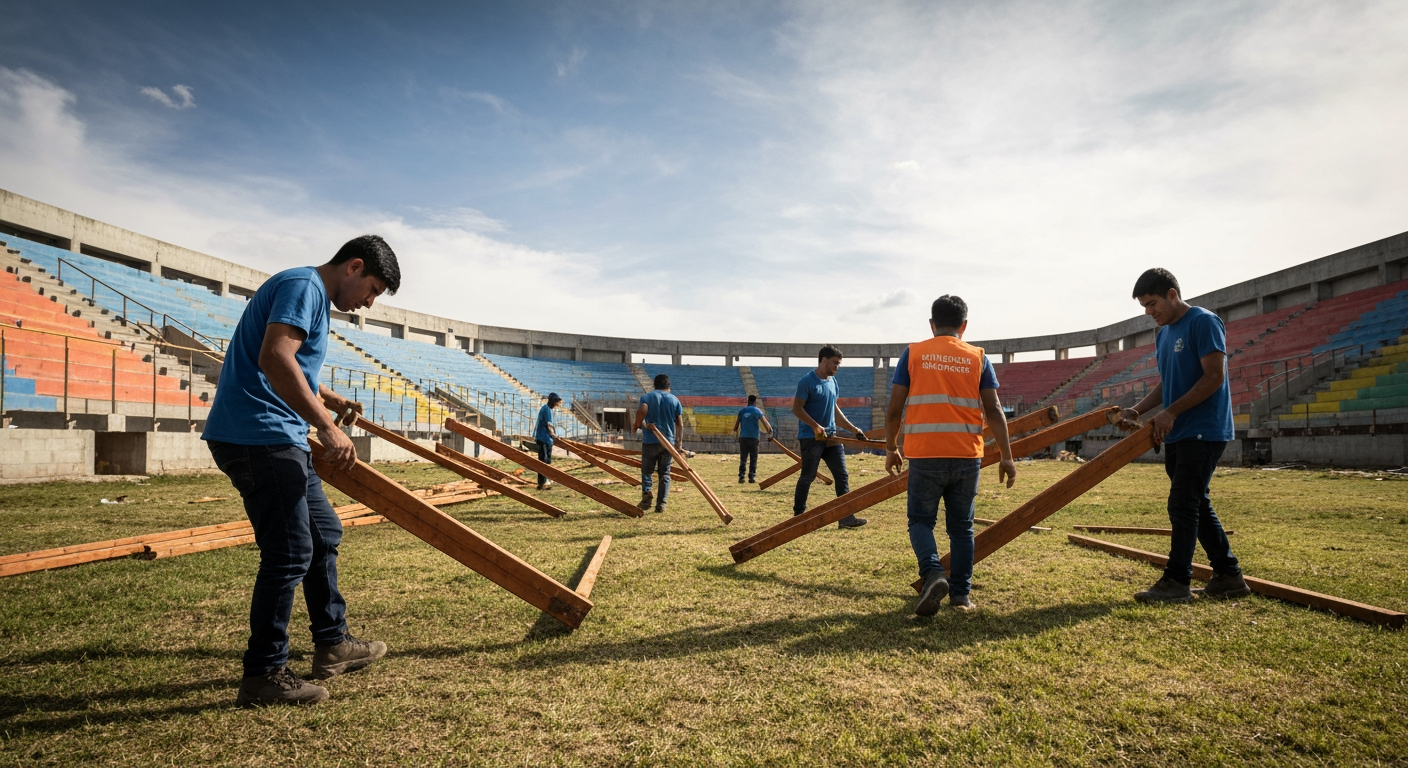
Perhaps one of the most distinctive legacies of the 2026 World Cup is its innovative approach to infrastructure. Unlike many previous tournaments that necessitated the construction of entirely new, purpose-built stadiums—often leading to "white elephants" and significant long-term maintenance burdens—the 2026 event largely relied on modernizing and repurposing existing venues. Zero new permanent stadiums were built for the tournament, a stark contrast to events like Qatar 2022. Instead, existing NFL and football stadiums across North America were retrofitted to meet FIFA's exacting standards.
This "right-sizing" strategy involved strategic renovations rather than wholesale rebuilding. For example, Toronto's BMO Field saw upgrades to suite and club seating, concourse improvements, and an increase in capacity from approximately 29,000 to 45,000 seats using semi-permanent systems that can be disassembled for future flexibility. Across the 16 host cities, over $2 billion was invested in stadium upgrades, public spaces, and crucial transportation networks.
The tournament served as a real-world stress test for urban infrastructure, highlighting the importance of resilient cities. Host cities implemented significant improvements to public transit, cycling infrastructure, and pedestrian routes. Boston's MBTA invested in stadium station enhancements, Philadelphia upgraded its SEPTA system, and Atlanta reimagined its bus services to manage crowds and improve long-term urban mobility. These infrastructure projects, while spurred by the World Cup, are designed to deliver lasting benefits to residents, improving daily commutes and supporting future large-scale events. The experience also underscored the urgent need for climate-resilient stadium design and urban planning, especially after some matches were played under extreme heat conditions, sparking debates about the suitability of open-air venues in a warming climate.
Navigating the Environmental and Social Terrain
The sheer scale of the 2026 World Cup, encompassing travel across three vast countries, presented formidable environmental challenges. Estimates projected the tournament could generate at least 9 million tons of carbon dioxide equivalent emissions, with international air travel and associated tourism identified as the largest contributors to its environmental footprint. Critics noted that while sustainability efforts were planned, the multi-nation format would inherently lead to a larger footprint than previous tournaments.
Nevertheless, FIFA and host cities committed to reducing these impacts. Key sustainability goals included lowering greenhouse gas emissions, promoting public transportation, enhancing waste diversion and recycling, and ensuring energy and water efficiency at venues. The reliance on existing stadiums was a critical component of this strategy, significantly reducing construction-related emissions. Host cities implemented various mitigation efforts: Atlanta's Mercedes-Benz Stadium, for example, diverts over 90% of its waste, while Toronto introduced a three-stream waste system and reusable foodware in fan zones. Houston aimed for 100% renewable electricity at key tournament sites, showcasing a commitment to cleaner energy.
Beyond environmental concerns, the World Cup's social impact has been a mixed bag. While many initiatives focused on community engagement and fostering youth sports programs, particularly in areas like Atlanta and Houston, questions have arisen regarding the equitable distribution of benefits. Human rights advocates voiced concerns about potential negative consequences for vulnerable populations, such as unhoused residents in Vancouver's Downtown Eastside, raising issues of displacement and lack of concrete protections. This highlights a broader debate about whether the spectacle of mega-events truly benefits all segments of the host communities or primarily enriches a select few.
A Legacy in Formation
The 2026 FIFA World Cup, lauded for its successful execution and vibrant atmosphere, has undoubtedly left an indelible mark on North America. The tournament has spurred significant economic activity and accelerated critical infrastructure improvements that will serve residents for years to come. The innovative use of existing venues sets a new precedent for future mega-events, prioritizing sustainability and long-term utility over new construction.
However, the ambitious scale of the event has also amplified discussions around its environmental footprint and the social equity of its economic benefits. The ultimate legacy will be measured not just in the millions of dollars generated or the upgraded transit lines, but in how effectively host cities integrate these changes into their long-term urban planning and how inclusively the benefits are shared. As the global football community looks ahead, the 2026 World Cup provides a powerful case study in the evolving challenges and opportunities of hosting the world's most popular sporting spectacle.
Related Articles

Ebola Crisis Deepens in DRC, Neighbors Boost Defenses Amid Regional Threat
KINSHASA, DR Congo – A rapidly escalating Ebola outbreak in the Democratic Republic of Congo (DRC), driven by the particularly challenging Bundibugyo virus, has prompted its neighbors to significantly bolster their...

UK Demands FIFA Investigation After Argentina Players Display Falklands Banner in World Cup Semi-Final Uproar
Atlanta, USA — Following a dramatic World Cup semi-final victory over arch-rival England, Argentina's triumphant football squad ignited a fresh international controversy by displaying a banner proclaiming "Las Malvinas...