Bishop Heiner Wilmer Elected to Lead German Bishops' Conference Amidst Deep Divides
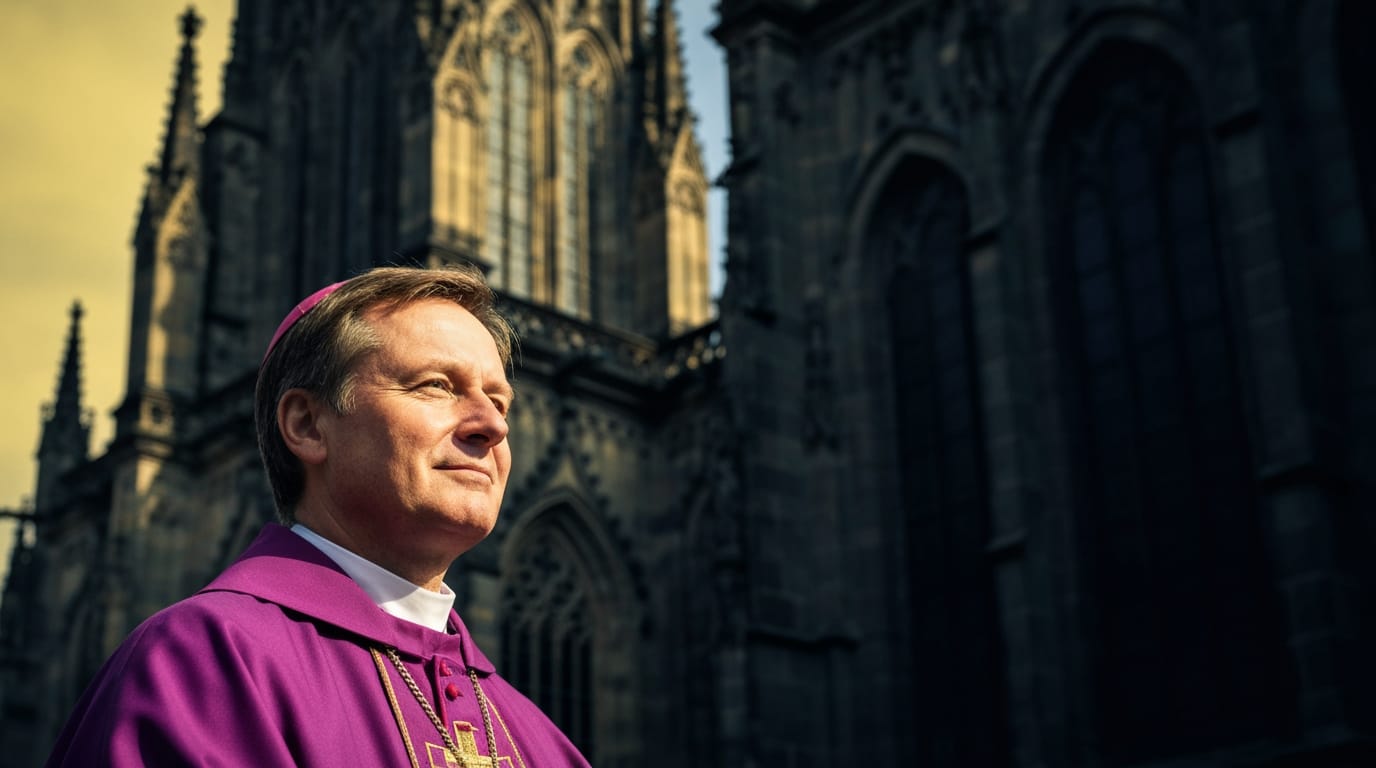
WÜRZBURG, Germany – Bishop Heiner Wilmer of Hildesheim has been elected the new President of the German Bishops' Conference, assuming leadership of a Church grappling with profound internal reform efforts, declining membership, and strained relations with the Vatican. His election on Tuesday, February 24, 2026, positions him at the helm for a six-year term, succeeding Bishop Georg Bätzing of Limburg, who chose not to seek re-election. The appointment marks a pivotal moment for German Catholicism, selecting a leader known for his support of the controversial Synodal Way and his reputation as a mediator.
Wilmer, 64, a member of the Priests of the Sacred Heart (Dehonians), brings a distinct background as the first member of a religious order to lead the influential body. In his initial remarks following the election, Bishop Wilmer emphasized a spiritual compass, opening with the words of the Gloria: "Glory to God in the highest and peace on earth." He articulated his primary task as "placing God at the center" and serving as "workers for your joy," drawing from his episcopal motto, "Adiutores gaudii vestri."
A Shepherd Shaped by Diverse Experiences
Born on a farm in Emsland in 1961, Heinrich Theodor Wilmer's roots are firmly planted in rural Germany. His early life experiences, including his ability to drive a tractor and his plain-spoken authenticity, often distinguish him from typical urban-dwelling church leaders. He joined the Dehonian order in 1980, committing to a life of service that would eventually lead him through diverse educational and pastoral roles.
Wilmer's academic pursuits were extensive, encompassing theology studies in Freiburg and romance philology in Paris, culminating in a doctorate in theology from Freiburg after studying French philosophy in Rome. His professional path prior to his episcopate included teaching German and history at Fordham Preparatory School in the Bronx, New York, an experience that exposed him to urban poverty and multicultural faith life. He also served as headmaster of the Dehonian high school Leoninum in Handrup. His leadership within his religious order saw him rise to Provincial Superior of the German Province and then to Superior General of the worldwide Priests of the Sacred Heart from 2015 to 2018, a role that deepened his understanding of global Church challenges. In 2018, Pope Francis appointed him Bishop of Hildesheim, a diocese he has led until his recent election. He is also an author, known for his book "Gott ist nicht nett" ("God is not kind").
Navigating the Synodal Way and Vatican Tensions
Bishop Wilmer's election comes at a critical juncture for the Catholic Church in Germany, which is in the midst of the "Synodal Way" (Synodaler Weg), a multi-year reform process launched in response to the clerical sexual abuse crisis. This initiative seeks to address issues such as power distribution within the Church, priestly celibacy, the role of women in ministries, and the Church's stance on sexual morality, including blessings for same-sex unions.
Wilmer has been an outspoken proponent of these reform efforts, consistent in his support for the Synodal Way's proposals. He has publicly advocated for blessings for same-sex couples and expanded opportunities for women within the Church. Notably, in 2018, he stated his belief that "abuse of power is in the DNA of the Church," underscoring his commitment to systemic change.
The Synodal Way, while aiming for renewal, has generated significant tension with the Holy See. The Vatican has repeatedly expressed concerns about the German Church's reform trajectory, warning against deviations from universal Church teachings and the potential for schism. In particular, proposals to establish a permanent "Synodal Council" that would grant laypeople equal voting rights alongside bishops on matters of Church governance have drawn reservations from Rome. Bishop Wilmer's past consideration by Pope Francis for a top doctrinal post in the Vatican, the Dicastery for the Doctrine of the Faith, despite encountering opposition, highlights his standing as a figure who can potentially bridge the dialogue between Germany and Rome.
Challenges of a Declining Flock
Beyond doctrinal and structural reforms, the German Catholic Church faces an existential crisis marked by a significant exodus of its members. In 2023 alone, 400,000 Germans officially left the Church, contributing to an ongoing trend of declining affiliation. Current statistics indicate that only 6.2% of German Catholics regularly attend Mass, signaling a broader struggle for relevance and engagement. This decline impacts not only the spiritual vitality of communities but also the Church's financial stability, as the German system relies on a church tax paid by registered members.
Bishop Wilmer's leadership is thus tasked with addressing these multifaceted challenges, aiming to instill unity among bishops who hold diverse views on the Synodal Way, while also navigating complex negotiations with the Vatican. His stated commitment to dialogue, participation, and shared responsibility, encapsulated in his belief that "the days when the bishop was a ruler are over," suggests a pastoral approach to these formidable tasks. He acknowledged the deep pain of abuse victims and the imperative for accountability, stating that "every step of coming to terms with the past gains depth and truth through their testimony."
A Future of Dialogue and Renewal
Bishop Heiner Wilmer's election as President of the German Bishops' Conference signals a commitment from the German episcopacy to continue on a path of reform, albeit with a leader who embodies both a deep spiritual conviction and a pragmatic understanding of the Church's internal and external pressures. His experience as a global religious superior and his reputation as a mediator position him uniquely to engage in crucial conversations with Rome and to foster a sense of shared purpose within the German Church.
The immediate future will undoubtedly see Wilmer grappling with the implementation of the Synodal Way's resolutions, particularly the contentious Synodal Council, and striving to maintain unity amidst calls for both radical change and traditional adherence. His emphasis on "God at the center" and the belief that the "Holy Spirit lives not only in consensus but also in dissent" suggests a readiness to embrace difficult discussions while seeking spiritual guidance. As the German Catholic Church navigates its turbulent waters, Bishop Wilmer's tenure will be closely watched as a barometer for the broader trajectory of Catholicism in an increasingly secular and questioning world.


