Border Blazes Anew: Thailand and Cambodia Grapple with Escalating Conflict as Truce Talks Loom
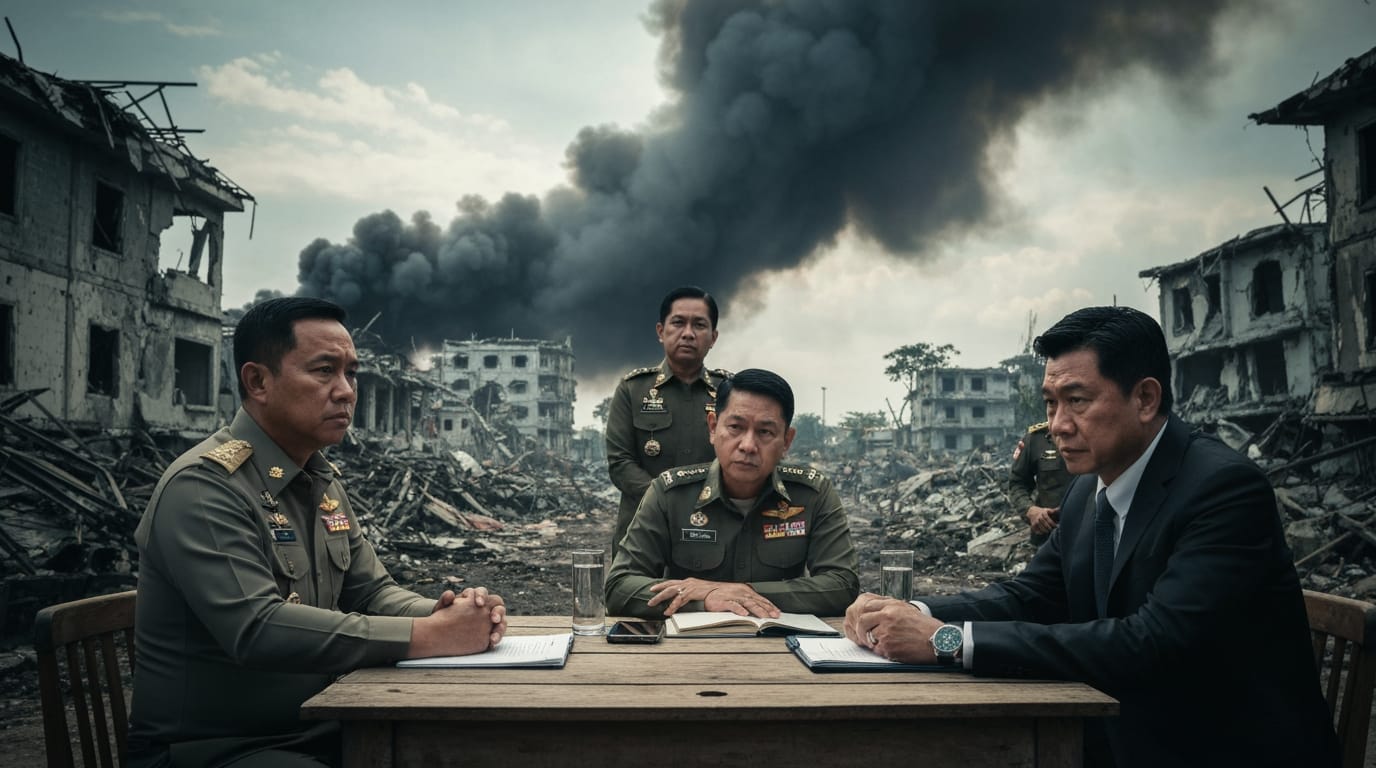
Kuala Lumpur, Malaysia – As artillery exchanges and airstrikes continue to rock their shared border, Thailand and Cambodia are set to engage in crucial ceasefire talks on December 24, 2025, amidst intense diplomatic pressure from regional and international bodies. The latest eruption of hostilities, which began on December 7, marks a grave deterioration in relations, shattering a fragile peace established earlier this year and triggering a significant humanitarian crisis that has displaced hundreds of thousands of civilians. The renewed fighting underscores the enduring volatility of a territorial dispute rooted in colonial-era demarcations, posing a critical test for ASEAN's ability to maintain regional stability.
A Flaring Front Line and Mounting Casualties
The current surge in violence, now in its third week, has seen both Thai and Cambodian forces employing heavy weaponry, including F-16 fighter jets, drones, and advanced rocket systems. The intensity of the clashes has drawn alarm from the international community, with UN Human Rights Chief Volker Türk expressing grave concern over reports of attacks on villages and cultural sites. Since the fighting reignited on December 7, Cambodia has reported 18 civilian fatalities, while Thailand has confirmed one civilian death, though overall casualties from the renewed hostilities are estimated to be at least 40 people, with dozens more injured. The combat zones extend beyond the historically contested areas, with strikes increasingly reported deeper into both countries' territories. This widespread engagement marks the worst fighting between the two nations since the dispute began, creating an atmosphere of fear and uncertainty along the 817-kilometer border.
Echoes of a Century-Old Dispute
The underlying tensions between Thailand and Cambodia are deeply entrenched in historical disagreements over their shared border, primarily stemming from imprecise delimitations defined by Franco-Siamese treaties of 1904 and 1907. At the heart of the dispute is the 11th-century Preah Vihear temple, a UNESCO World Heritage site situated atop the Dangrek Mountains. In 1962, the International Court of Justice (ICJ) ruled that the temple belonged to Cambodia, a decision that has been a recurring flashpoint. While the ICJ affirmed Cambodian sovereignty over the temple, it left the status of surrounding territories largely unresolved, leading to persistent claims and counter-claims. Decades of uneasy peace were punctuated by significant military clashes between 2008 and 2011, when Cambodia's successful bid for UNESCO World Heritage status for Preah Vihear reignited nationalist sentiments and led to deadly skirmishes around the temple and other border areas like Prasat Ta Muen Thom and Prasat Ta Krabey.
A Cycle of Failed Ceasefires and Broken Pacts
The current flare-up is particularly disheartening as it follows several attempts to establish lasting peace throughout 2025. After months of simmering tensions and a brief exchange of fire in May that left a Cambodian soldier dead, a major armed confrontation erupted on July 24. This brutal four-day conflict, spreading across at least 12 border sites and claiming the lives of dozens and displacing over 300,000, saw the deployment of heavy artillery and airstrikes. On July 28, 2025, an "immediate and unconditional" ceasefire was brokered in Kuala Lumpur, Malaysia, with mediation from the Malaysian government, then chair of ASEAN, and encouragement from the United States and China. This agreement, sometimes referred to as the Putrajaya Agreement, was intended as a vital first step towards de-escalation.
Further diplomatic efforts led to the signing of the Kuala Lumpur Peace Accord on October 26, 2025, on the sidelines of the 47th ASEAN Summit. This accord outlined concrete measures, including the establishment of an ASEAN Observer Team to monitor the ceasefire, withdrawal of heavy weapons, joint demining operations, and the restoration of diplomatic relations. However, this hard-won peace proved short-lived. On November 10, the accord was effectively suspended after Thai soldiers were injured by a landmine, an incident Thailand attributed to newly placed devices by Cambodia, a charge Phnom Penh denied. This breakdown in trust paved the way for the renewed and intense fighting that commenced on December 7.
A Worsening Humanitarian Crisis and Urgent Appeals
The human cost of the renewed conflict is staggering. Since December 7, over 500,000 people have been displaced, adding to the 172,000 displaced during the July clashes, bringing the total number of displaced persons to approximately 750,000. Many have sought refuge in makeshift camps, government evacuation centers, or with relatives, straining resources in neighboring provinces. Essential services have been severely disrupted, with 883 schools closed in Cambodia alone, affecting over 200,000 students. The UN Human Rights Chief, Volker Türk, voiced strong concerns regarding the use of heavy weaponry in and around populated areas and the increasing risks to civilians and civilian infrastructure, including cultural sites. He also highlighted the particular vulnerability of trafficked individuals forced to work in illicit scam centers, reportedly targeted in some strikes, urging their evacuation. The widespread displacement has also impacted cross-border trade, tourism, and remittances from Cambodian migrant workers in Thailand, exacerbating economic hardship.
The Path to Peace Remains Steep
Against this backdrop of ongoing violence and humanitarian suffering, defense officials from Thailand and Cambodia are scheduled to meet on December 24 to discuss a potential ceasefire. This follows an urgent meeting of ASEAN foreign ministers in Kuala Lumpur on December 22, where calls for "maximum restraint" and the full implementation of existing peace agreements were reiterated. Malaysian Foreign Minister Dato' Seri Utama Haji Mohamad bin Haji Hasan, chairing the ASEAN meeting, emphasized the regional bloc's concern for stability and credibility, urging both parties to prioritize peace.
However, achieving a lasting truce faces significant hurdles. Thai Foreign Minister Sihasak Phuangketkeow stated that the December 22 ASEAN meeting concluded without a concrete ceasefire agreement between the two nations. Thailand has outlined three key conditions for a ceasefire: Cambodia must be the first to declare a cessation of hostilities, the ceasefire must be real and continuous, and Cambodia must demonstrate sincerity in cooperating on critical issues such as landmine clearance. Cambodia, on its part, has previously sought an ICJ ruling and referred the matter to the UN Security Council, at times expressing a preference for international mediation over purely bilateral talks.
The ongoing crisis tests the fundamental principles of ASEAN – non-interference and peaceful dispute settlement. While Malaysia and other international actors have pushed for dialogue, the deep-seated grievances, compounded by domestic political pressures and emerging issues like cybercrime operations near the border, make a swift and comprehensive resolution challenging. The upcoming talks represent a critical opportunity, but trust-building measures, effective monitoring mechanisms, and a genuine commitment from both sides will be essential to translate discussions into a durable peace and alleviate the suffering of those caught in the crossfire.


