Border Conflict Flares as Trump Declares Truce Between Thailand and Cambodia
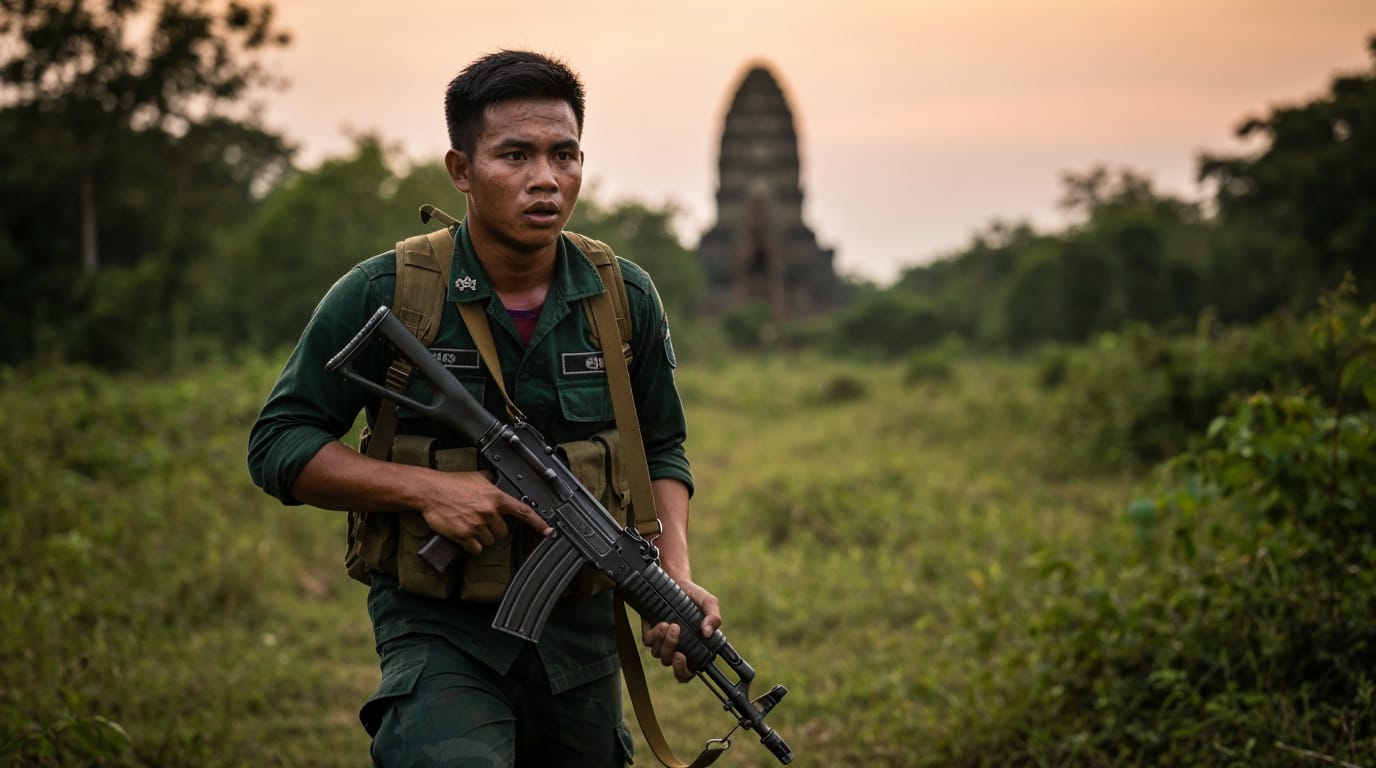
Southeast Asia finds itself embroiled in renewed cross-border hostilities between Thailand and Cambodia, defying claims by former U.S. President Donald Trump that he had brokered a fresh ceasefire. As artillery shells and rockets once again impact disputed territories, the international community watches a humanitarian crisis unfold, underscoring the deep-seated complexities of a conflict spanning generations.
Heavy fighting re-erupted along the contentious 817-kilometer frontier this week, resulting in at least 20 fatalities and wounding more than 260 individuals, according to tallies from both sides. The clashes have also triggered a significant humanitarian impact, displacing hundreds of thousands of residents from their homes on either side of the border. This escalation occurred despite President Trump's declaration on Friday, December 12, that both nations had agreed to "CEASE all shooting effective this evening, and go back to the original Peace Accord," following his conversations with Thai Prime Minister Anutin Charnvirakul and Cambodian Premier Hun Manet. However, reports from the ground and statements from officials in both Southeast Asian nations starkly contradicted the American leader's assertion, confirming ongoing military operations and mutual accusations of aggression.
Renewed Hostilities Defy Diplomatic Announcements
The latest surge in violence marks a critical breakdown in a fragile calm, which was supposedly solidified by a peace accord brokered earlier this year, partly with Trump's involvement. Cambodian officials indicated that Thai forces continued to strike targets across their shared border, employing fighter jets and ground bombardments. Cambodia's Ministry of Information stated on Saturday, December 13, that Thai forces had not ceased their attacks and were still engaging in shelling. In response, Thailand's military accused Cambodia of "repeated violations of international rules," alleging incursions into Thai territory, targeting civilian areas, and the deployment of new landmines. Prime Minister Anutin Charnvirakul maintained that Thailand was compelled to retaliate against Cambodian aggression and the threats posed by freshly laid landmines, vowing that military actions would persist until all threats to Thai land and people were nullified.
The intensity of the current conflict is significant, with both nations employing heavy weaponry. Thai forces have reportedly deployed jet fighters for airstrikes on what they describe as military targets, while Cambodian forces have utilized BM-21 rocket launchers, capable of ranges between 30 to 40 kilometers. Reports from Thai public broadcaster ThaiPBS indicated that rocket shrapnel was responsible for some of the Thai soldier fatalities. Meanwhile, the Thai army's northeastern regional command confirmed damage to residential areas and homes near the border from Cambodian rocket fire. Furthermore, the Thai military reported destroying a crane positioned on a Cambodian-held hill near the Preah Vihear temple, alleging it was used for military command and control purposes. These actions highlight a direct and immediate military engagement that starkly contrasts with the proclaimed truce.
The Diplomatic Chessboard: Trump's Repeated Interventions
Donald Trump's involvement in the Thai-Cambodian conflict has been a prominent feature of the diplomatic landscape in 2025. Earlier in July, Trump had publicly claimed to have brokered an initial ceasefire following intense fighting. This was followed by a more formalized peace accord signed in October during a regional meeting in Malaysia, which Trump attended. He frequently leveraged his position as a self-styled "President of Peace," often using economic incentives and threats, such as tariffs, to pressure both nations into agreement. This transactional approach to diplomacy aimed to secure short-term stability, with the US leader publicly taking credit for de-escalating what he termed a "long-running war" that he believed could have escalated into a major conflict.
The Malaysian Prime Minister, Anwar Ibrahim, also played a significant role in mediating the earlier ceasefire efforts, a contribution acknowledged by Trump. However, analysts have expressed concerns about the sustainability of peace agreements brokered primarily through external pressure and economic leverage. Critics suggest that such an approach, while potentially yielding immediate results, may not address the underlying causes of entrenched conflicts, leaving them vulnerable to reignition. Indeed, despite the October accord and Trump's recent declaration, the persistent fighting underscores the limitations of external diplomatic interventions when confronted with deeply rooted nationalistic sentiments and territorial claims.
Roots of the Enduring Conflict
The current hostilities are the latest chapter in a protracted territorial dispute that has plagued Thailand and Cambodia for over a century. At the heart of the conflict is the imprecise demarcation of their shared border, largely a legacy of French colonial rule in Cambodia. A 1907 map, drawn during this period, established a boundary that Thailand has long contested, particularly concerning areas rich in historical and cultural significance.
A central flashpoint is the Preah Vihear temple, an 11th-century Khmer Hindu temple complex situated on a cliff in the Dângrêk Mountains. The International Court of Justice (ICJ) ruled in 1962 that the temple itself belonged to Cambodia, a decision that has been a continuous source of contention for many Thais. While the ruling determined sovereignty over the temple, it did not definitively resolve the broader territorial claims in surrounding areas. This historical and legal complexity has fueled sporadic outbreaks of violence, including significant clashes between 2008 and 2011, and again in July of this year, which involved ground combat and artillery exchanges, leading to numerous casualties and large-scale displacements. The recent re-escalation in December 2025, therefore, is not an isolated incident but a continuation of a deeply ingrained historical rivalry.
A Fragile Peace and the Path Forward
The breakdown of the latest ceasefire highlights the inherent challenges in resolving conflicts rooted in historical grievances and competing national narratives. Both Cambodian and Thai officials have accused each other of violating agreements and instigating hostilities, reflecting a deep-seated distrust that is difficult to overcome through diplomatic announcements alone. The continued military posturing and accusations demonstrate that domestic political imperatives often outweigh the desire for a swift, externally imposed peace.
The humanitarian cost of this renewed conflict is substantial, with innocent lives lost and communities uprooted. The displacement of hundreds of thousands underscores the urgent need for a durable resolution that goes beyond temporary ceasefires. For regional stability, the ongoing conflict between two ASEAN member states also presents a challenge, raising questions about the effectiveness of regional mechanisms in mediating such deeply entrenched disputes. The path forward remains uncertain, as the immediate priority for both nations appears to be securing their perceived territorial integrity, even as international calls for de-escalation intensify.
Conclusion
The recent flare-up of hostilities between Thailand and Cambodia, despite international efforts to broker a ceasefire, serves as a stark reminder of the enduring nature of historical conflicts. While President Donald Trump proclaimed a renewed truce, the reality on the ground depicts a grim picture of ongoing military engagements, casualties, and displacement. The deeply rooted territorial dispute, exacerbated by interpretations of colonial-era maps and historical rulings, continues to fuel animosity. Achieving a lasting peace will require more than diplomatic pronouncements; it demands a comprehensive, mutually agreeable solution that addresses the core grievances and secures the long-term stability of the border region, offering genuine relief to the populations caught in the crossfire.


