Border Wall Divides Wildlife and Wilderness on Poland-Belarus Frontier
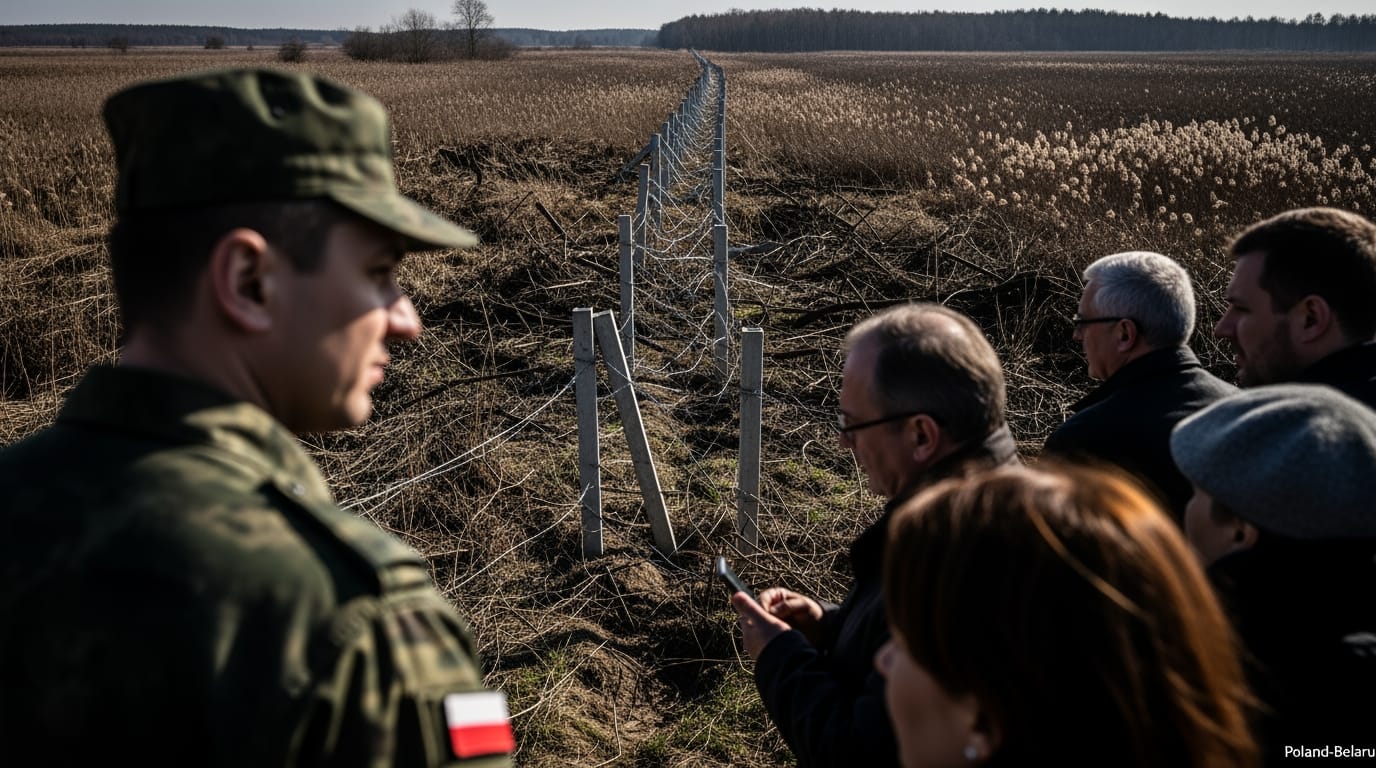
Białowieża Forest, Poland/Belarus Border – A formidable steel barrier, erected by Poland along its border with Belarus, has cleaved through one of Europe's last remaining primeval forests and several critical natural habitats, sparking widespread alarm among conservationists and scientists. Intended to curb irregular migration, the 186-kilometer (116-mile) wall now stands as a stark testament to how human geopolitics can inflict profound and potentially irreversible damage on nature. The controversial construction has fragmented ecosystems, disrupted vital wildlife migration routes, and isolated genetically crucial animal populations, raising urgent questions about ecological integrity versus national security.
The Iron Curtain of the 21st Century: A Response to Crisis
The decision to build the extensive barrier arose from a volatile geopolitical situation beginning in mid-2021, when thousands of migrants, primarily from the Middle East, sought to enter the European Union via Belarus. Polish authorities accused the Belarusian government of orchestrating this influx to destabilize the EU, leading to a humanitarian crisis at the border. In response, Poland initially deployed a razor-wire fence in 2021, which reportedly trapped and killed animals, including bison and moose. This temporary measure was soon replaced by a permanent structure: a 5.5-meter (18-foot) tall steel wall, topped with wire and equipped with cameras, constructed between January and June 2022. The project was expedited under special legislation that exempted it from typical environmental, water, and construction laws, bypassing crucial environmental impact assessments that would normally be mandatory for such a significant undertaking.
Fragmenting Europe's Last Primeval Wilderness
The physical barrier cuts directly through some of Europe's most ecologically valuable and protected landscapes, including six Natura 2000 sites. Most notably, it bisects the Białowieża Forest, a UNESCO World Heritage Site recognized as the continent's last lowland old-growth woodland, existing with minimal human disturbance since the last ice age. This ancient forest spans the Polish-Belarusian border, making its conservation inherently an international concern. Scientists emphasize that the wall creates a devastating ecological barrier, interrupting the functional connectivity of the Natura 2000 network on both national and European scales. The isolation of habitats on either side of the border is expected to have multifaceted and large-scale consequences, preventing the movement of many animal species and restricting gene flow between populations.
Devastating Impact on Iconic Wildlife
The wall poses an existential threat to numerous species, particularly large mammals that depend on transboundary movement for survival and genetic diversity. Researchers warn that the barrier could lead to the collapse of the Polish lowland lynx population, which relies on accessing areas on both sides of the border. Before the wall's construction, approximately 40 lynxes inhabited the dense forest, moving freely between the two countries. The Mammal Research Institute at the Polish Academy of Sciences indicated that dividing the forest into two distinct ecosystems will sever these populations, affecting reproduction, spatial organization, migration, and gene flow, potentially leading to extinction or the need for reintroduction over time.
Other critically affected species include the European bison, home to the largest remaining population in Białowieża, as well as wolves, red deer, and brown bears whose re-colonization efforts in the region are now jeopardized. Reports suggest that animals have been trapped and killed by the initial razor-wire fence, and the permanent wall continues to impede movement. Studies using camera traps and snow-tracking reveal that while some smaller mammals might navigate certain barriers, larger species like bison face significant movement restrictions. A recent study on the Polish-Belarusian border also indicated that animals are actively avoiding the wall, with very few signs of wildlife detected along the barrier, even in rich forest habitats.
Polish border guards have asserted that the barrier includes 24 wildlife gates for large animals and over 140,000 channels for smaller creatures, claiming these would mitigate environmental impacts and allow continuous migration, provided there is "no pressure on the border." However, wildlife experts counter these claims, presenting evidence that a pre-existing Belarusian fence (the "Sistiema"), in place since the 1980s, did not fully prevent animal movements, with lynxes reportedly crossing it up to 50-60 times annually.
Broader Ecological and Legal Ramifications
Beyond direct physical obstruction, the construction and presence of the wall have broader ecological consequences. The building phase involved logging and road development, contributing to habitat degradation. Ongoing militarization of the border area, including heavy traffic, noise, and light, further disrupts wildlife. Anthropogenic noise has been shown to penetrate 100-250 meters into the forest, impacting bird communities. There are also concerns about the spread of invasive plant species along the newly created linear disturbance.
The lack of a proper environmental impact assessment during the wall's planning and construction represents a clear infringement of Article 6(3) of the EU's Habitats Directive, according to environmental organizations and scientists. Over 1,400 scientists and a coalition of 160 non-governmental organizations petitioned the European Commission to intervene, stressing the wall's "devastating" impact on the delicate ecosystem. In October 2024, the Belarusian Foreign Ministry cited statistics indicating that approximately 50 animals, including bison, roe deer, and moose, had died on the border due to the barrier, further confirming its negative impact on the Belovezhskaya Pushcha ecosystems, as recognized by the UNESCO World Heritage Committee.
A Lasting Scar on Nature
The Poland-Belarus border wall exemplifies a growing global trend where geopolitical tensions lead to the construction of barriers with severe and often overlooked environmental costs. While governments prioritize national security and migration control, the long-term ecological damage to unique and irreplaceable ecosystems like the Białowieża Forest is a significant and escalating concern. The division of this ancient woodland and other critical habitats could result in diminished genetic diversity, local extinctions, and profound alterations to natural processes, leaving a lasting scar on the European landscape and a stark reminder of the unintended consequences when human borders harm nature.