Bosnia Nationalist Parties Retain Power as New Voting Technology Curbs Fraud
Biometric checks and ballot scanners lowered voter turnout to a record low without loosening the political grip of established ethnic blocs across the divided country.
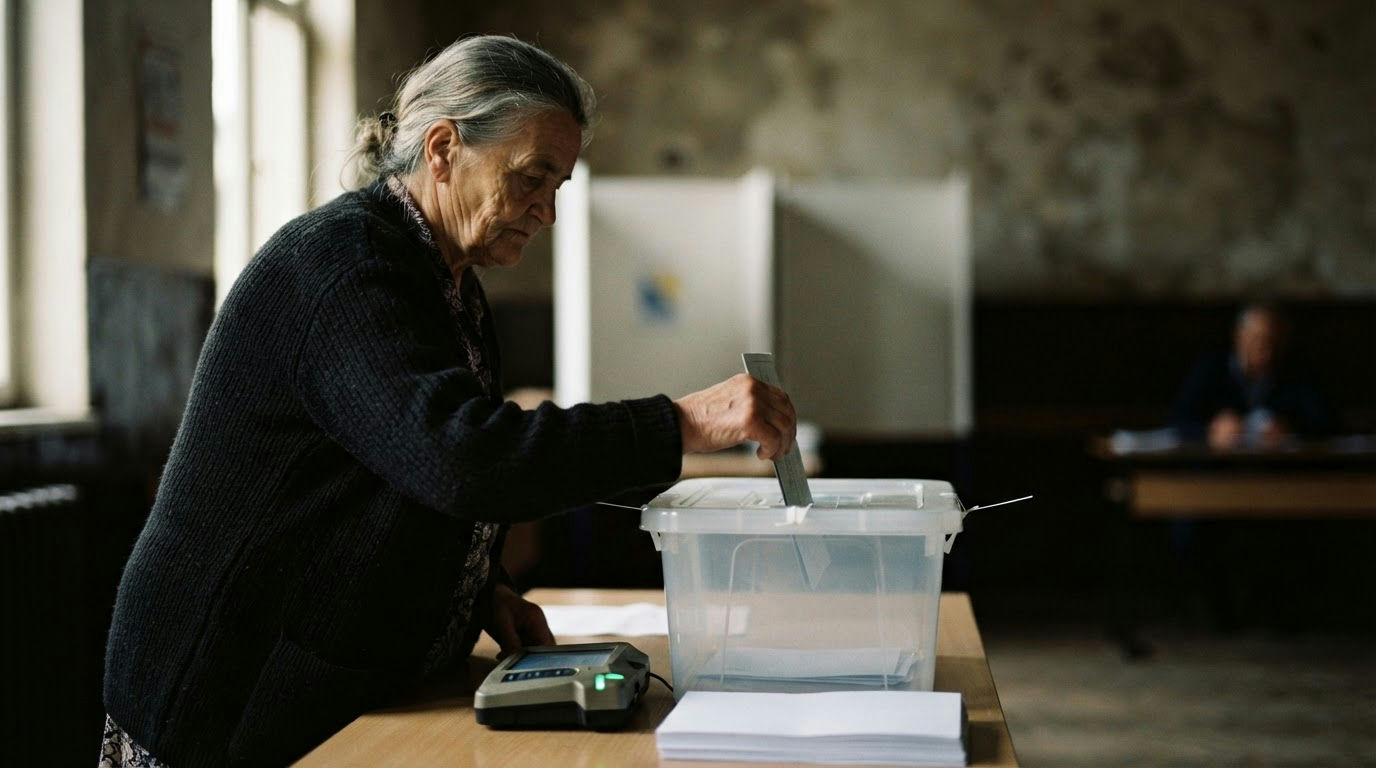
Bosnia and Herzegovina held nationwide general elections on Sunday using new biometric technology, where traditional ethnic nationalist parties retained broad control.
Voters chose members of the multiethnic tripartite presidency, the state parliament, and regional assemblies. Election authorities introduced fingerprint verification devices and optical ballot scanners to prevent fraud, including votes cast for deceased people. Central Election Commission President Jovan Kalaba said the digital equipment performed as planned, with no polling stations forced back to manual counting.
Official turnout dropped to 41.48 percent, with about 1.41 million of 3.4 million registered voters casting ballots. The participation rate fell nearly ten percentage points compared to the 2022 national election. Election observers said the decline partly reflected the elimination of fraudulent ballots previously cast using deceased or absent citizens.
Preliminary counts showed Denis Becirovic, a Social Democrat, retaining the Bosniak seat on the three-member presidency. Zeljka Cvijanovic of the Alliance of Independent Social Democrats retained the Serb seat. Darijana Filipovic of the Croatian Democratic Union led the race for the Croat seat, unseating incumbent Zeljko Komsic.
Milorad Dodik declared victory for his party in Republika Srpska, where candidate Savo Minic won the entity presidency. Dodik said his political bloc would work to reclaim state-level powers granted to central institutions since the 1995 Dayton peace agreement. Dodik remains the dominant Serb politician despite a conviction that barred him from holding public office.
In the Bosniak-Croat Federation, the Party of Democratic Action led the vote for the entity parliament. Party leader Bakir Izetbegovic conceded his defeat to Becirovic in the presidential race while noting gains for his party. The Croatian Democratic Union and the Social Democratic Party followed in the entity parliamentary tally.
Technical glitches delayed voting at some polling sites on Sunday morning. Republika Srpska interior officials reported opening delays at 201 polling stations because of problems with scanners. The election commission kept affected stations open past the normal closing time to ensure all voters had access.
Bosnia received European Union candidate status in 2022, but political disputes have slowed accession talks. European officials backed the election technology project to align Bosnian voting procedures with international standards.
The Central Election Commission is processing postal ballots and votes from diplomatic missions before certifying final results. Election officials must wait five days for all mailed ballots to arrive before completing the official count.