Bosnian Serb Police Raid Federal Office as Tensions Escalate
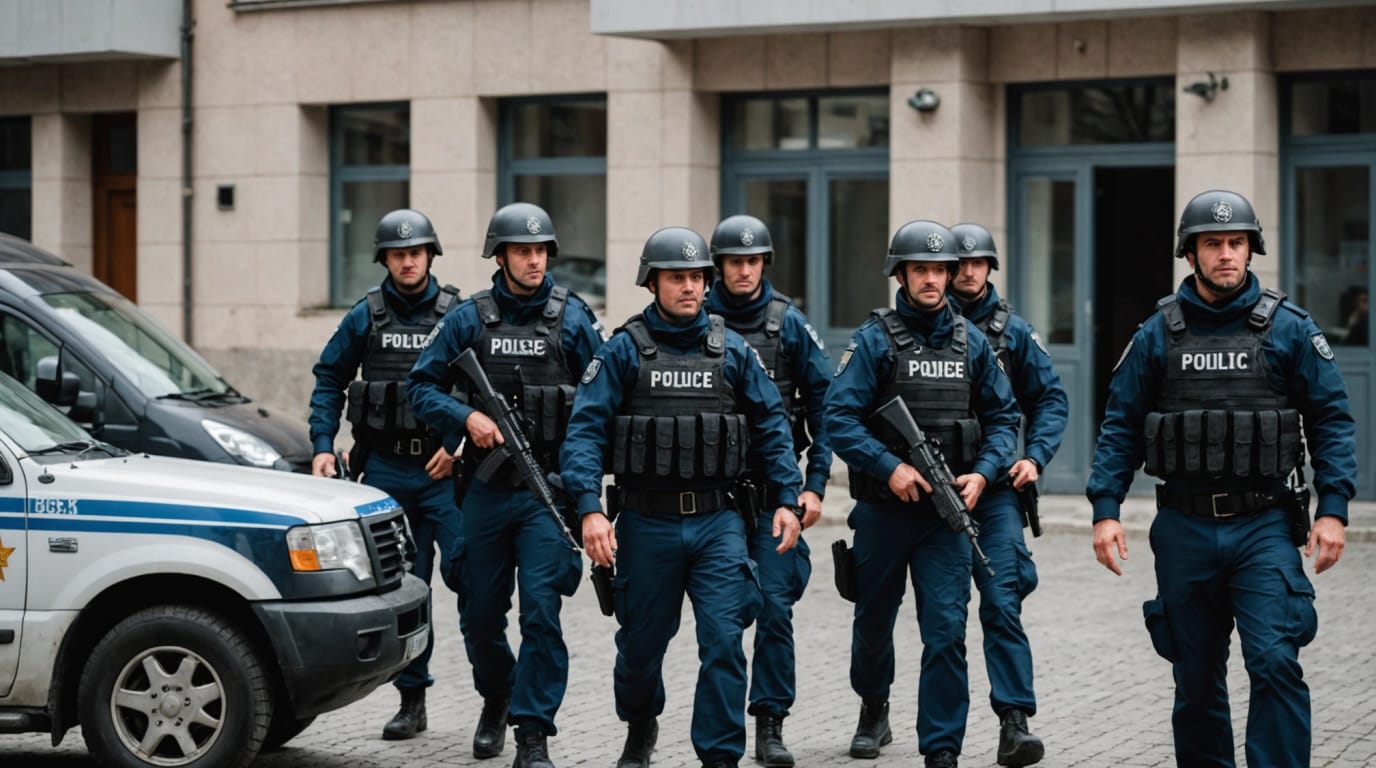
BANJA LUKA, Bosnia and Herzegovina — Tensions in Bosnia and Herzegovina soared Friday as police from Republika Srpska (RS), the Serb-controlled entity within the country, raided an office of the State Investigation and Protection Agency (SIPA), the federal police force, in Banja Luka. The move is the latest in a series of escalating actions that threaten to destabilize the fragile peace in the Balkan nation.
The raid occurred amid a deepening political crisis sparked by separatist legislation passed by the RS parliament and signed into law by Milorad Dodik, the president of Republika Srpska. Dodik, a pro-Russian nationalist, has been actively undermining the authority of the central government, leading to heightened concerns about the country's future.
Separatist Laws Trigger Crisis
The RS parliament recently passed laws that effectively ban the national police and judiciary from operating within the territory of Republika Srpska. These laws represent a direct challenge to the constitutional order of Bosnia and Herzegovina, which has been governed under a complex power-sharing arrangement since the end of the Bosnian War in 1995.
Dodik has defended the legislation, arguing that the state-level judiciary, prosecutors, and police are unconstitutional because they were not explicitly provided for in the Dayton Peace Agreement that ended the war. He has called for all Serbs working in state institutions, including SIPA, the state court, and the prosecutor's office, to resign and take up positions within the RS government, promising them continued employment and equal or higher salaries.
Federal Response and International Concerns
Bosnian officials have condemned Dodik's actions as an attack on the country's sovereignty and have vowed to uphold the rule of law. The state prosecutor's office has launched an investigation into what it described as a criminal act against the constitutional order.
The international community has also expressed concern over the escalating tensions. The United States and European Union have called on all parties to refrain from actions that could further destabilize the country. The Office of the High Representative (OHR), the international body charged with overseeing the implementation of the Dayton Agreement, has warned against any attempts to undermine the central government's authority.
Srebrenica Memorial Center Closes
Reflecting the growing unease, the Srebrenica Memorial Center, which commemorates the victims of the 1995 Srebrenica genocide, announced its closure to the public "until further notice" due to security concerns. The center, a site of immense historical and emotional significance, cited the "current security situation" as the reason for its unprecedented closure.
The Srebrenica massacre, in which over 8,000 Bosnian Muslim men and boys were killed by Bosnian Serb forces, remains a deeply sensitive issue in Bosnia and Herzegovina and a symbol of the brutal ethnic cleansing that characterized the Bosnian War.
Hungarian Involvement and Regional Implications
Adding another layer of complexity to the situation, reports have emerged of Hungary's involvement in the crisis. According to an investigation by VSquare, Hungarian special police forces were allegedly deployed to Republika Srpska in late February with a covert mission to extract Dodik to Hungary if he faced arrest.
The report claims that the deployment was disguised as a joint training exercise with local police. However, the plan was reportedly revealed to multiple governments and authorities monitoring the region, leading to a warning from U.S. officials to Hungary to refrain from interfering in Bosnia.
Bosnia's defense minister also prevented a Hungarian military plane carrying a state secretary from landing in the country earlier this week, further escalating tensions between Bosnia and Hungary.
Dodik's Defiance and Potential for Further Escalation
Dodik has remained defiant in the face of criticism and legal challenges. He was recently sentenced to a year in prison and banned from politics for six years for refusing to comply with decisions made by the High Representative, but he has rejected the ruling and vowed to "radicalize the situation" in the country.
While Dodik has stated that he does not plan for a violent escalation, he has also asserted that Republika Srpska has "the ability to defend itself." This statement, coupled with the recent actions and the deployment of Hungarian forces, has raised fears of potential conflict and further fragmentation of Bosnia and Herzegovina.
The current crisis represents a significant challenge to the Dayton Peace Agreement and the fragile stability that has been maintained in Bosnia and Herzegovina for the past three decades. The actions of Milorad Dodik and the response from the international community will be crucial in determining the future of the country and the wider region. The coming days and weeks will be critical in de-escalating tensions and preventing a return to the violence and division that plagued Bosnia and Herzegovina in the 1990s.


