Bosnia's Pipeline Predicament: A Controversial Gas Deal Threatens EU Accession
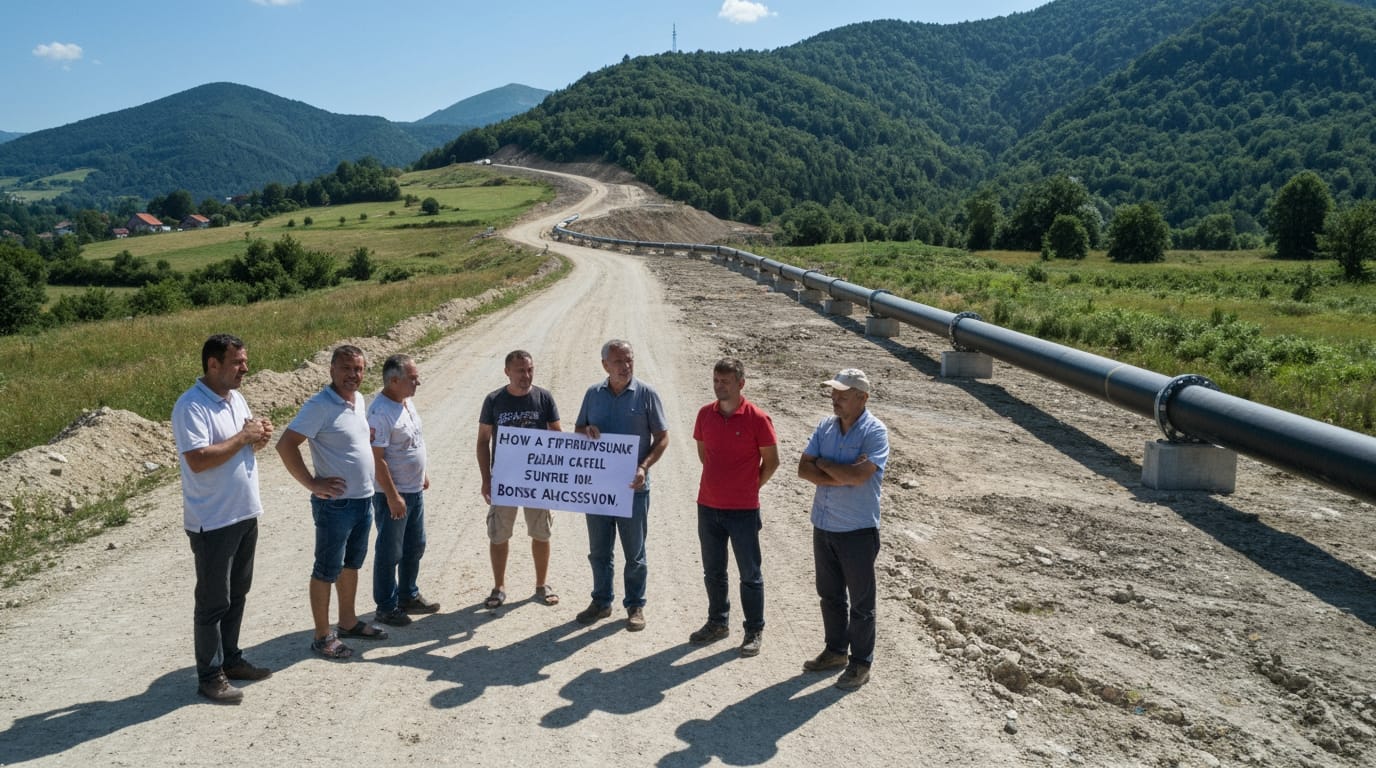
SARAJEVO – Bosnia and Herzegovina’s aspiration for European Union membership faces a critical test as a controversial gas pipeline deal, the "Southern Interconnection," has drawn a stern warning from Brussels. The project, intended to diversify Bosnia’s energy supply away from its historical dependence on Russian gas, has become entangled in a web of non-transparent procurement, political influence, and geopolitical maneuvering, prompting the European Union to signal that its continuation under current terms could jeopardize the nation's path toward accession and critical financial aid. The situation underscores the complex challenges Bosnia faces in aligning its domestic policies with EU standards, particularly in the sensitive energy sector.
The Controversial "Southern Interconnection" Deal
At the heart of the dispute is the proposed Southern Interconnection gas pipeline, a project designed to link Bosnia and Herzegovina's gas network with Croatia's system and, by extension, to the Krk Liquefied Natural Gas (LNG) terminal. This connection is envisioned as a strategic move to provide an alternative gas supply route for Bosnia, which currently relies almost entirely on Russian gas delivered via Serbia. The project's stated goal is to enhance energy security and diversify supply sources, a critical objective given geopolitical shifts and the EU's push to reduce reliance on Russian energy. The pipeline is projected to have an initial capacity of 1 to 1.5 billion cubic meters (bcm) per year, a significant volume considering Bosnia’s total annual gas consumption has historically been below 0.5 bcm. Its estimated cost ranges from €120 million to €1.5 billion, with the EU having previously indicated potential financial support through grants and loans for such strategic infrastructure.
However, the implementation of the Southern Interconnection has become mired in controversy following legislative actions taken by the Federation of Bosnia and Herzegovina, one of the country's two autonomous entities. The Federation adopted amendments to its law, effectively designating a private U.S. company, AAFS Infrastructure and Energy, as the sole investor and developer for the project. This move, characterized as "lex specialis" legislation, bypasses standard public procurement and competitive bidding processes, raising significant alarms regarding transparency and fairness. AAFS Infrastructure and Energy, incorporated in November 2025, has no discernible track record of major infrastructure projects. The company is fronted by individuals with reported ties to former U.S. President Donald Trump's administration, including Jesse Binnall, a former lawyer for Trump, and Joseph Flynn, the brother of former National Security Adviser Michael Flynn. This swift, non-transparent award of a critical national infrastructure project to a relatively new, politically connected entity has ignited concerns about potential corruption and undue influence, undermining the principles of fair competition that are fundamental to EU market rules.
Brussels' Red Flag: EU Accession on the Line
The European Union has reacted sharply to the developments, issuing a clear warning that the controversial gas deal could severely impede Bosnia and Herzegovina's progress toward EU accession. Luigi Soreca, the EU ambassador to Sarajevo, conveyed in an April 13 letter that legislation adopted specifically for the gas pipeline project could jeopardize Bosnia's access to the European energy market and risk approximately €1 billion in funding under the EU Growth Plan for the Western Balkans.
Bosnia and Herzegovina received EU candidate status in December 2022, and accession negotiations were formally opened in March 2024. This significant step forward is conditional upon the country undertaking comprehensive judicial, constitutional, and regulatory reforms, including a crucial alignment with the EU's energy and climate policies. The EU's concerns are multi-faceted:
- Breach of EU Rules: The "lex specialis" approach, which awards the contract without a tender, is seen as a direct violation of EU public procurement rules, competition law, and principles of energy market liberalization, which require open and fair competition.
- Lack of Regulatory Alignment: The EU insists that any energy-sector legislation must be consistent with Bosnia's accession obligations and submitted for review under EU procedures. The current process bypasses this requirement, demonstrating a lack of harmonization with EU standards.
- Loss of Financial Opportunities: The potential loss of €1 billion in EU aid is a substantial blow to a country heavily reliant on international support for development and reform. This funding is critical for initiatives aimed at strengthening the Western Balkans region's economic stability and connectivity.
The EU's position is rooted in its broader strategy for energy security and market integration, which emphasizes diversification, liberalization, and a transition to green energy. Brussels views the Southern Interconnection as strategically important for Bosnia to integrate into the European gas system, especially with the Krk LNG terminal, which is a key hub for non-Russian gas. However, the process of its construction must adhere to the rule of law and transparency that are cornerstones of the EU's acquis communautaire.
Bosnia's Fragmented Energy Landscape and Geopolitical Crossroads
Bosnia and Herzegovina's energy sector is characterized by deep fragmentation, mirroring the country's complex political structure. While the Federation of BiH has pursued the Southern Interconnection to diversify away from Russia, the other autonomous entity, Republika Srpska (RS), has been solidifying its energy ties with Moscow. RS has existing contracts with Russian energy giant Gazprom for gas supply and has announced plans for a separate pipeline to transport Russian gas via Serbia, along with the joint construction of gas-fired power plants with Russian investment. These projects, estimated at €1.5 billion, would further entrench RS's dependence on Russian energy, directly contradicting the EU's goal of reducing Moscow's energy leverage in the region.
This bifurcated approach to energy policy within Bosnia creates a significant hurdle for its EU integration. The European Commission has explicitly warned that RS's pipeline project could increase Bosnia's overall dependence on Russian gas, thus further complicating the country's alignment with EU energy policy goals. The differing strategies highlight the persistent internal divisions that often impede Bosnia's ability to speak with one voice on critical national issues and implement reforms necessary for EU accession. The geopolitical stakes are considerable, with the EU seeking to integrate the Western Balkans into its energy market, while other external actors pursue their own interests through strategic investments.
The Path Forward: Balancing Energy Needs with European Ambitions
Bosnia and Herzegovina is at a pivotal juncture, needing to balance its immediate energy needs with its long-term European aspirations. The EU has consistently supported Bosnia's green transition, providing substantial financial aid for energy efficiency and renewable energy projects. Brussels encourages BiH to harness its significant potential in renewable energy sources and align its policies with the European Green Deal. Key reforms demanded by the EU include establishing a state-level independent regulator to ensure fair access and competition in the gas market, and adopting the Third Energy Package to liberalize the energy sector.
The controversy surrounding the Southern Interconnection project forces Bosnia to confront critical choices. While the diversification of gas supply is a legitimate and necessary goal, the manner in which this particular project is being pursued risks undermining the very principles of good governance and market transparency that are preconditions for EU membership. Environmental groups have also raised concerns about the project, labeling it "harmful" and carrying "serious legal and financial risks," urging a focus on decarbonization rather than locking in new fossil fuel infrastructure.
Ultimately, Bosnia and Herzegovina's leadership faces the responsibility of navigating this complex energy landscape. Adhering to the rule of law, ensuring transparent procurement processes, and aligning energy policy with EU standards are not merely bureaucratic requirements but fundamental steps toward building a resilient, integrated, and sustainable future for all its citizens within the European family. Failure to address these concerns risks a substantial setback for a country that has been striving for decades to secure its place within the European Union.


