Bosnia's Top Court Suspends Separatist Laws as EU Augments Peacekeeping Force
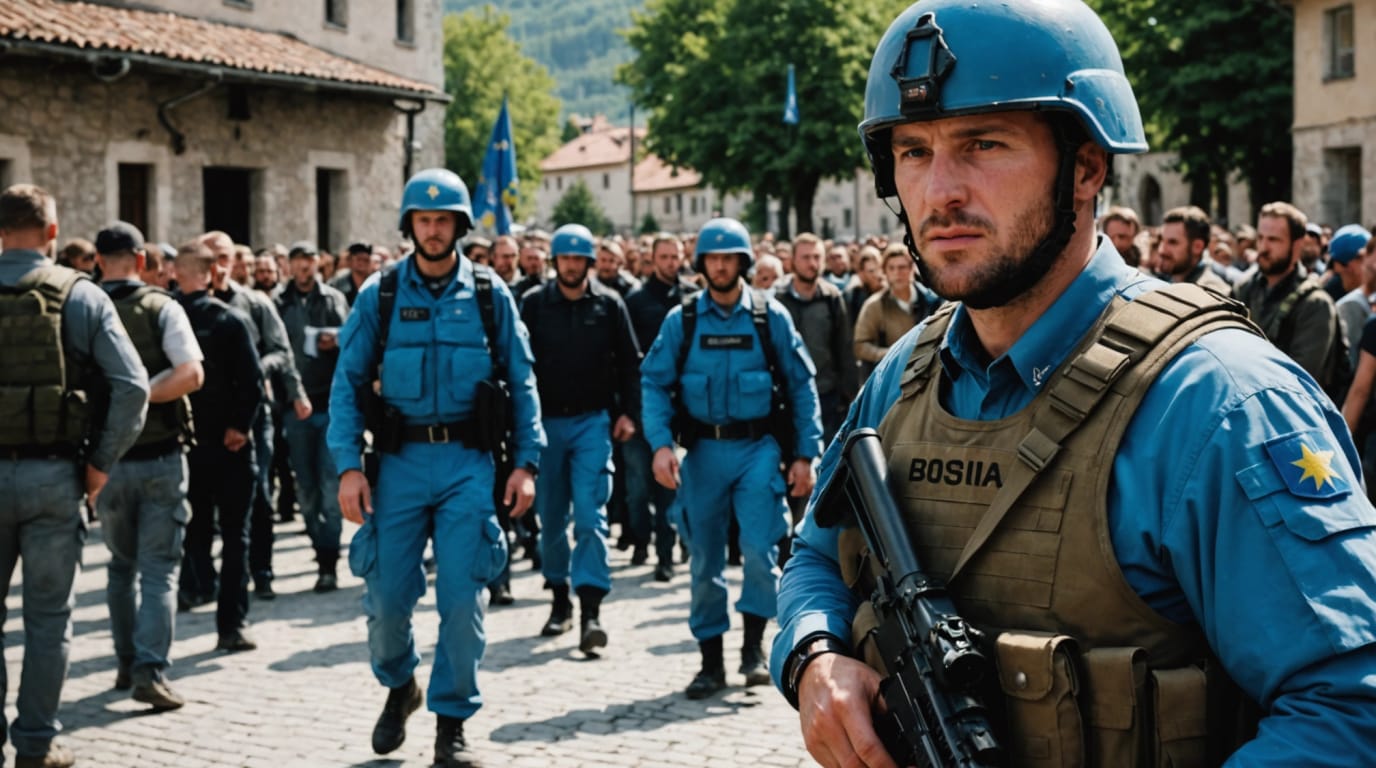
Bosnia and Herzegovina is facing renewed tensions as its Constitutional Court temporarily suspended a set of laws passed by the Republika Srpska (RS), the Serb-controlled entity within Bosnia. These laws, enacted by separatist Bosnian Serb authorities, effectively barred the state judiciary and police from operating within the RS. In response to the escalating situation, the European Union announced it would increase its peacekeeping force in the deeply divided Balkan nation.
Constitutional Court Intervention
On Friday, March 7, 2025, Bosnia's Constitutional Court acted swiftly to suspend the legislation proposed by Milorad Dodik, the president of the RS. The court stated the laws "could harm the constitutional order of Bosnia-Herzegovina," and a thorough deliberation is expected to follow, likely resulting in the laws being declared invalid. The suspended laws rejected the authority of the federal police and judiciary within the RS, further exacerbating the already fragile inter-ethnic relations in the country.
Denis Becirovic, a member of the Bosnian presidency, along with other officials, had previously lodged an appeal against the laws, asserting their violation of Bosnia's constitution and the Dayton Peace Agreement that ended the Bosnian War in 1995.
EU Peacekeeper Reinforcements
The European Union has responded to the escalating tensions by announcing an increase in the size of its peacekeeping mission, EUFOR, in Bosnia. While specific numbers were not disclosed, EUFOR stated the move was a "proactive measure aimed at assisting Bosnia-Herzegovina in the interest of all citizens." EUFOR currently has approximately 1,500 troops stationed in Sarajevo as part of a multinational battalion. Contributing countries include Austria, Greece, Hungary, Italy, Moldova, North Macedonia, Romania, and Turkey.
The EU's decision to bolster its peacekeeping force underscores the international community's concern over the potential for renewed conflict in Bosnia. The EU has also condemned the RS for passing a "foreign agent" law, similar to legislation in Russia, accusing authorities of undermining Bosnia's constitutional and legal order.
Milorad Dodik's Defiance
The recent crisis was triggered, in part, by the conviction of Milorad Dodik on charges related to his defiance of an international peace envoy's orders. Dodik was sentenced in absentia to a year in prison and a six-year ban from public office. He has dismissed the ruling as politically motivated and has stated that Bosnia and Herzegovina "no longer exists."
Dodik's actions have been viewed by many as a move toward secession, further destabilizing the region. The United States and the United Kingdom have imposed sanctions on Dodik and his associates, citing corruption, destabilization, and ties with Russia. While leading members of the European Parliament are calling for the EU to impose sanctions as well, Hungary has notably resisted such measures.
Historical Context and Dayton Agreement
Bosnia and Herzegovina's complex political landscape is a direct result of the 1992-95 Bosnian War. The Dayton Peace Agreement, which ended the war, divided the country into two entities: the Bosniak-Croat Federation and the Serb-led Republika Srpska, with a central government in Sarajevo. The agreement established joint state institutions, including the army, top judiciary, and tax administration, to bind the entities together.
However, tensions have persisted, particularly with leaders in the RS seeking greater autonomy and even separation from Bosnia. The current political crisis is a culmination of years of disagreements and challenges to the authority of the central government.
Implications and Concerns
The suspension of the separatist laws by Bosnia's Constitutional Court and the EU's decision to reinforce its peacekeeping mission are significant developments in the ongoing efforts to maintain stability in Bosnia and Herzegovina. However, the situation remains precarious.
The Srebrenica Genocide Center closed its doors on March 7, citing security fears amid the rising tensions. The center marks the site of the 1995 genocide committed by ethnic Serb troops against Muslim Bosniaks.
The EU has designated Bosnia and Herzegovina as a candidate country for membership, urging the country to implement key reforms in governance, judicial independence, and anti-corruption measures. However, the current political crisis threatens to derail these efforts and further destabilize the region.
A Fragile Peace
Bosnia and Herzegovina stands at a critical juncture. The actions of Milorad Dodik and the separatist laws passed by the Republika Srpska have challenged the foundations of the Dayton Peace Agreement and raised concerns about the future of the country. The international community, particularly the EU, is stepping up its efforts to prevent a return to conflict. However, the path forward remains uncertain, and the fragile peace in Bosnia and Herzegovina hangs in the balance.


