Brazil Revives Controversial Amazon Highway Project Amid Escalating Environmental Concerns
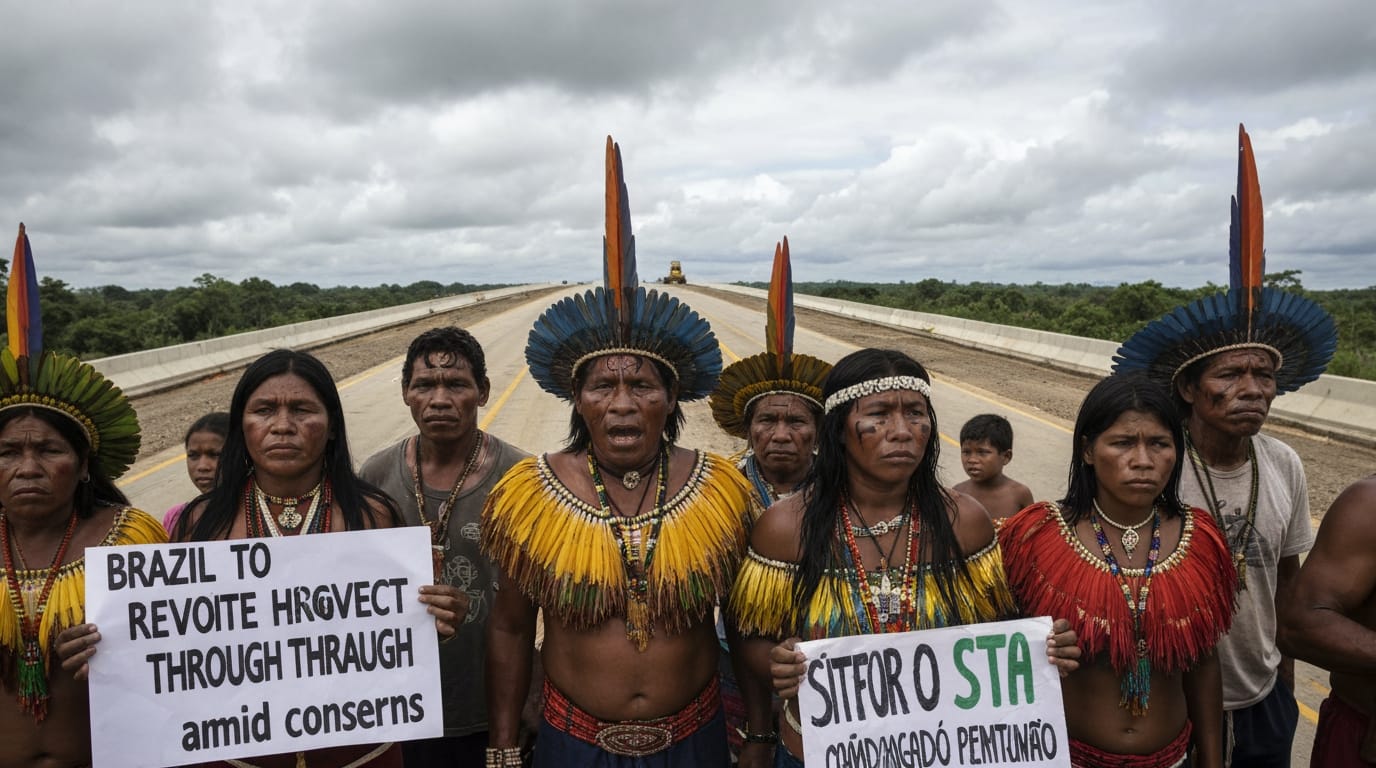
Brazil's government has announced a significant investment in the BR-319 highway, a project that seeks to pave a roughly 400-kilometer unpaved stretch through the heart of the Amazon rainforest, stirring a contentious national and international debate. While proponents argue the highway is vital for regional economic development and integration, environmentalists and scientists warn it could trigger irreversible deforestation and severe ecological and social consequences, potentially pushing the Amazon past a critical "tipping point."
The decision by President Luiz Inácio Lula da Silva's administration to allocate $75 million for the BR-319 highway comes alongside an unveiled environmental protection plan, which Lula has optimistically described as making it "the most modern road in the world" from an environmental perspective. However, critics argue these protection measures are insufficient and are being implemented too late, bypassing due process and proper environmental impact studies. The revival of this decades-old project represents a significant crossroads for Brazil, balancing development aspirations with its role as a steward of one of the planet's most crucial ecosystems.
A Legacy Road Rises Again
The BR-319 highway, spanning approximately 885 kilometers (550 miles), was initially constructed in the early 1970s during Brazil's military dictatorship, connecting Manaus in Amazonas state to Porto Velho in Rondônia. However, due to challenging soil conditions, heavy rainfall, and a lack of economic viability, much of its central section deteriorated and became impassable by 1988, effectively sealing off large, pristine areas of the Amazon.
Since 2015, a "maintenance" program has made portions of the road marginally passable during the dry season, but the ambitious plan now is to fully reconstruct and pave the remaining "middle section," a stretch of around 340 to 406 kilometers that remains largely unpaved and cuts through old-growth forest. This modernization effort is seen by its advocates, including local politicians and agribusiness representatives, as a crucial step to integrate the Amazonas state with the rest of Brazil, improving transportation, reducing logistical costs, and fostering economic growth in the isolated northern region. Proponents highlight benefits such as enhanced market access, job creation, and improved access to essential services like healthcare for local communities. Some politicians even controversially cited the 2021 Manaus oxygen crisis during the COVID-19 pandemic as evidence of the highway's necessity for emergency supply transport, despite studies indicating that more reliable alternative routes were available at the time.
Environmental Catastrophe on the Horizon?
Despite the development rhetoric, a broad coalition of environmental organizations, scientists, and indigenous communities warns of catastrophic environmental and social consequences. The BR-319 highway traverses one of the most biodiverse and well-preserved areas of the Amazon rainforest, home to 69 indigenous territories and 41 conservation units.
Experts fear that paving the road will act as a major "deforestation front," directly connecting the "arc of deforestation" in the southern Amazon, where the majority of clearing has occurred, to the largely untouched central Amazon. Studies project that the completed highway could quadruple deforestation rates over the next three decades, potentially leading to the loss of billions of tons of CO2 and making it impossible for Brazil to meet its climate commitments under the Paris Agreement.
The primary concern is the "fishbone effect," where a paved main road spawns countless illegal side roads, providing access for illegal logging, mining, cattle ranching, and land grabbing. Already, more than 6,000 kilometers of illegal roads crisscross the region along the BR-319, and deforestation in the area has surged by 144% since the announcement of road works resumption in 2019.
Beyond deforestation, scientists highlight other dire impacts:
- Biodiversity Loss: Fragmentation of critical ecosystems threatens endemic species.
- Climate Regulation: The rainforest's role as a carbon sink and a regulator of regional and global climate is jeopardized. The disruption of "flying rivers"—atmospheric moisture transport crucial for rainfall in distant Brazilian states like São Paulo—could lead to severe water shortages and agricultural collapse.
- Indigenous Rights and Health: Over 18,000 indigenous people across dozens of communities are at risk of displacement and cultural disruption. Critics argue that Brazil has failed to conduct proper consultations, violating international conventions. Increased human mobility and degradation also heighten the risk of zoonotic disease spillover and potential pandemics.
The Economic and Political Divide
The economic viability of the BR-319 project itself is fiercely debated. While proponents emphasize connectivity and reduced transport costs, studies by organizations like Conservation Strategy Fund suggest the project is economically inefficient, projecting net losses, particularly when environmental costs are factored in. One analysis indicated potential losses as high as $1.05 billion, making it an inefficient use of taxpayer money. Some researchers contend that existing riverine transport routes are more cost-effective for freight.
Politically, the project highlights a persistent tension between development and conservation in Brazil. President Lula, who has pledged to lead on the global climate agenda, is simultaneously pushing for the BR-319's completion, garnering support from local politicians who see it as a necessary infrastructure upgrade. His administration has utilized new environmental licensing bills to expedite strategic projects, sparking concerns from environmental watchdog groups like the Climate Observatory, which argue these measures undermine rigorous environmental reviews and community consultations.
Government officials, including Environment Minister João Paulo Capobianco, assert that the project includes robust environmental monitoring and enforcement, with pledges for inspection checkpoints, new conservation units, and the hiring of private companies for support by 2028. However, critics, including former Environment Minister Marina Silva, point to a history of inadequate governance and enforcement in the Amazon, where vast and complex terrain makes controlling illegal activities exceedingly difficult.
An Uncertain Future
As Brazil prepares to host the COP30 climate summit in 2025, the BR-319 highway stands as a potent symbol of the country's ongoing struggle to reconcile economic ambitions with environmental protection. The government's commitment to the project, despite mounting scientific warnings and legal challenges, underscores the deep divisions over the Amazon's future. The fate of the highway, and by extension, a significant portion of the world's largest rainforest, remains a critical and unfolding narrative with profound implications reaching far beyond Brazil's borders.


