Breakaway Traditionalist Group SSPX Risks Deeper Schism with Rome Over Unauthorized Bishop Consecrations
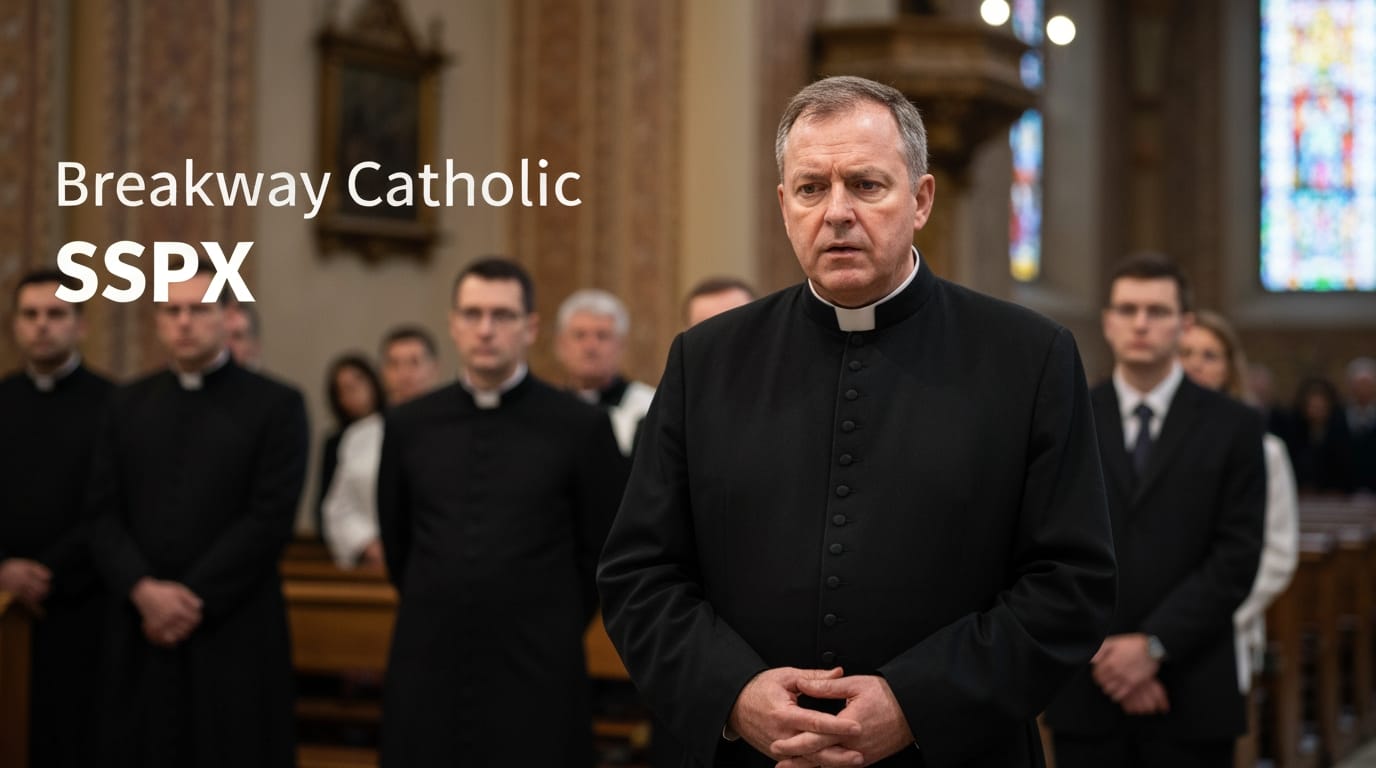
VATICAN CITY – The ultra-traditionalist Society of Saint Pius X (SSPX) is poised to escalate its long-standing dispute with the Vatican on July 1, 2026, by proceeding with the unauthorized consecration of four new bishops at its seminary in Écône, Switzerland. This act of defiance against Pope Leo XIV risks deepening a decades-old rupture and could lead to automatic excommunication for all involved, marking a significant challenge to papal authority and the unity of the Catholic Church.
The planned consecrations have prompted strong warnings from the Holy See, which views such an action as a "schismatic act" that entails automatic excommunication for both the consecrating bishops and those receiving the episcopal ordination. Pope Leo XIV has personally appealed to the SSPX to reconsider, calling the move a "sin of extreme gravity" and stating that if they choose this path, the Church "must move forward." The confrontation underscores the persistent doctrinal disagreements that have kept the SSPX in an "irregular canonical situation" with Rome for over 50 years.
A Legacy of Dissent: The Roots of the SSPX
The Society of Saint Pius X was founded in 1970 by French Archbishop Marcel Lefebvre in Switzerland, primarily in opposition to the modernizing reforms of the Second Vatican Council (1962–1965). Lefebvre, a prominent traditionalist at the Council, along with his followers, strongly rejected changes to the Catholic liturgy, particularly the shift from the Traditional Latin Mass (Tridentine Mass) to the Novus Ordo Mass, as well as new teachings on religious liberty and ecumenism.
Initially established as an Association of the Christian faithful with the permission of a local Swiss bishop, the SSPX's relationship with Rome quickly deteriorated. In 1975, the Vatican suppressed the society after Archbishop Lefebvre publicly denounced the teachings of Vatican II. The pivotal moment of rupture came in 1988 when, despite express prohibitions from Pope John Paul II, Lefebvre consecrated four bishops without a papal mandate. This act incurred automatic (latae sententiae) excommunication for Lefebvre and the four bishops, with the Vatican declaring it a schismatic act that severed their communion with the Catholic Church. Lefebvre maintained that he was acting out of necessity to preserve traditional Catholicism against what he perceived as deviations within the Church.
Doctrinal Impasse: A Clash Over Vatican II
At the heart of the ongoing division are profound doctrinal disagreements concerning the Second Vatican Council. The SSPX fundamentally rejects various reforms and teachings promulgated by Vatican II.
Key points of contention include:
- Liturgical Reforms: The SSPX insists on the exclusive use of the Traditional Latin Mass and pre-Vatican II liturgical books, viewing the post-conciliar liturgical changes as detrimental to the faith.
- Religious Liberty: The Society rejects the Council's affirmation of religious freedom, particularly as expressed in the document Dignitatis Humanae. They argue that only the Catholic Church should be afforded full religious freedom, while other religions may only be tolerated.
- Ecumenism and Interreligious Dialogue: The SSPX is critical of the Council's openness to ecumenical and interreligious dialogue, viewing it as a compromise of Catholic truth.
- Papal Authority and Magisterium: While recognizing the legitimacy of the Pope, the SSPX selectively accepts or rejects elements of the post-Vatican II Magisterium based on its perceived consistency with earlier Church tradition. They also voice opposition to "synodalist conceptions," which they believe could transform the Church into a democratic body.
For the SSPX, adherence to what they define as the "two-thousand-year Tradition of the Church" is paramount, and they see many post-conciliar developments as departures from this tradition.
Attempts at Reconciliation and Persistent Irregularity
Over the years, several Popes have extended overtures to the SSPX in an effort to heal the rift. Pope Benedict XVI made reconciliation a significant priority during his pontificate. In 2007, he broadened permission for the celebration of the Traditional Latin Mass. In a major gesture in 2009, Benedict XVI lifted the excommunications of the four SSPX bishops, emphasizing that this was a step towards full communion and an effort to remove the "scandal of division."
However, Pope Benedict XVI also clarified that lifting the excommunications did not resolve the SSPX's irregular canonical status. He stressed that until doctrinal issues, particularly the acceptance of the Second Vatican Council, were resolved, the SSPX would not have legitimate canonical standing or exercise legitimate ministry within the Church. In 2011, the Vatican presented a "doctrinal preamble" as a basis for reconciliation, which the SSPX indicated needed modifications. A subsequent offer of a personal prelature in 2012 was ultimately rejected by the SSPX, citing unresolved doctrinal differences.
Pope Francis continued efforts to address the pastoral needs of SSPX faithful, making significant concessions. In 2015, he granted SSPX priests the faculties to validly hear confessions, a provision later made permanent. In 2017, he authorized local bishops to permit marriages involving SSPX members to be witnessed by SSPX priests, ensuring their validity. These were seen as gestures of mercy, acknowledging the spiritual needs of their adherents despite the group's lack of formal canonical status.
The Brink of a Deeper Divide
Despite these attempts at rapprochement and the pastoral concessions, the SSPX has remained in a state of canonical irregularity, lacking official recognition as a religious institute or personal prelature within the Catholic Church. The Holy See maintains that the society has "broken away from communion."
The planned episcopal consecrations on July 1, 2026, represent a direct challenge to the authority of Pope Leo XIV, who assumed the papacy just over a year ago. The SSPX leadership has stated these ordinations are a "practical necessity" to ensure the continuity of their priestly formation and ministry, claiming they do not intend to establish a parallel authority. They argue that with only two bishops remaining, they need new ones to ordain future priests. Ahead of the consecrations, the SSPX issued a "Profession of Faith," reiterating their commitment to what they describe as perennial Catholic tradition.
The Vatican, however, has been unequivocal: consecrating bishops without a papal mandate is an act that incurs automatic excommunication. While the SSPX has a strong following, estimated at nearly half a million faithful and over 750 priests across 75 countries, the impending action casts a shadow over the prospects for future reconciliation.
The current impasse highlights a delicate and deeply entrenched division within Catholicism. Both sides affirm their commitment to the Catholic faith, yet remain fundamentally at odds over the interpretation and implementation of the Second Vatican Council. For Pope Leo XIV, the challenge is to uphold Church unity and canonical law while dealing with a traditionalist movement that, despite recognizing the Pope, actively chooses a path of self-governance in areas it deems essential. As the SSPX proceeds with its plans, the Catholic world watches to see if this latest act will solidify a permanent schism, making true reconciliation an increasingly distant hope, perhaps requiring nothing short of "divine intervention or a miraculous and intergenerational change of heart."


