Breakthrough HIV Prevention Drug Holds Immense Promise, But Global Access Remains a Critical Hurdle

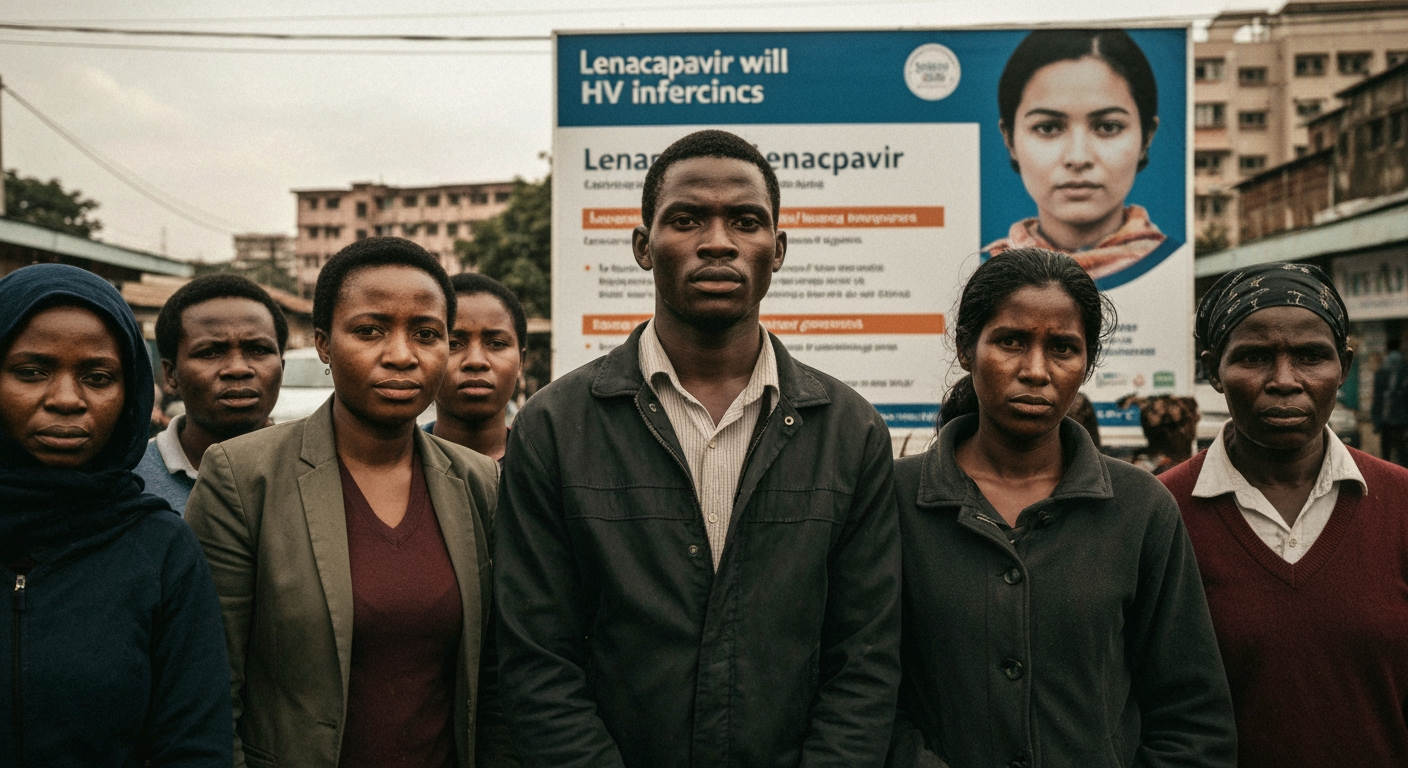
A new frontier in HIV prevention has emerged with the introduction of lenacapavir, a long-acting injectable pre-exposure prophylaxis (PrEP) treatment, offering unprecedented efficacy and convenience. Approved by global health authorities, this innovative drug has the potential to dramatically slow HIV infections worldwide. However, its transformative impact hinges on overcoming significant hurdles related to production, affordability, and equitable distribution to the populations most at risk. The promise of lenacapavir stands as a testament to scientific advancement, yet its true measure will be its ability to reach those who need it most, a challenge that demands coordinated global action.
A New Era in HIV Prevention
Lenacapavir, marketed under brand names like Yeztugo, marks a significant scientific leap as the first in a new class of drugs known as capsid inhibitors. Developed by Gilead Sciences, this antiretroviral medication works by targeting the HIV-1 virus's protein shell, the capsid, thereby interfering with multiple essential stages of the viral life cycle. This multi-stage mechanism of action distinguishes it from other approved antiretroviral agents, which typically act on only one stage of viral replication. The drug's unique approach prevents the virus from properly releasing its contents, inhibiting the transfer of viral DNA into the nucleus and ultimately reducing viral integration.
The U.S. Food and Drug Administration (FDA) approved injectable lenacapavir for HIV prevention in June 2025, making it the first and only twice-yearly option available in the United States for those at risk of HIV acquisition. This approval was swiftly followed by a strong recommendation from the World Health Organization (WHO) in July 2025, endorsing the long-acting injectable as an additional, highly effective choice for HIV prevention. The convenient dosing schedule, involving two subcutaneous injections per year, is a major advancement over daily oral PrEP regimens, promising to reduce the burden of daily pill-taking and potentially mitigating issues of adherence and stigma. An oral weekly pill formulation of lenacapavir is also currently under review by the FDA, with a decision expected in February 2027, which could further diversify prevention options.
Unprecedented Efficacy in Clinical Trials
The remarkable efficacy of lenacapavir in preventing HIV infection has been demonstrated through the pivotal Phase 3 PURPOSE clinical trial program, which included PURPOSE 1 and PURPOSE 2 studies. These trials showcased near-perfect protection rates across diverse populations. The PURPOSE 1 trial, which involved cisgender women in high-incidence regions of sub-Saharan Africa, reported an extraordinary 100% efficacy in preventing HIV acquisition over 52 weeks. This outcome represents a significant breakthrough for a demographic disproportionately affected by new HIV infections.
Similarly, the PURPOSE 2 trial, conducted among cisgender men, transgender women, transgender men, and gender non-binary individuals across various countries, demonstrated a 96% efficacy in preventing HIV infection compared to no PrEP use. Furthermore, lenacapavir proved to be 89% more effective than existing daily oral PrEP regimens such as tenofovir disoproxil/emtricitabine (TDF/FTC). Across both studies, an impressive 99.9% of participants who received lenacapavir remained HIV negative, marking some of the best prevention numbers ever reported. The long-acting nature of lenacapavir is particularly beneficial, as it can simplify adherence, reduce the psychological stress associated with daily medication, and address challenges related to privacy and stigma that can hinder consistent PrEP use.
The Price of Innovation: Cost and Supply Chain Realities
Despite its groundbreaking potential, the journey of lenacapavir from clinical triumph to widespread public health impact faces a steep financial barrier. In the United States, the annual list price for lenacapavir as PrEP is set at over $28,000. The treatment version, Sunlenca, carries an even higher price tag of $42,250 per year. This starkly contrasts with expert estimates for generic production costs, which suggest lenacapavir could be manufactured for as little as $25 to $46 per person per year if produced at scale (for 2 to 5 million users annually). This 1,000-fold difference between the market price in high-income settings and the potential generic cost highlights a significant challenge for global accessibility.
Gilead Sciences has acknowledged the need for broader access, entering into voluntary, royalty-free licensing agreements with six generic manufacturers in October 2024. These agreements aim to enable the production and supply of lower-cost generic versions of lenacapavir in 120 low- and middle-income countries (LMICs), with a target price of approximately $40 per person per year, becoming available from 2027. Furthermore, Gilead has committed to supplying lenacapavir at no profit to countries supported by the Global Fund until generic versions are widely available, aiming to reach up to 3 million people through 2028. However, this interim supply, while crucial, may not be sufficient to meet the vast global need, especially given that only 15% of the global PrEP demand is currently being met.
Reaching the Most Vulnerable: Equity and Distribution Challenges
The path to equitable access for lenacapavir is fraught with complexities beyond mere production costs. A major concern voiced by global health advocates is the exclusion of several upper-middle-income countries with significant HIV burdens from Gilead's voluntary licensing agreements. These exclusions limit the scope of generic competition and broader access to more affordable options, potentially leaving millions behind in regions like Latin America, where communities that participated in clinical trials may still lack access to the approved drug.
Organizations like Doctors Without Borders (MSF) have criticized Gilead for what they perceive as restrictive licensing conditions and for allegedly refusing to sell lenacapavir directly to humanitarian programs. MSF argues that the fixed and insufficient supply allocated to the Global Fund (enough for up to 2-3 million people over three years) falls well short of global requirements, particularly in humanitarian settings where long-acting PrEP is desperately needed. Compounding these issues are ongoing global health funding cuts, which are severely impacting HIV prevention services, especially for key populations and vulnerable communities. These funding shortfalls threaten to reverse progress in combating HIV, potentially leading to a resurgence in new infections.
Key populations who stand to benefit most from an effective, long-acting PrEP option include men who have sex with men (MSM), transgender individuals, sex workers, people who inject drugs, and adolescent girls and young women in high-incidence areas. However, these groups often face significant barriers to healthcare access, including stigma, logistical challenges, and limited provider availability, issues that existing PrEP programs have struggled to overcome. In the U.S., for instance, PrEP uptake remains suboptimal, with significant disparities observed among Black and Hispanic/Latino individuals. Without deliberate strategies to dismantle these structural and social barriers, even the most effective new prevention tools risk widening existing health inequities.
A Transformative Tool Awaiting Widespread Impact
Lenacapavir represents a transformative scientific achievement in the fight against HIV, offering a highly efficacious and convenient long-acting option that could revolutionize prevention strategies. Its approval by leading health authorities and demonstrated effectiveness in diverse populations signal a powerful new tool in the global effort to curb HIV infections.
However, the real-world impact of this biomedical triumph hinges on whether it can overcome the intertwined challenges of manufacturing scalability, equitable pricing, and widespread distribution. The current disparities in access, exacerbated by high market prices and restrictive licensing practices, threaten to limit lenacapavir's reach to only a fraction of those who could benefit. To fully realize the promise of an HIV-free world, governments, pharmaceutical manufacturers, global health organizations, and civil society must collaborate to ensure that this critical innovation is not just available, but truly accessible, affordable, and reaches every individual and community at risk, irrespective of their geographic or socioeconomic circumstances. Only then can lenacapavir fulfill its potential to make a profound and lasting difference in the global HIV epidemic.
Sources
- nih.gov
- plos.org
- hiv.gov
- gilead.com
- merck.com
- gilead.com
- nih.gov
- nih.gov
- prepwatch.org
- eatg.org
- who.int
- who.int
- nih.gov
- prepwatch.org
- gilead.com
- doctorswithoutborders.org
- saludporderecho.org
- gilead.com
- gilead.com
- yale.edu
- hivglasgow.org
- hivma.org
- eatg.org
- thinkglobalhealth.org
- nih.gov
- gilead.com
- prepwatch.org
- paho.org
- viivhealthcare.com
- hivma.org
Related Articles


Skull Bone Marrow Reveals Hidden 'Immune Hubs,' Reshaping Brain Defense Paradigm
ST. LOUIS, MO – In a discovery poised to fundamentally alter our understanding of brain immunity, scientists at Washington University School of Medicine in St. Louis have identified previously unrecognized lymph...


Unpacking the Link: How Dietary Fats Influence Colorectal Cancer Risk
Colorectal cancer, a significant global health concern, is increasingly linked to modern dietary habits, with particular attention turning to the role of fatty foods. While the relationship is complex and nuanced,...