British Prime Minister Starmer Embarks on Critical China Visit Amidst Shifting Global Alliances
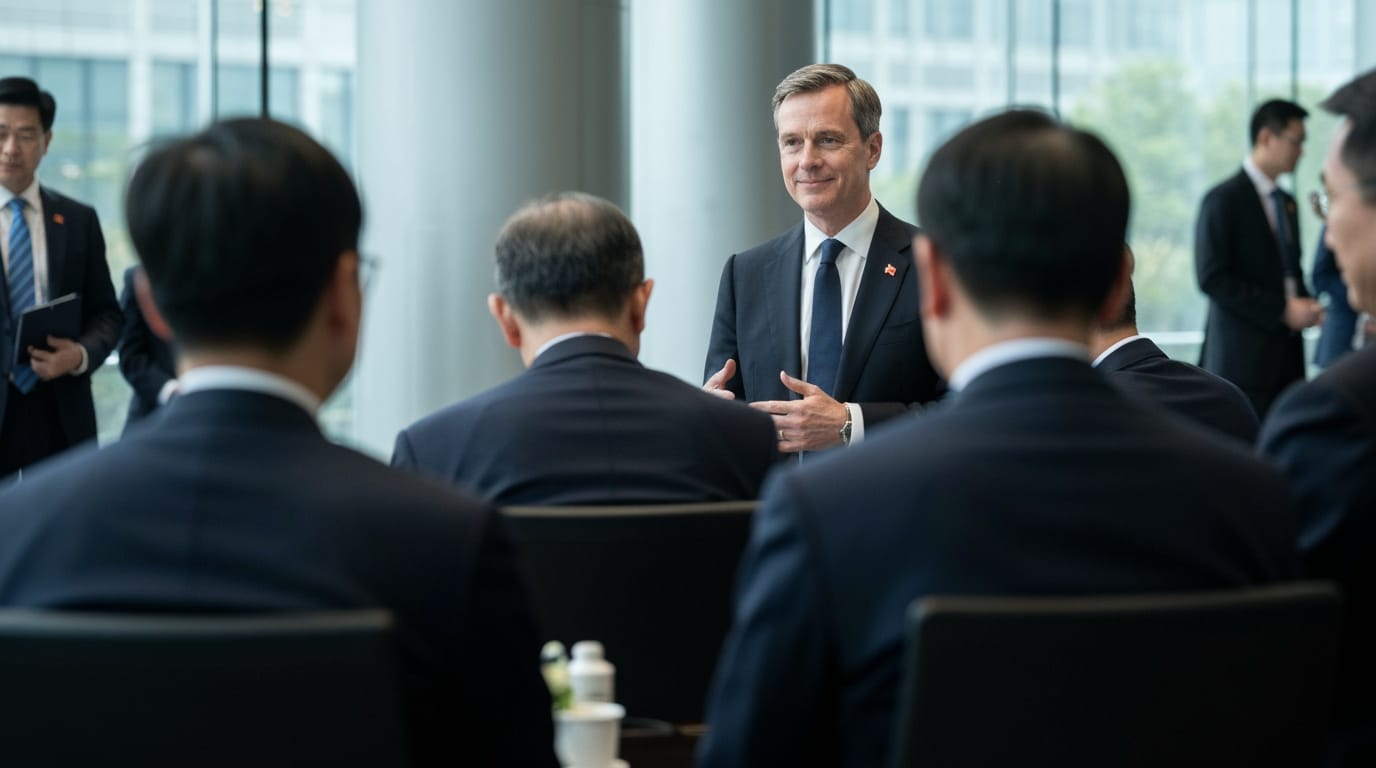
Beijing, China – United Kingdom Prime Minister Keir Starmer arrived in Beijing today for a four-day official visit, marking the first time a British leader has traveled to China since 2018. The high-stakes diplomatic mission aims to mend strained relations and unlock economic opportunities for British businesses, all while navigating a complex geopolitical landscape where Beijing actively seeks to cultivate ties with America's traditional allies. Starmer's government, having taken office in July 2024, emphasizes a "hard-headed engagement" approach, seeking pragmatic cooperation while asserting the UK's national security interests and values.
The visit unfolds against a backdrop of escalating global uncertainties and a notable recalibration of international relationships. With potential shifts in transatlantic dynamics, particularly with a possible return of former U.S. President Donald Trump, nations like the UK are reassessing their foreign policy priorities. Starmer's presence in China signals a deliberate effort by London to forge a more stable and consistent relationship with the world's second-largest economy, moving beyond what he has described as a previous "golden age" that abruptly transitioned into an "ice age" in bilateral ties.
Rebuilding Bridges: Economic Imperatives and Pragmatic Engagement
At the core of Prime Minister Starmer's visit is a clear economic objective: to repair and expand trade and investment links with China. Accompanying him is a substantial delegation of over 50 British business leaders, including executives from major corporations such as British Airways, HSBC bank, and Jaguar Land Rover. The itinerary includes high-level meetings with Chinese President Xi Jinping and Premier Li Qiang in Beijing, followed by engagements with local executives in Shanghai. The delegation's presence underscores Britain's ambition to secure greater access to the vast Chinese market for UK financial services, technology, cars, and Scotch whisky.
Starmer has articulated his strategy as one of "cooperate where we can, compete where we must and challenge where we need to," a departure from what he described as the "damaging Conservative inconsistency" of the past 14 years. This pragmatic stance is driven by the recognition that disengaging from China is not a viable option for the UK. Rather, the goal is to establish a "comprehensive and consistent approach" that balances economic necessity with national interests. Chinese Foreign Ministry spokesperson Guo Jiakun echoed this sentiment, stating that Beijing views the visit as an opportunity to enhance political trust and deepen "pragmatic cooperation" amid a complex international situation.
Navigating a Shifting Global Order: The Trump Factor and Strategic Autonomy
Starmer's visit carries significant geopolitical weight, occurring at a time when the stability of traditional Western alliances faces considerable strain. With the potential for a more unpredictable U.S. foreign policy under a future Trump administration, European nations, including the UK, are increasingly seeking to diversify their international partnerships. Starmer explicitly stated that the UK "doesn't have to choose between relations with the United States and China," signaling an intent to maintain independent diplomatic and economic flexibility.
China, for its part, has actively engaged in diplomatic outreach to European countries, advocating for "strategic autonomy" and reduced reliance on the United States for security. This broader Chinese strategy seeks to leverage any emerging tensions between the U.S. and its allies, positioning China as a reliable partner in a multipolar world. Beijing has offered economic incentives and strategic partnerships to several European nations, exemplified by its deepening ties with countries like Hungary and Slovakia, which have seen significant Chinese foreign direct investment. The UK's proactive re-engagement with China can be seen as part of this wider European trend, albeit one undertaken with a distinct British lens.
Persistent Points of Friction: Human Rights and National Security
Despite the emphasis on economic cooperation, the visit cannot sidestep the contentious issues that have plagued UK-China relations in recent years. Concerns about Chinese espionage, Beijing's support for Russia in the Ukraine war, and the severe crackdown on civil liberties in Hong Kong remain prominent. The recent conviction of Jimmy Lai, a British citizen and former newspaper publisher, under Hong Kong's national security law, has amplified calls from human rights organizations for Starmer to address these concerns directly and publicly.
Downing Street has affirmed that while the Prime Minister seeks to improve economic relations, he will maintain "guardrails" on national security and human rights, refusing to trade one for the other. Starmer has pledged to "raise the issues that need to be raised" with President Xi, including human rights abuses. Rights groups, including Human Rights Watch, have urged Starmer to advocate for Lai's release and speak against the "dramatic erasure of freedoms" in Hong Kong, and to address the treatment of Uyghurs in Xinjiang. The contentious approval of a new Chinese mega-embassy in London, despite critics' warnings about potential espionage and intimidation, further highlights the delicate balance the UK is attempting to strike.
The Road Ahead: Balancing Interests in a Complex World
Prime Minister Starmer's visit to China represents a pivotal moment in UK foreign policy, reflecting a pragmatic shift towards re-engagement driven by economic necessity and the complexities of global power dynamics. The UK aims to secure tangible economic benefits and cooperate on shared challenges like climate change, while simultaneously upholding its values and safeguarding national security interests.
This delicate balancing act underscores a broader trend among Western nations as they navigate their relationships with a rising China amidst an evolving geopolitical landscape. For Beijing, the visit is an opportunity to project an image of stability and expand its influence among key European players. For the UK, it is a test of its ability to forge an independent and consistent foreign policy that serves its national interests in an increasingly multipolar and unpredictable world. The success of this re-engagement will be measured not only by the economic deals struck but also by the UK's capacity to articulate and defend its principles on the global stage.


