British WWII Codebreaker Betty Webb Dies at 101
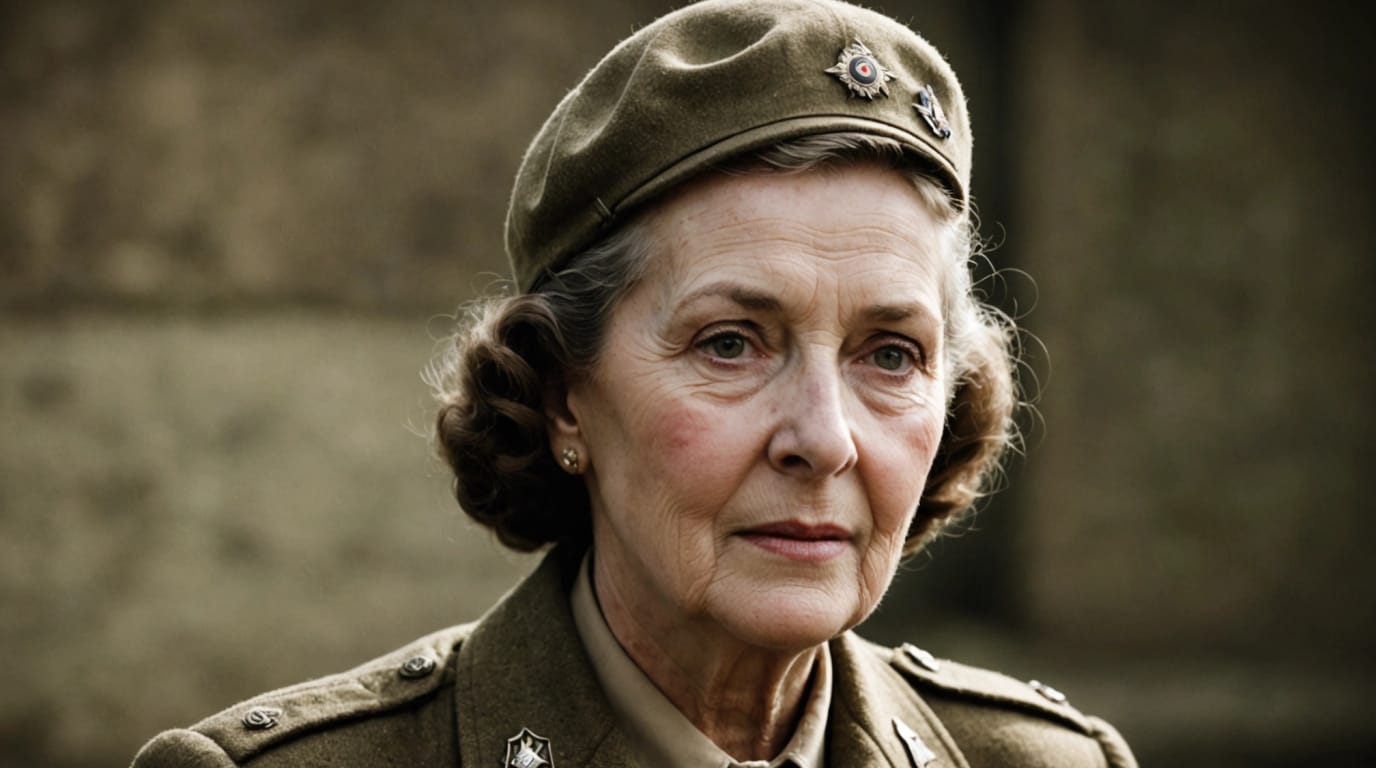
Charlotte "Betty" Webb, a British codebreaker who served at Bletchley Park during World War II, has died at the age of 101. Webb, who joined the Auxiliary Territorial Service (ATS) in 1941 at the age of 18, played a crucial role in deciphering enemy communications, contributing to the Allied victory. Her passing marks the end of an era for the dwindling number of surviving Bletchley Park veterans.
Early Life and Call to Service
Born Charlotte Elizabeth Vine-Stevens on May 13, 1923, Betty Webb spent her early years in Ryeford, on the Herefordshire side of Richard's Castle, and described her childhood as idyllic. She was primarily home-schooled by her mother. At the start of World War II, she was studying domestic science at Radbrook College in Shrewsbury. However, feeling a strong desire to contribute more directly to the war effort, she volunteered for the Auxiliary Territorial Service (ATS) as soon as she turned 18. She famously said she "wanted to do something more for the war effort than bake sausage rolls." After basic training, she was sent to Bletchley Park.
Cracking Codes at Bletchley Park
Bletchley Park, the top-secret home of British codebreaking, was where Webb's skills were put to the test. She began her work by registering messages on cards, organizing them meticulously for efficient retrieval. Later, she moved to Block F, where she worked on intercepted Japanese messages. Her aptitude for this task led to her being sent to Washington D.C. in May 1945 to support the American war effort in the Pacific. Her work involved indexing German messages and paraphrasing Japanese signals. According to ITV News, Webb first worked as a typist, which she described as "pretty boring but had to be done," before moving into paraphrasing. She spoke German, and her job was taking decoded messages and reordering the unencrypted wording to be sent to Allied commanders, so that if intercepted by the enemy, they would not discover their transmissions were being deciphered.
Life After the War and Recognition
Webb's wartime contributions remained a secret for many years. She never told anyone about her work, including her parents, who died not knowing her secret. The Official Secrets Act kept her silent until 1975. After the war, she dedicated herself to preserving the legacy of Bletchley Park and educating future generations about its vital role in the war. She became an active speaker, sharing her experiences with schools and organizations, and even wrote a book about her time at Bletchley Park.
Her efforts were recognized with several honors. In 2015, she was appointed a Member of the Order of the British Empire (MBE) for her services to remembering and promoting the work of Bletchley Park. In 2021, the government of France appointed her Chevalier de la Légion d'Honneur (Knight of the Legion of Honour). In 2023, she was invited to King Charles's coronation and sat in the front row.
A Lasting Legacy
Betty Webb's death marks a significant loss for the Bletchley Park community and the broader historical community. Her dedication to preserving the history of Bletchley Park and her tireless work as an educator and volunteer will be felt for many years to come. Iain Standen, Chief Executive of Bletchley Park Trust, said she would be remembered "not only for her work at Park during World War Two, but also for her efforts to ensure that the story of what she and her colleagues achieved is not forgotten." The Women's Royal Army Corps Association, in announcing her death, described her as an inspiration to women in the Army for decades and a champion of female veterans. Adam Kent, Worcestershire County Councillor for Wythall, said, "Her passion for history and her commitment to educating others were truly remarkable...Betty leaves behind a lasting legacy that will continue to inspire all who knew her."
Webb's story serves as a reminder of the vital contributions made by the often-unsung heroes of World War II. Her work at Bletchley Park, along with the efforts of thousands of others, helped to shorten the war and save countless lives. Her legacy will continue to inspire future generations to remember and learn from the sacrifices made during this pivotal period in history.


