Budapest Mayor Charged Over Defied Pride Parade Amid Escalating LGBTQ+ Rights Crackdown
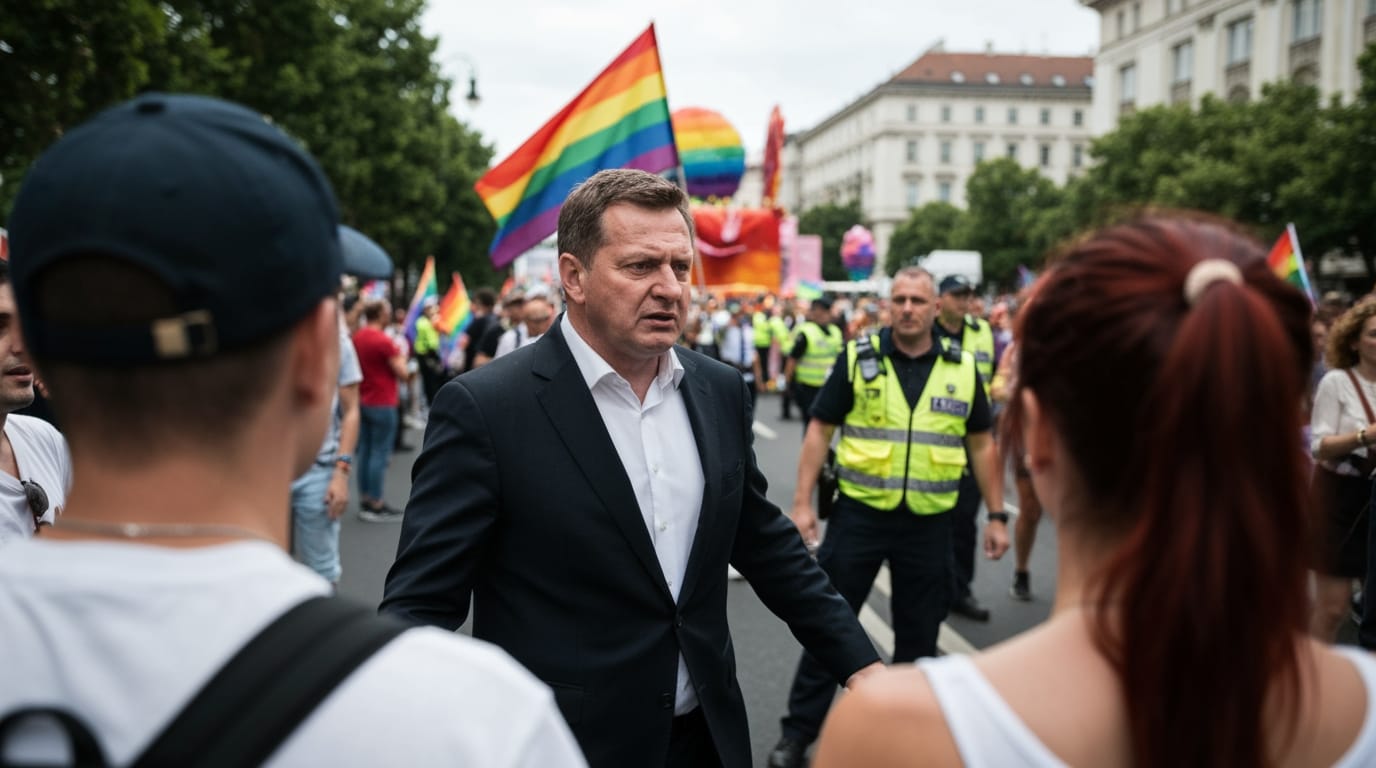
BUDAPEST, Hungary – Budapest Mayor Gergely Karácsony has been formally charged by Hungarian prosecutors for his pivotal role in organizing and leading the city's Pride parade last June, an event that proceeded despite an official police ban under new government legislation targeting LGBTQ+ gatherings. The legal action against the opposition mayor marks a significant escalation in Hungary's ongoing cultural and political clash over LGBTQ+ rights, raising alarms among human rights advocates and drawing international attention.
The charges, filed on January 28, 2026, accuse Karácsony of violating the freedom of association and assembly, stemming from the massive June 28, 2025, Budapest Pride march. Prosecutors are seeking to impose a fine on the mayor through a summary judgment, bypassing a traditional trial. Karácsony, a prominent figure in Hungary's opposition and a member of the Green party, has defiantly embraced his status, stating on social media that he is a "proud defendant" after previously being a "proud suspect." He asserted that the charges underscored a broader attempt to suppress freedom in the face of what he described as "selfish, petty, and despicable power."
Legal Framework: The Anti-LGBTQ+ Legislative Offensive
The charges against Mayor Karácsony are rooted in a series of legislative changes enacted by the government of Prime Minister Viktor Orbán, which significantly curtailed rights related to public assembly and LGBTQ+ expression. In April 2025, Orbán's Fidesz party pushed through amendments to the Assembly Act, introducing new rules that explicitly allow for the banning of public events deemed to "depict or promote homosexuality or gender diversity." This legislation built upon a 2021 anti-LGBTQ+ law, often likened to Russia's "gay propaganda" law, which prohibited the sharing of LGBTQ+-related information with minors.
Further cementing these restrictions, a constitutional amendment was approved around the same time, prioritizing "the right of children to physical, psychological, and moral development" above other fundamental rights, including the right to assembly. Critics, both domestically and internationally, argue these measures are thinly veiled attempts to repress civil liberties and discriminate against the LGBTQ+ community under the guise of child protection. The new laws stipulate that organizers of banned events could face up to one year in prison, while participants could incur fines of up to €500. Authorities were also granted the power to use facial recognition technology to identify and penalize attendees.
Defiance in the Streets: The 2025 Budapest Pride
Despite the stringent new laws and a police ban issued on June 19, 2025, Mayor Karácsony and the Budapest City Hall played a crucial role in ensuring the 2025 Budapest Pride parade went ahead. Karácsony, in a video message on June 16, 2025, publicly announced that the municipality would organize the event and encouraged widespread participation. By declaring it a "municipal event," the city government attempted to circumvent the police prohibition, which had cited the amended child protection law and a conflicting event registration as grounds for the ban.
The outcome was a historic demonstration of defiance. The 2025 Budapest Pride on June 28 saw an unprecedented turnout, with estimates ranging from 100,000 to 300,000 participants. This record-breaking crowd, comprising Hungarians from across the country and numerous international guests including MEPs, foreign city mayors, and ambassadors, transformed the march into a powerful symbol of resistance against Orbán's government and its rollback of rights. Notably, despite the explicit threats of fines for participants, police announced they would not pursue those who attended, although they did line the route with officers and set up surveillance cameras.
Political Undercurrents and Broader Implications
The timing of the charges against Mayor Karácsony is particularly salient, coming less than three months before crucial parliamentary elections in Hungary. Analysts suggest that this legal action may be a calculated move by Prime Minister Orbán to mobilize his conservative base ahead of a challenging electoral contest, where he faces an unprecedented challenge from a former Fidesz insider. The standoff between the central government and the opposition mayor underscores widening political and cultural divides within the country.
The prosecution of Karácsony is not an isolated incident. Géza Buzás-Hábel, the organizer of Pécs Pride in southwestern Hungary, has also faced investigation and indictment for coordinating an LGBTQ+ event in October 2025. Buzás-Hábel subsequently lost his teaching job and could face a suspended prison sentence of up to three years, demonstrating the severe repercussions for individuals defying the new legislation. The European Union has voiced strong objections to Hungary's anti-LGBTQ+ laws, with the European Commission and various member states condemning the measures as discriminatory and a violation of fundamental rights.
Conclusion: A Test of Freedoms in Hungary
The charges leveled against Budapest Mayor Gergely Karácsony represent a pivotal moment in Hungary's struggle over civil liberties and LGBTQ+ rights. His prosecution for supporting a public assembly, despite its ban under controversial legislation, highlights the deepening authoritarian tendencies perceived within the Orbán government. The massive turnout at the 2025 Budapest Pride parade, facilitated by the mayor's actions, demonstrated a potent public pushback against these policies. As Hungary approaches parliamentary elections, this legal battle serves as a stark reminder of the ongoing tensions between municipal autonomy and central government control, and the resilience of those advocating for freedom and equality in the face of increasing restrictions. The outcome of Karácsony's case and the broader political climate will undoubtedly shape the future of human rights and democratic values in the Central European nation.


