Bulgaria Charts New Course as Radev's Progressive Movement Secures Decisive Parliamentary Win
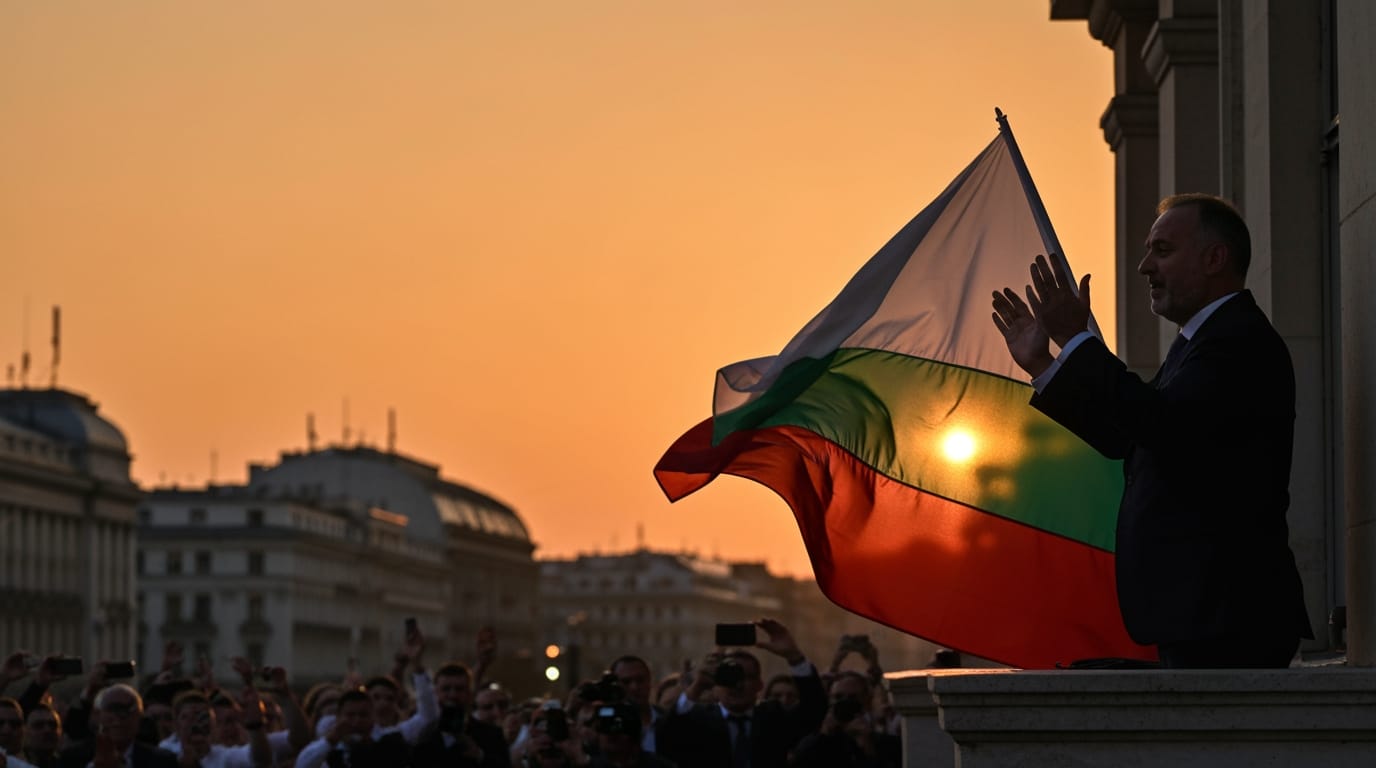
SOFIA – Bulgaria finds itself at a pivotal juncture, embarking on what many observers describe as "uncharted territory" following the overwhelming parliamentary election victory of the Progressive Bulgaria movement, led by former President Rumen Radev. The landslide win on Sunday, April 19, 2026, promises to fundamentally reshape the nation's political landscape, potentially ending years of debilitating instability and signaling a significant shift in its domestic and foreign policy orientations. This historic outcome, which saw Radev's party secure what could be an outright majority, comes amidst widespread public frustration with corruption and persistent political gridlock, handing a robust mandate to a figure who has consistently challenged established norms.
A Resounding Mandate for Stability
The parliamentary elections delivered a decisive outcome, far exceeding projections and marking one of the strongest performances by a single party in a generation. Exit polls indicated Radev's Progressive Bulgaria garnered approximately 44% of the vote, placing it significantly ahead of the long-dominant GERB party, led by former Prime Minister Boyko Borissov, which stood at a distant 12.5%. With 78% of the vote counted, early projections suggested Progressive Bulgaria could command as many as 135 seats in the 240-strong chamber, paving the way for a stable, single-party government. This result stands in stark contrast to the previous five years, which saw Bulgaria endure eight general elections and chronic governmental instability. The scale of the victory prompted celebrations in Radev's birth village, with Bulgarian media heralding the triumph as a clear expression of national will.
The Architect of "Progressive Bulgaria"
At the heart of this political earthquake is Rumen Radev, a former air force commander and ex-President who has transitioned from a political novice to a formidable parliamentary leader. Radev, 62, stepped down from the presidency in January 2026 to contest the parliamentary election, capitalizing on a wave of public discontent. His political journey began in 2016 when, backed by the opposition Socialists, he secured the presidency with nearly 60% of the vote, campaigning as an anti-establishment figure and prompting the resignation of then-Prime Minister Boyko Borisov.
His recent campaign for parliament resonated deeply with a populace weary of corruption and political inertia. Radev effectively tapped into grievances, promising to dismantle oligarchic networks and restore integrity to a political system widely perceived as compromised. His message of "hope over distrust, freedom over fear, and morality" clearly struck a chord with voters. While often characterized as Eurosceptic and pro-Russian, Radev has also expressed a desire to strengthen the European Union and NATO, presenting a complex and sometimes contradictory political identity.
Navigating Geopolitical Crosscurrents
The implications of Progressive Bulgaria's victory extend beyond the nation's borders, particularly regarding its alignment within the European Union and NATO. Radev has openly voiced opposition to EU sanctions against Russia and has resisted providing military aid to Ukraine. These positions diverge significantly from the collective stance of most EU and NATO members, particularly amid ongoing geopolitical tensions in Eastern Europe. Analysts suggest this could lead to Bulgaria pursuing a foreign policy that seeks improved relations with Moscow, potentially positioning the country as a "bridge to Russia." This shift is particularly notable in a European context, coming shortly after the electoral defeat of Hungary's Viktor Orbán, who had long been a prominent pro-Kremlin voice within the EU. Radev's ascendancy, therefore, introduces a new dynamic into the intricate balance of European alliances and strategies.
The Path Ahead: Domestic Challenges and Hopes
Domestically, Radev's Progressive Bulgaria faces the daunting task of delivering on its promises of reform and stability. The new government will be expected to tackle endemic corruption, improve the economic lot of ordinary Bulgarians (who endure an average monthly salary of around 480 euros), and address institutional fragilities that have plagued the nation for years. The landslide win, potentially granting an outright majority, offers an unprecedented opportunity for a single party to govern and implement reforms without the compromises and deadlocks often seen in coalition governments.
The strong mandate carries with it immense public expectation. Voters, fed up with decades of political instability and lack of progress, have placed their trust in Radev to fundamentally alter the nation's trajectory. The forthcoming months will be critical in determining whether Progressive Bulgaria can translate its electoral success into tangible improvements for the country and provide the stability that Bulgarians have long sought.
In conclusion, Rumen Radev's resounding parliamentary victory marks a profound turning point for Bulgaria. It signals a decisive break from a period of political fragmentation and ushers in an era defined by a powerful new political force. While the promise of stability and anti-corruption measures resonates strongly with the Bulgarian public, the new government's distinct foreign policy leanings, particularly concerning Russia, are poised to introduce complex dynamics within the European Union and NATO. Bulgaria is indeed in uncharted territory, with its future path now largely in the hands of Radev and his Progressive Bulgaria movement.


