Bulgarian Diplomat Nickolay Mladenov Takes Helm of Ambitious Gaza Peace Initiative

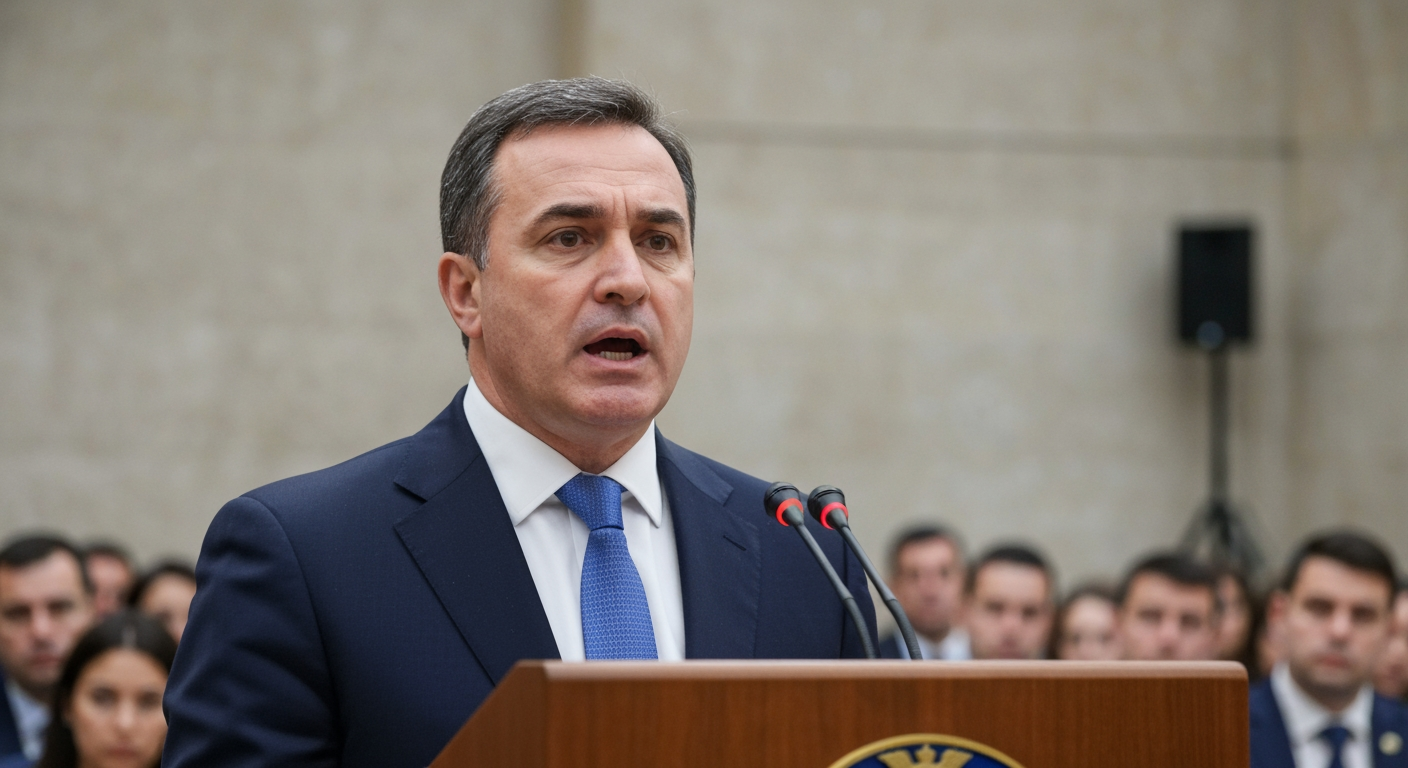
Brussels, Belgium – In a critical juncture for Middle East diplomacy, Bulgarian veteran diplomat Nickolay Mladenov has been appointed as the High Representative for Gaza, tasked with leading the newly established "Board of Peace." This U.S.-led initiative, chaired by former President Donald Trump, aims to navigate the complex post-ceasefire landscape of the Gaza Strip, overseeing crucial aspects of governance, reconstruction, and security coordination. Mladenov's appointment in January 2026 has placed him at the forefront of efforts to implement a comprehensive plan for the war-torn enclave, a role that leverages his extensive experience in some of the world's most intractable conflicts.
Mladenov's current mission represents perhaps his most formidable challenge yet, as he steps into a role demanding nuanced diplomacy and robust leadership amidst ongoing regional tensions. His primary responsibility involves linking the Board of Peace with a newly formed Palestinian technocratic committee and steering the colossal task of rebuilding Gaza. The initiative emerges from a fragile ceasefire and seeks to address the urgent humanitarian crisis while laying foundations for long-term stability in the region.
A Career Defined by Crisis Management
Nickolay Mladenov, 53, brings a distinguished career in international diplomacy and Bulgarian politics to his new role. Born in Sofia, Bulgaria, he holds master's degrees in War Studies from King's College London and International Relations from the University of National and World Economy in Sofia. His journey in public service began with a focus on European integration, including founding the European Institute in Sofia. He then moved into national politics, serving as a Member of the European Parliament from 2007 to 2009.
Mladenov's cabinet appointments in Bulgaria further honed his strategic and foreign policy acumen. He served as Minister of Defense from 2009 to 2010 and subsequently as Minister of Foreign Affairs from 2010 to 2013, a period marked by significant upheaval across the Middle East during the Arab Spring. These roles provided him with early exposure to the intricacies of regional security and international relations.
His entry into high-stakes international diplomacy began in 2013, when he was appointed by then-UN Secretary-General Ban Ki-moon as the Special Representative for Iraq and Head of the United Nations Assistance Mission for Iraq (UNAMI). In this capacity, he played a critical role in shaping a national unity government and brokering vital agreements amidst the volatile Iraqi political landscape.
From 2015 to 2020, Mladenov served as the UN Special Coordinator for the Middle East Peace Process. During his tenure, he became a central figure in efforts to defuse cross-border violence between Israel and Hamas, advocating for a negotiated settlement and maintaining communication channels between all parties. His effectiveness in this challenging role earned him praise from both Israeli and Palestinian leaders, a rare feat in the deeply polarized region. The Palestinian Authority recognized his contributions by awarding him the Grand Star of the Order of Jerusalem in 2021. This track record of impartiality and bridge-building is seen as a key asset for his new responsibilities in Gaza.
The "Board of Peace": Structure and Vision
The "Board of Peace," also referred to as a "peace council," is part of a broader U.S.-led initiative associated with President Donald Trump's comprehensive plan for ending the conflict in Gaza. Announced in January 2026, the Board's mandate is expansive, designed to provide strategic oversight and mobilize international resources for Gaza's transition from conflict to stability and development.
Chaired by President Trump himself, the Board of Peace features an Executive Board composed of figures with experience across diplomacy, development, infrastructure, and economic strategy. Notable members appointed to the Gaza Executive Board, which supports the High Representative's office, include figures like Jared Kushner, Sir Tony Blair, and Marc Rowan.
Mladenov, as the High Representative for Gaza, acts as the on-the-ground link between the overarching Board of Peace and a newly formed National Committee for the Administration of Gaza (NCAG), composed of Palestinian technocrats. His role involves supporting the Board's oversight of all aspects of Gaza's governance, reconstruction, and development, while ensuring coordination across civilian and security pillars. The plan also includes the deployment of an International Stabilization Force (ISF) to secure peace, disarm Hamas, and facilitate humanitarian aid delivery and reconstruction.
The Board's vision extends to rebuilding Gaza as a functional entity with a sustainable economy, moving beyond perpetual humanitarian aid. Mladenov has emphasized the urgency of addressing immediate humanitarian needs while simultaneously planning for comprehensive redevelopment that allows the Palestinian economy of Gaza to flourish.
Navigating International Skepticism and Division
Despite the ambitious scope of the "Board of Peace," its formation and approach have been met with a degree of skepticism and division within the international community, particularly among European Union member states. While some EU nations, such as Hungary and Mladenov's native Bulgaria, have become full members of the Board, others have sent observers, and some remain hesitant about fully embracing the Trump-led initiative.
Concerns have been raised regarding the Board's architecture, especially the initial lack of Palestinian representation within its executive structures. While the plan refers to a committee of Palestinian technocrats, the absence of Palestinians on the main Executive Board has drawn scrutiny. Mladenov, however, views the initiative as a broad "leadership forum of states" working with the United States on peace initiatives, asserting that there is significant scope for cooperation with the European Union. He has engaged directly with EU foreign ministers, urging swift action and emphasizing the shared goal of stabilizing Gaza and addressing the dire living conditions of its population.
The EU's historical role as a significant donor to Palestinians and its interest in regional stability mean that cooperation, even with reservations, remains a possibility. Mladenov advocates for shared expertise, including the continuation of EU missions for training Palestinian police and providing support for governance infrastructure.
The Road Ahead: Challenges and Hopes for a Unified Gaza
The task awaiting Mladenov and the Board of Peace is monumental. Gaza remains deeply fragmented, described by Mladenov as effectively "two Gazas": one part under Hamas control, and another controlled by the Israeli army. He insists that sustainable reconstruction and lasting peace necessitate an end to this division and the creation of a unified governing structure. The humanitarian crisis is acute, and the urgency of delivering aid while simultaneously initiating long-term redevelopment cannot be overstated.
Mladenov's priorities include establishing conditions for the National Committee for the Administration of Gaza to assume governance, ensuring the ceasefire holds, and fostering an environment conducive to reconstruction. His experience in mediating between Israelis and Palestinians, combined with his reputation for objective problem-solving, positions him as a potentially pivotal figure in this challenging endeavor.
The stakes are incredibly high. The success of the "Board of Peace" and Mladenov's leadership could determine the future trajectory of Gaza, offering a pathway toward stability and economic viability. Failure, conversely, risks perpetuating a cycle of conflict and humanitarian suffering. The coming months will test Mladenov's diplomatic prowess and the collective will of the international community to transform a long-standing crisis into an opportunity for enduring peace.
Related Articles

Mounting Frustration Grips Russia as Economic Hardship and War's Toll Deepen
Moscow, Russia – A palpable shift in public sentiment is emerging across Russia, with growing frustration among citizens fueled by a confluence of economic pressures, increasing internet restrictions, and the undeniable...

Germany's Strategic Calculus: Ukraine Aid is an Investment in European Security, Not Charity
Berlin – The ongoing provision of substantial aid to Ukraine by Germany and its allies is increasingly being framed not as an act of altruism, but as a crucial investment in European security and stability. This...