Iran on the Brink: Escalation Looms as Diplomacy Reaches Critical Juncture
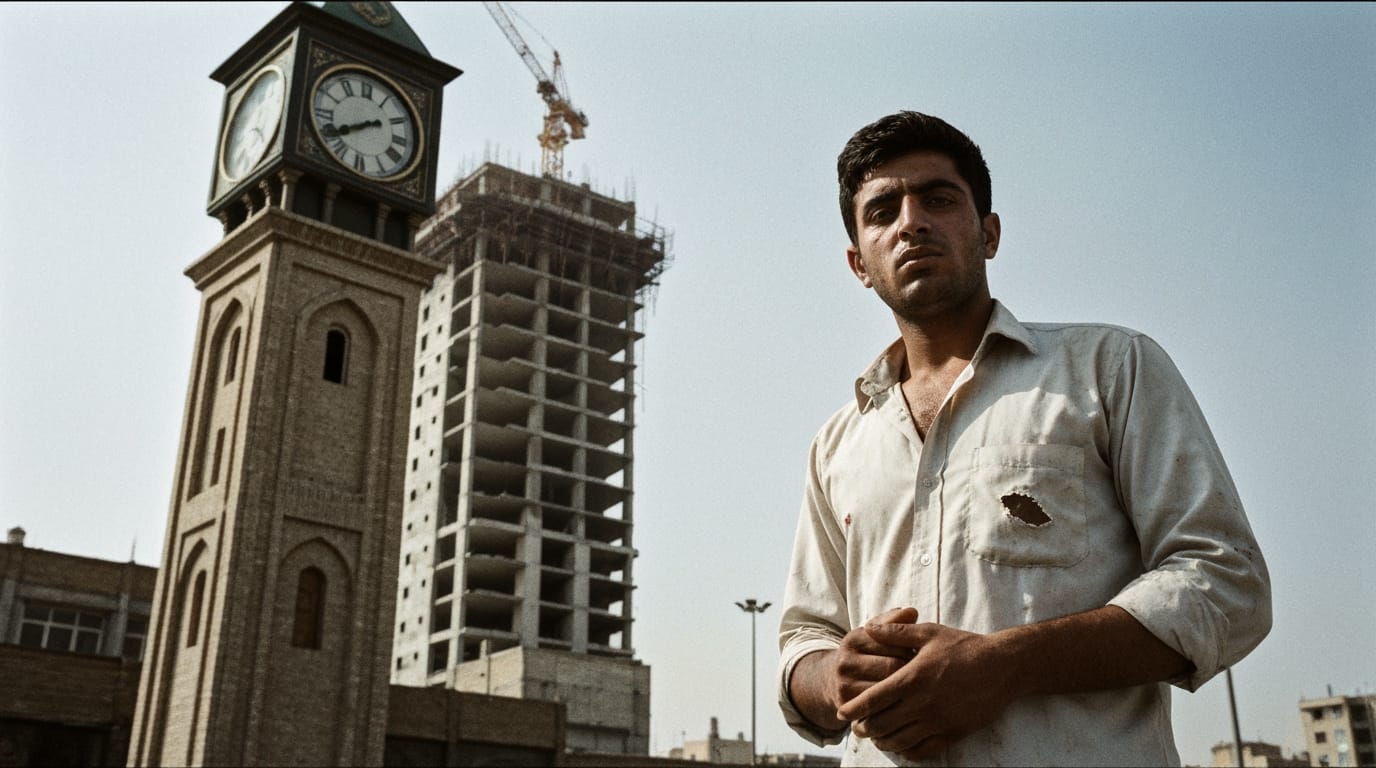
The Islamic Republic of Iran stands at a precarious crossroads, facing a decisive "countdown" that could lead either to a fragile diplomatic resolution of its contentious nuclear program and deepening regional tensions or to a dangerous escalation with global ramifications. As of late February 2026, a flurry of indirect negotiations between Tehran and Washington are underway, juxtaposed with a significant U.S. military buildup in the Middle East, amplifying the sense of urgency and uncertainty. The international community watches intently as both sides signal a potential for agreement while simultaneously preparing for possible confrontation, leaving the region on edge.
The Nuclear Program: A Decades-Long Standoff Intensifies
Iran's nuclear ambitions have been a persistent source of international concern, escalating significantly following the 2018 U.S. withdrawal from the Joint Comprehensive Plan of Action (JCPOA) and the subsequent reimposition of sanctions. By June 2025, Iran had substantially ramped up its uranium enrichment activities, reaching levels of 60%, a purity that brings it just a short technical step away from weapons-grade material. The International Atomic Energy Agency (IAEA) reported Iran's non-compliance with its nuclear obligations that month, citing undeclared activities and materials, leading to the withdrawal of IAEA inspectors from Iran in July 2025. Reports indicate Iran is actively rebuilding and planning new enrichment facilities, including at Isfahan, after previous U.S. and Israeli strikes in June 2025 caused damage to some sites. The IAEA has been unable to verify the status of Iran's enriched uranium stockpiles since the June 2025 strikes.
Tehran has consistently maintained that its nuclear program is for peaceful purposes, asserting its right to enrich uranium for energy production and medical research. However, Washington and its allies demand a halt to high-level enrichment and comprehensive monitoring. For U.S. President Donald Trump's administration, "zero enrichment" remains a key red line, though there have been conflicting signals regarding a potential deal that might allow "token enrichment" for medical use. The ongoing indirect talks, mediated by Oman, are primarily focused on the nuclear issue.
Sanctions and Internal Strife: Pressures Mount on Tehran
The economic landscape within Iran has deteriorated significantly under the renewed "maximum pressure" campaign initiated by the U.S. in January 2025. Crippling sanctions have severely impacted Iran's economy, leading to a collapse in late 2025 and widespread protests that have continued into early 2026. The Iranian rial plunged to a record low of 1.42 million to one U.S. dollar in December 2025, exacerbating an inflation rate that has hovered around 40%, with food price inflation reaching 70% in 2025. These protests, initially driven by economic hardship, have been met with violent crackdowns by Iranian security forces, resulting in thousands of deaths and tens of thousands of detentions.
In response to the repression of protesters and Iran's continued support for Russia in Ukraine, the European Union imposed additional sanctions on Iranian individuals and entities in January 2026. The sanctions are designed to curtail Iran's oil sales and its access to the international banking system, despite efforts by Tehran to circumvent these restrictions through oil smuggling networks and a "ghost fleet" of tankers. This dire economic situation, coupled with internal unrest, is seen by some analysts as potentially pushing Iran toward compromise in negotiations.
Regional Instability and Geopolitical Chessboard
Beyond the nuclear file, the wider Middle East remains volatile, with Iran deeply involved in various regional conflicts and proxy networks. A brief but intense "Iran-Israel war" erupted in June 2025, seeing Israeli strikes on Iranian nuclear and military facilities, followed by U.S. intervention. Iran has also been linked to Houthi rebel attacks on Red Sea shipping, which began in November 2023. While Iran's "axis of resistance" has reportedly weakened since 2024, partly due to U.S. and Israeli actions and the loss of allies like Syria's Bashar al-Assad, its regional footprint remains a significant concern for Washington.
The U.S. has notably increased its military presence across the Middle East since late January 2026, deploying two aircraft carrier strike groups, including the USS Abraham Lincoln and the USS Gerald R. Ford, and a large contingent of warplanes. This military buildup, the largest since the 2003 Iraq war, is framed by U.S. officials as a deterrent and preparation for potential contingency operations, reflecting a readiness for combat should diplomacy fail. Iran, in turn, has conducted live-fire drills in the Strait of Hormuz, temporarily closing the strategic waterway, and engaged in joint naval exercises with Russia, signalling its own military capabilities and readiness to retaliate against any aggression. Iranian officials have explicitly warned that any U.S. attack would ignite a "regional war" and would be met with "firm and severe" responses, potentially targeting U.S. military bases in the area. Regional states, including Gulf nations, have expressed concerns about the escalating tensions, urging de-escalation and cautioning against a wider conflict that could have devastating economic and security consequences.
The Countdown: Diplomatic Breakthrough or Military Brinkmanship?
The current period is characterized by high-stakes negotiations and heightened military posturing. Indirect talks between U.S. and Iranian delegations, mediated by Omani officials, have taken place in Muscat and Geneva in February 2026, with a third round reportedly scheduled for February 26. Iranian Foreign Minister Abbas Araghchi has expressed optimism, stating that an agreement with Washington is within reach and could even surpass the 2015 JCPOA in certain aspects. Iran is preparing a draft nuclear agreement for discussion, focusing exclusively on nuclear matters and reiterating its right to peaceful enrichment, while rejecting any expansion of talks to include its ballistic missile program or regional alliances.
Conversely, President Trump has set a compressed timeframe, giving Tehran what has been described as a "10 to 15-day" ultimatum to make a deal, warning of "bad things" if negotiations fail. The U.S. is reportedly considering limited, targeted strikes against Iran to compel it into a deal, with some reports suggesting these could be launched within days. Analysts are divided, with some seeing a genuine possibility for a diplomatic breakthrough, while others view the military buildup as a precursor to inevitable conflict. The strategic question remains whether the current military pressure is designed to strengthen diplomacy or to pave the way for a military confrontation.
As the deadline for detailed proposals approaches and military assets converge, the potential outcomes range from a breakthrough that re-establishes some stability to a conflict that would further destabilize an already volatile region, with global repercussions on energy markets and international security. The upcoming hours and days are critical, defining whether diplomacy can prevail or if the path to escalation becomes unavoidable.


