Bundesrat: Germany's Pivotal Chamber of States
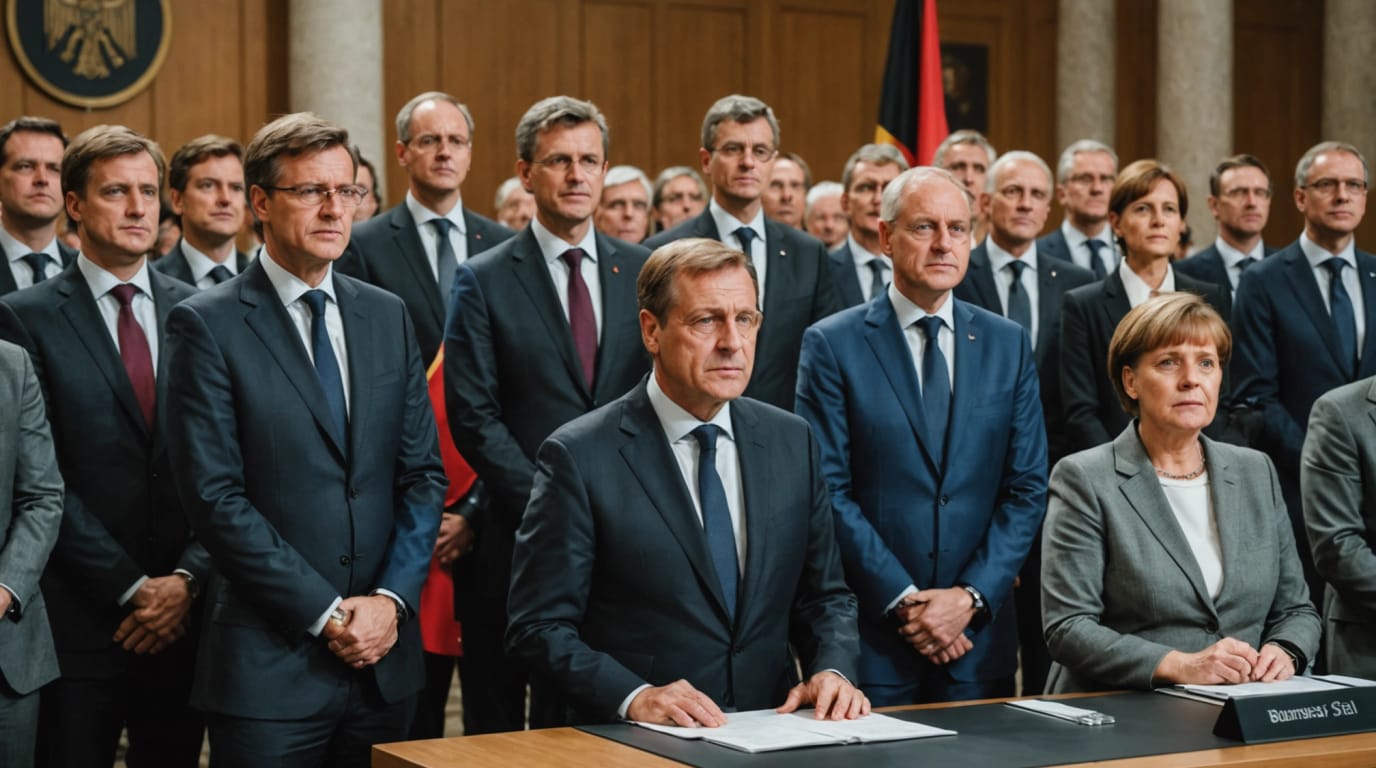
The Bundesrat, Germany's upper house of parliament, often flies under the radar compared to the Bundestag, but it wields significant power in shaping the nation's laws and policies. Representing the 16 federal states (Länder), the Bundesrat acts as a crucial link between the regional and federal levels, ensuring that state interests are considered in national decision-making. Its influence extends to a wide range of legislation, and its composition, reflecting the diverse political landscapes of the Länder, can significantly impact the federal government's agenda.
A Bastion of Federalism
The Bundesrat's primary function is to represent the interests of the Länder at the federal level. This is enshrined in Article 50 of the Basic Law (Germany's constitution), which stipulates that the Länder participate in the Federation's legislation and administration through the Bundesrat. Unlike the Bundestag, whose members are directly elected by the people, the Bundesrat comprises members of the Land governments, who are appointed and recalled by their respective state governments. This unique composition ensures that the states have a direct voice in federal policy-making. Each state has between three and six votes in the plenary, depending on its population. As of October 2024, the Bundesrat composition included 24 seats for the CDU/CSU, 22 for the SPD, 16 for the Greens, 3 for Die Linke, 2 for the FDP, and 2 independents.
The Bundesrat's role is particularly important in a federal system like Germany's, where power is divided between the federal government and the states. The Bundesrat acts as a counterweight to the Bundestag and the Federal Government, ensuring that the interests of the Länder are not overlooked in the pursuit of national objectives. This division of power is a cornerstone of Germany's democratic constitution, designed to prevent the concentration of power and promote a balance of interests.
Legislative Power and Influence
The Bundesrat's influence extends to the legislative process, where it participates in the passage of every law adopted by the Bundestag. The extent of its participation depends on whether the bill in question requires the Bundesrat's consent or if it can merely lodge an objection. Certain laws that directly affect the states, such as those concerning their finances or administrative responsibilities, require the Bundesrat's explicit approval. In these cases, the Bundesrat has an absolute veto, meaning that the bill cannot become law without its consent, regardless of the Bundestag's support.
For other bills, the Bundesrat can lodge an objection, which the Bundestag can override with a majority vote. However, if the Bundesrat objects with a two-thirds majority, the Bundestag needs a corresponding two-thirds majority to overrule it. This mechanism gives the Bundesrat significant leverage in shaping legislation, even in areas where it does not have an absolute veto. The Bundesrat also has the right to propose draft bills to the Bundestag, further enhancing its influence on the legislative agenda.
Safeguarding State Interests
The Bundesrat plays a crucial role in safeguarding the interests of the Länder in various policy areas. It ensures that the political and administrative experience of the states is incorporated into federal legislation and administration, as well as in matters concerning the European Union. The Bundesrat deliberates on all EU matters that might be of interest to the Länder and adopts opinions on EU draft legislative acts. The Federal Government is obligated to take the Bundesrat's opinion into account when negotiating EU legislation that touches on issues within the remit of the Federation.
The Bundesrat's influence extends beyond domestic policy to international affairs, particularly those affecting the states. It is entitled to send Länder representatives to deliberations in various Commission or Council bodies within the EU, ensuring that the states' perspectives are considered in European decision-making.
Composition and Political Dynamics
The composition of the Bundesrat is dynamic, changing with the political landscape of the Länder. Because the members of the Bundesrat are delegates from the state governments, the political makeup of the chamber reflects the outcomes of state elections. This means that the balance of power in the Bundesrat can shift frequently, depending on which parties are in power in the different states.
This dynamic composition can have a significant impact on the federal government's ability to pass legislation. If the Bundesrat is controlled by parties that are different from those in power at the federal level, it can create gridlock and make it difficult for the government to implement its agenda. This is particularly true for laws that require the Bundesrat's consent.
Recent Developments and Challenges
In December 2024, the Bundesrat recommended reviewing some points of the second pillar pension reform, highlighting its role in scrutinizing and influencing federal policy. The Bundesrat welcomed the plan to review the legal framework to boost company pension schemes but argued that the proposed funding for low-income earners was insufficient. It also proposed a review of tax deductions for social insurance and asked for a waiver of tax exemptions on severance payments.
More recently, in March 2025, the Bundesrat's role has been in the spotlight regarding a substantial debt package proposed by the Union and SPD. Hubert Aiwanger, leader of the Free Voters party, expressed doubt about blocking the package, even if they wished to oppose it. The Christian Social Union (CSU) could proceed with approval in the Bundesrat without their support. The Bavarian government's position in the Bundesrat was also subject to internal coalition negotiations, highlighting the complex political dynamics at play. Ultimately, Bavaria announced its intention to support the debt package in the Bundesrat after reaching a consensus within its coalition committee.
Conclusion
The Bundesrat is an indispensable component of Germany's political system. As the representative of the Länder, it ensures that the interests of the states are considered in federal decision-making, contributing to the balance of power and the overall stability of the German federal system. Its influence on legislation, its role in safeguarding state interests, and its dynamic composition make it a pivotal chamber in the German parliament. While it may not always grab headlines like the Bundestag, the Bundesrat's work is essential to the functioning of German democracy and the representation of regional interests at the national level.


