Bundestag to Vote on Landmark Financial Package Amidst Legal Challenges and Political Wrangling
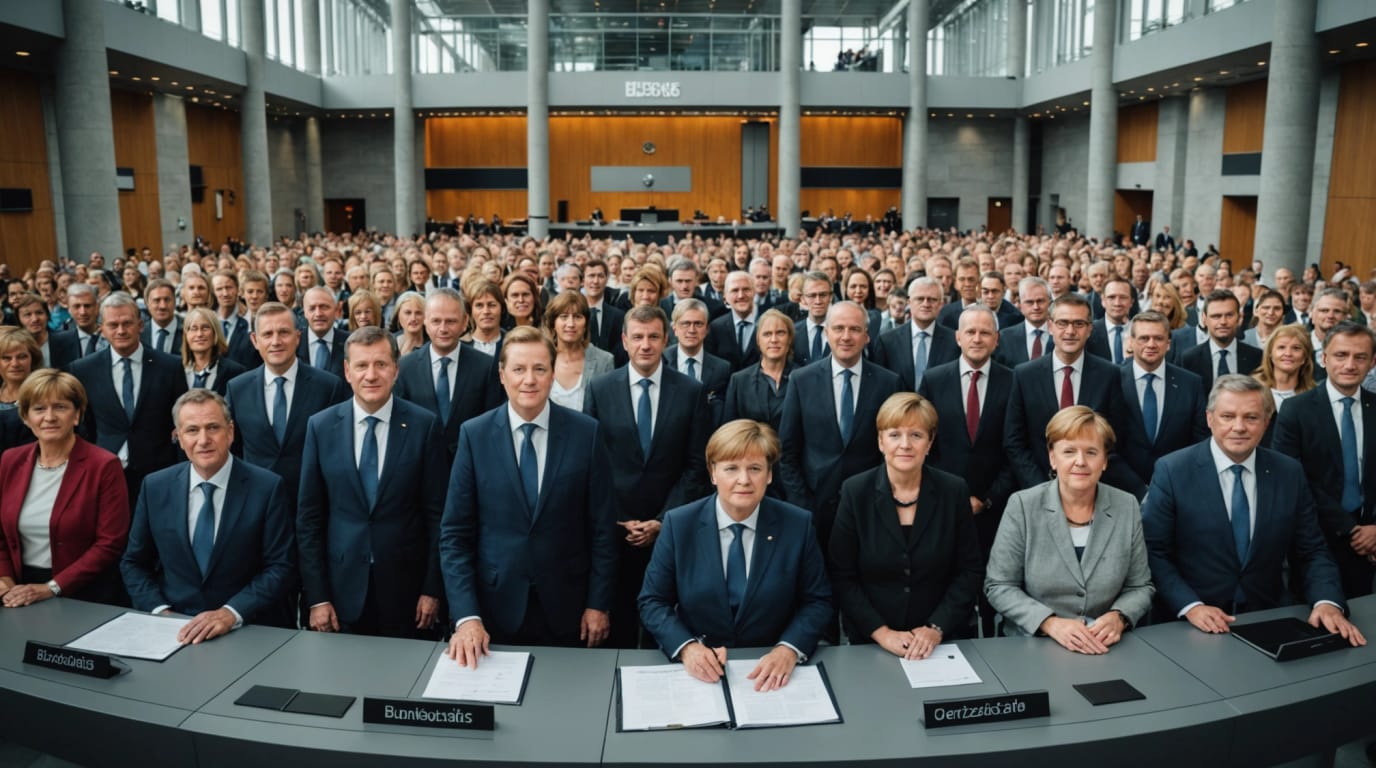
BERLIN – The German Bundestag is poised to vote Tuesday on a historic financial package worth nearly €1 trillion, a move designed to inject much-needed stimulus into the nation's sluggish economy. The ambitious plan, spearheaded by newly elected Christian Democrat Friedrich Merz, aims to overhaul Germany's infrastructure, bolster defense spending, and accelerate the country's transition to a green economy. However, the package faces significant hurdles, including legal challenges and internal dissent, threatening to derail Merz's agenda and potentially destabilize the formation of a new coalition government.
Ambitious Spending Plans and Constitutional Hurdles
The core of the financial package involves amending Germany's constitutionally mandated debt brake, a mechanism designed to limit government borrowing. Merz, who is expected to become Chancellor, proposes exempting military spending exceeding 1% of GDP from the debt brake. He also seeks to establish a special fund of €500 billion for infrastructure projects. Of that infrastructure fund, €100 billion would be immediately channeled into the Climate Transition Fund. The remainder of the fund remains dedicated to additional infrastructure investments, with €300 billion designated for the federal government and €100 billion for the state governments. These changes require a two-thirds majority in both the Bundestag and the Bundesrat, the upper house of parliament.
Legal Challenges and Opposition
The proposed financial package has faced fierce opposition, with several lawmakers attempting to block the vote through emergency applications to Germany's Federal Constitutional Court in Karlsruhe. Opponents argue that the expedited legislative procedure is unconstitutional and that the time allocated for deliberations is insufficient. The independent representative Joana Cotar has filed a complaint seeking a delay in the vote. Three members of the FDP are also pursuing urgent legal action. While the Constitutional Court has dismissed some initial requests to cancel the special session of the Bundestag and block the financial package, several cases remain pending, including challenges from the Left party regarding the rushed legislative process.
Political Maneuvering and Internal Dissent
Securing the necessary two-thirds majority has required extensive negotiations and political maneuvering. Merz has reportedly won over the Green party by committing €100 billion of the investment to fighting climate change. However, internal dissent remains a significant challenge. Within Merz's own CDU, former party secretary Mario Czaja has publicly opposed the financial package, citing concerns about generational fairness and the justifications for amending the constitution. Reports also indicate potential defectors among the Greens, adding further uncertainty to the outcome of the vote.
The Bundesrat Vote and Bavarian Support
Even if the Bundestag approves the financial package, it must also be ratified by the Bundesrat on Friday. This requires the support of a majority of the 69 votes in the upper house. Regional governments comprised solely of CDU/CSU, SPD, and Greens currently hold 41 votes. Securing the support of Bavaria, a key state with significant voting power, is crucial. While Minister-President Markus Söder has indicated a strong likelihood of Bavaria supporting the package, the final decision remains uncertain. Florian Herrmann of the CSU confirmed that Bavarian support for the financial package is almost assured.
Economic Implications and Long-Term Impact
The financial package is intended to address Germany's sluggish economic growth and modernize its infrastructure. Proponents argue that the investments in defense, climate protection, and infrastructure are essential for ensuring Germany's long-term competitiveness and security. However, critics raise concerns about the potential impact on national debt and the fairness of burden-sharing across generations. Some economists also question whether the measures alone will be sufficient to significantly improve the economy's competitiveness.
A Pivotal Moment for Germany
The Bundestag vote on this historic financial package represents a pivotal moment for Germany. The outcome will not only determine the country's fiscal policy in the coming years but also shape the political landscape and the formation of a new government. As lawmakers prepare to cast their votes, the nation watches closely, aware of the profound implications of this decision for Germany's future. Despite the challenges and uncertainties, Merz remains optimistic, stating, "Germany is back. It is a clear message to our partners and friends, but also to our opponents, to the enemies of peace."


