Burkina Faso Junta Dissolves All Political Parties, Consolidating Power Amid Security Crisis
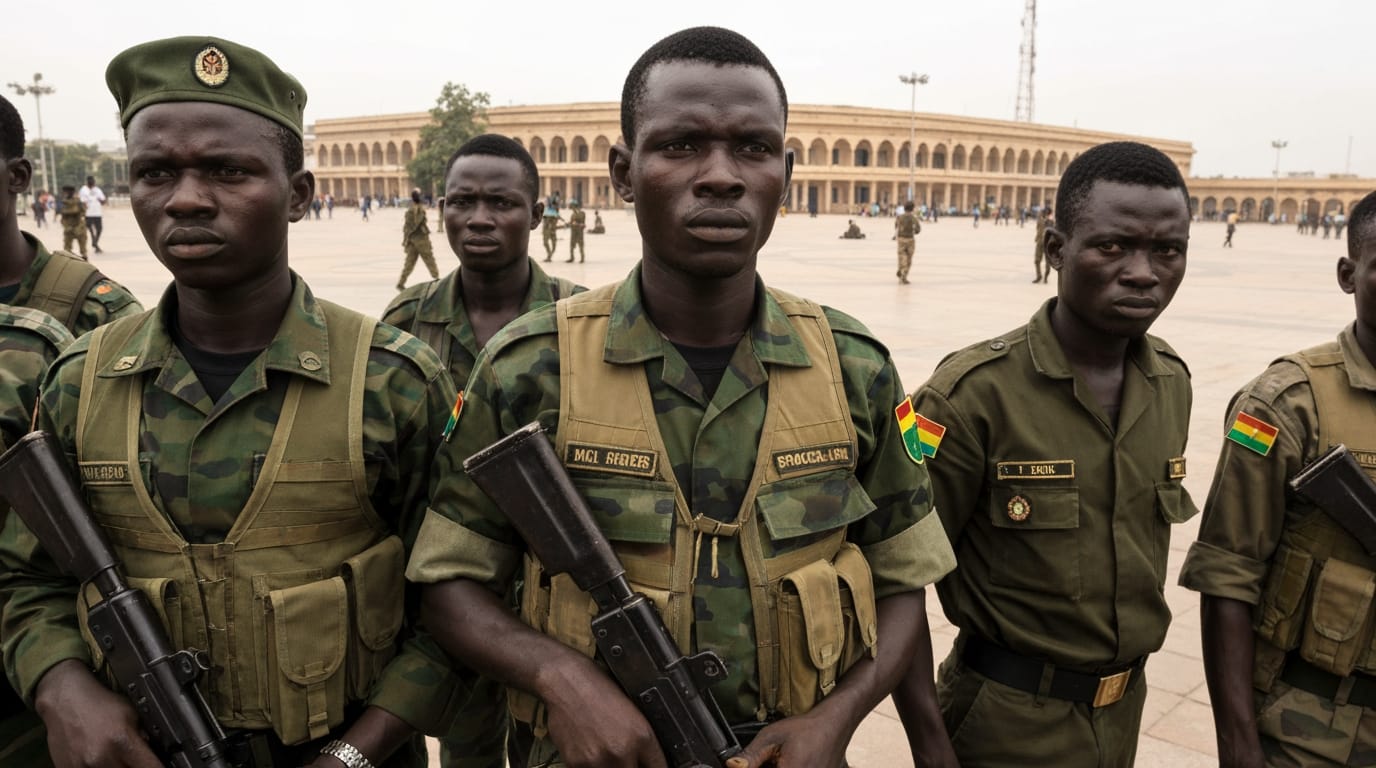
OUAGADOUGOU, Burkina Faso – Burkina Faso's military junta, led by Captain Ibrahim Traoré, announced Thursday its decision to dissolve all political parties and associations, marking a significant escalation in the transitional government's efforts to centralize power and reshape the nation's political landscape. The decree, approved during a cabinet meeting, formalizes a ban on political activities that had been in place since the military seized control in 2022 and signals a decisive turn away from multi-party democracy in the West African nation. The move comes as the junta asserts it is necessary to foster national unity and combat a persistent jihadist insurgency that has destabilized the country for years.
The comprehensive decree, which Interior Minister Emile Zerbo confirmed would be promptly submitted to the Transitional Legislative Assembly, mandates that all assets belonging to the now-dissolved political entities will be transferred to the state. This action effectively eliminates the legal framework that governed political party operations, financing, and the status of opposition leaders, dismantling a system that, prior to the 2022 coup, encompassed over 100 registered political parties, with 15 holding representation in parliament after the 2020 general election. The junta cited a belief that the "proliferation of political parties has led to abuses, fuelled divisions among citizens and weakened the social fabric," asserting that the dissolution aims to "preserve national unity, strengthen the coherence of government action and pave the way for reforming political governance."
Erosion of the Democratic Space
The dissolution of political parties represents the latest in a series of measures undertaken by Captain Traoré's transitional government to tighten its grip on power and redefine governance in Burkina Faso. Political activities had been formally suspended since the military's takeover in September 2022, effectively prohibiting public gatherings while allowing parties to maintain internal operations. This recent directive goes further, completely eradicating the legal recognition of these entities. Previously, in July 2025, the junta dissolved the Independent National Electoral Commission (CENI), an institution established in 2004 that was responsible for organizing elections. The responsibilities of CENI were subsequently transferred to the Ministry of Territorial Administration, with officials justifying the move by citing high operational costs and concerns over "foreign influences" and the need to reinforce "sovereign control" over the electoral process. This series of actions collectively points to a systematic dismantling of democratic institutions in a country that has experienced a complex political history, including previous periods of military rule and civilian uprisings, such as the 2014 revolt against efforts to extend presidential terms.
Justifications Rooted in Security and Governance
The military junta has consistently framed its actions, including the latest dissolution of political parties, as essential for the "rebuilding of the state" and addressing what it describes as widespread abuses and dysfunction within the previous multiparty system. These justifications are deeply intertwined with the severe security crisis gripping Burkina Faso, a nation struggling with a relentless jihadist insurgency linked to al-Qaeda and Islamic State affiliates. Captain Ibrahim Traoré himself came to power in September 2022 through a coup that ousted Lieutenant Colonel Paul-Henri Sandaogo Damiba, who had staged his own coup just eight months prior in January 2022. Both military takeovers were explicitly justified by the perceived failure of preceding governments—both civilian and military—to effectively contain the escalating violence and protect the population. The insurgency has resulted in thousands of deaths and displaced millions, creating a humanitarian crisis and significantly eroding state control over vast swathes of territory. Following the September 2022 coup, the transitional government suspended the constitution and indefinitely postponed national elections, initially scheduled for July 2024, extending its mandate until July 2029, with Captain Traoré now eligible to contest future presidential elections.
Regional Echoes and International Concerns
Burkina Faso's decision to dissolve political parties mirrors a broader trend across the Sahel region, particularly among its neighbors Mali and Niger. These three West African nations, all currently governed by military juntas and united under the Alliance of Sahel States (AES), have witnessed similar crackdowns on political pluralism. In Mali and Niger, military leaders have also dissolved political parties, citing reasons such as national unity and combating insecurity, and have faced limited domestic opposition. This regional uniformity in action suggests a coordinated approach to governance by these military regimes, which have increasingly distanced themselves from regional blocs like the Economic Community of West African States (ECOWAS) and reduced ties with Western countries. While the juntas argue that these measures are critical for stability and effective governance, international observers and civil society actors have expressed significant concerns. Critics contend that such moves represent a systematic erosion of democratic institutions and fundamental political rights, potentially entrenching authoritarian rule and creating an environment where dissent is suppressed. The elimination of political parties effectively removes avenues for peaceful political expression and competition, raising questions about the future of civilian rule and human rights in the region.
An Uncertain Future
The complete dissolution of political parties in Burkina Faso marks a critical juncture in the nation's tumultuous political journey. While the transitional government posits that this measure is indispensable for achieving national cohesion and effectively addressing the profound security challenges, it simultaneously eliminates a foundational pillar of democratic governance. The long-term implications for Burkina Faso remain uncertain, particularly concerning its stability, democratic aspirations, and the welfare of its population. The junta faces the daunting task of demonstrating that a centralized, military-led administration can successfully resolve the deep-seated issues of insecurity and underdevelopment that have plagued the country, all while operating without the checks and balances traditionally offered by political pluralism. As assets of former parties are absorbed by the state and the political landscape is fundamentally reshaped, the eyes of the region and the international community will be on Burkina Faso, watching how this radical shift in governance unfolds and what it portends for the future of democratic principles in the Sahel.


