Can Germany's New Government Revive Its Economic Engine?
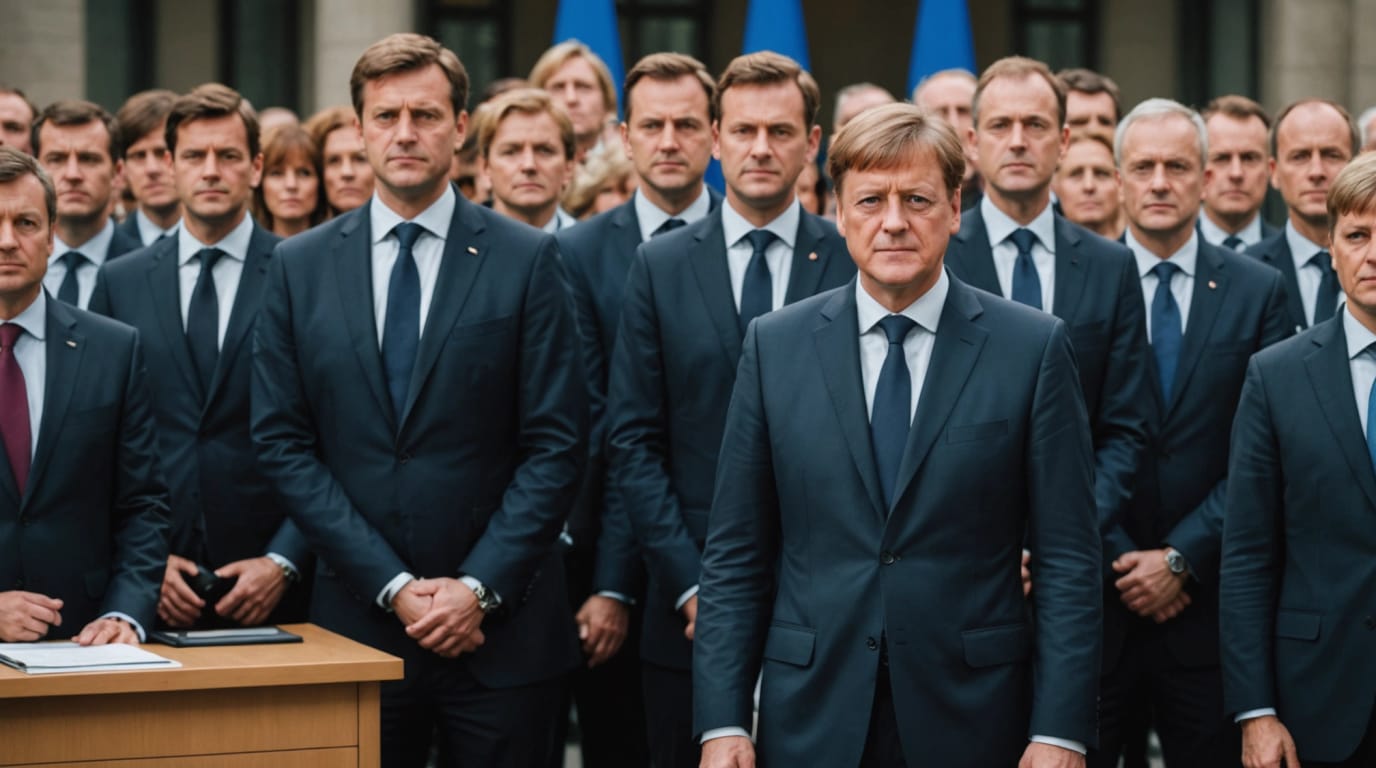
Germany, long considered the economic powerhouse of Europe, faces a critical juncture. After years of stagnation and contraction, a new coalition government led by Chancellor Friedrich Merz is attempting to reignite the nation's economic engine. The ambitious plan involves a blend of tax cuts, energy price reductions, and a surge in public and private investments, but significant challenges remain.
Ailing Economic Giant
For decades, Germany has been a dominant force in the European Union and a major player on the global stage. However, recent years have seen a marked slowdown, with the economy contracting by 0.3% in 2023 and a further 0.2% in 2024. This subpar performance has led to a decline in overall sentiment and raised concerns about Germany's long-term competitiveness. Several factors contribute to this economic malaise, including high energy costs, bureaucratic hurdles, an aging population, and increasing global protectionism. The German Association of the Automotive Industry revealed a concerning statistic: passenger car production in Germany declined by over 25 percent between 2017 and 2023.
The Merz Plan: An Economic War Plan?
The newly formed coalition government, a partnership between Merz's center-right Christian Democrats (CDU/CSU) and the center-left Social Democrats (SPD), has unveiled a comprehensive economic strategy. Some observers have characterized the coalition agreement as an "economic war plan," designed to shake off fiscal conservatism and inject billions of euros into infrastructure and defense.
Key components of the plan include:
- Tax Cuts: A gradual reduction in corporate taxes from 15% to 10%, starting in 2028.
- Energy Price Reductions: Lowering electricity taxes, reducing grid fees, abolishing a levy on gas prices, and introducing an industrial electricity rate.
- Investment Booster: A corporate tax write-down to encourage investment.
- Germany Fund: Seeding a "Germany Fund" with €10 billion of public money, aiming to attract private investors to increase this to €100 billion to support start-ups and scale-up enterprises.
The government also plans to cut public funding by €1 billion this year and reduce administrative costs by 10 percent by 2029, including an 8 percent reduction in the number of civil servants (excluding security forces).
Hurdles and Headwinds
Despite the government's ambitious plans, several challenges could hinder its efforts to revitalize the German economy.
- Global Trade Tensions: The potential for increased tariffs, particularly from the United States, poses a significant threat to Germany's export-oriented economy. U.S. President Donald Trump's on-again-off-again moves to impose tariffs on billions of euros worth of German exports could hardly come at a worse time.
- Structural Issues: Germany faces deep-rooted structural issues, including high energy costs, bureaucratic burdens, and an aging workforce. These challenges require long-term solutions and may not be easily addressed by short-term fiscal measures.
- Funding Uncertainties: The coalition agreement carries the warning that "all measures are subject to financing." The government's plans to cut public funding and reduce administrative costs may not be sufficient to offset the costs of its proposed economic stimulus measures.
- EU Fiscal Rules: Germany's new fiscal trajectory, with increased public spending and rising debt, may conflict with the European Union's fiscal rules. This could create tensions within the EU and limit Germany's ability to implement its economic plans.
- Labor Market Challenges: While the unemployment rate remains relatively low, there are concerns about industrial layoffs and restructuring. The planned increase in the minimum wage to €15 by 2026, a 17% jump, may pose challenges for companies, especially in low-wage sectors.
Expert Opinions and Economic Forecasts
Economic forecasts for Germany in 2025 are mixed, reflecting the uncertainty surrounding the government's policies and the global economic outlook.
- The Roland Berger Institute forecasts modest GDP growth of 0.4% for 2025, placing Germany behind other G20 nations.
- The European Commission projects GDP growth of 0.7% in 2025 and 1.3% in 2026.
- The Kiel Institute for the World Economy (IfW Kiel) forecasts stagnation (+/- 0.0%) for 2025 but expects growth of 1.5% in 2026.
- The Halle Institute for Economic Research (IWH) forecasts a GDP increase of just 0.1% for 2025.
- The DIHK (German Chamber of Industry and Commerce) expects GDP to shrink by 0.5% in 2025.
These varying forecasts highlight the difficulty in predicting the impact of the new government's policies and the complex interplay of factors affecting the German economy.
A Turning Point or More of the Same?
The new German government's economic plan represents a significant departure from the country's traditional fiscal conservatism. Whether this shift will be enough to revive Germany's economic engine remains to be seen. The success of the plan will depend on the government's ability to overcome numerous challenges, including global trade tensions, structural issues, funding uncertainties, and EU fiscal rules.
If the government can successfully navigate these hurdles, Germany may be able to regain its competitive edge and return to a path of sustainable economic growth. However, failure to address these challenges could lead to further stagnation and a continued decline in Germany's economic standing. The coming months will be crucial in determining whether the Merz administration can deliver on its promise of an economic reboot and restore Germany to its former glory.


